Australia is moving to give social media users more control over what they see online, proposing legislation that would require platforms to offer a choice between algorithm-driven feeds and simpler, chronological ones.
Prime Minister Anthony Albanese’s government announced Tuesday the “My Feed, My Way” initiative, which would force social media companies to let users aged 16 and older opt into personalized content recommended by algorithms or opt out entirely, seeing only posts from accounts they follow.
The draft bill, released for targeted consultation, would also mandate that platforms notify new and existing users about their feed options so they can set a default. Companies that fail to comply could face penalties of up to 109.2 million Australian dollars ($79 million).
The legislation is expected to be introduced to parliament this year, according to the government. It also includes provisions requiring AI chatbots, online games, and other digital services to protect under-18s from addictive design features.
“This is not about giving government control. It’s about giving people control. It’s about putting choice back into the hands of Australians online,” Albanese said at a press conference Tuesday. He described the proposal as “sensible, pragmatic, practical reform” that gives users choice and holds big tech companies accountable for inaction.
Platforms already offer partial options
Several major platforms already provide some way to view non-algorithmic content. TikTok has a Friends tab alongside its main recommendation feed, Facebook offers a friends-only feed, Instagram has Following and Favorites feeds, YouTube includes a Subscriptions feed, and Snapchat separates friends’ Stories from public discovery content.
The proposed Australian rules would go further by making these options more prominent and giving users a clear default choice, a step that could reshape how millions of people interact with platforms that rely heavily on engagement-driven algorithms.
Australia’s broader crackdown on Big Tech
The move follows Australia’s landmark 2024 decision to become the first country to ban social media for teens under 16. That policy has drawn mixed reviews. Albanese has called it “world-leading,” but a report from the country’s eSafety Commissioner found that three months after the ban, more than 81% of Australian children were still using at least one age-restricted platform, barely down from 86% before the ban. The same report showed 58% of teens were still using social media daily or more often, compared with roughly 60% before.
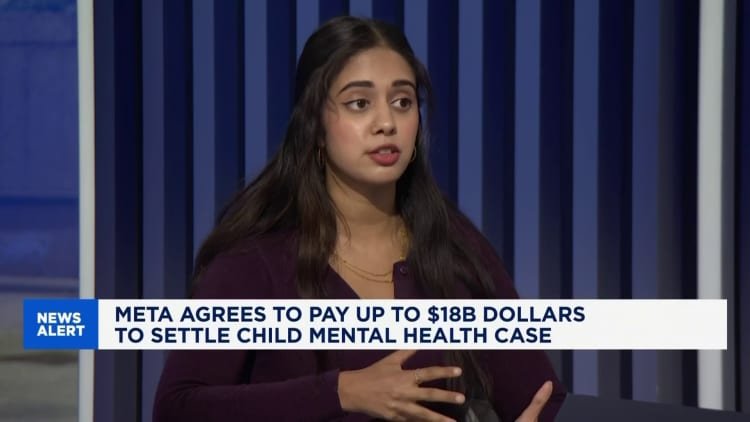
The new proposal adds to a year of intensifying scrutiny on social media companies globally. In August, Meta settled for $18 billion in a landmark trial brought by a coalition of U.S. states led by California, which alleged the company misled users about the harms its platforms posed to younger people. As part of that settlement, Meta agreed to make changes for users under 18, including offering a non-algorithmic feed, implementing a two-hour daily usage limit, and disabling extreme makeup and cosmetic surgery filters.
Earlier this year, Meta and YouTube lost a social media addiction trial in Los Angeles brought by a plaintiff who said addictive features like autoplay and infinite scrolling damaged her mental health. Meta also lost a separate case in March brought by New Mexico Attorney General Raul Torrez, with a court ordering the company to pay over $900 million in penalties for violating state child-safety laws.
California Attorney General Rob Bonta, who led the case against Meta, has indicated he plans to target TikTok, YouTube, and Snapchat next.
Source: www.cnbc.com — https://www.cnbc.com/2026/09/08/australia-social-media-algorithm-opt-out.html
This article is for informational purposes only and does not constitute financial, investment, tax, or legal advice. Do your own research and consult a licensed professional before making financial decisions.