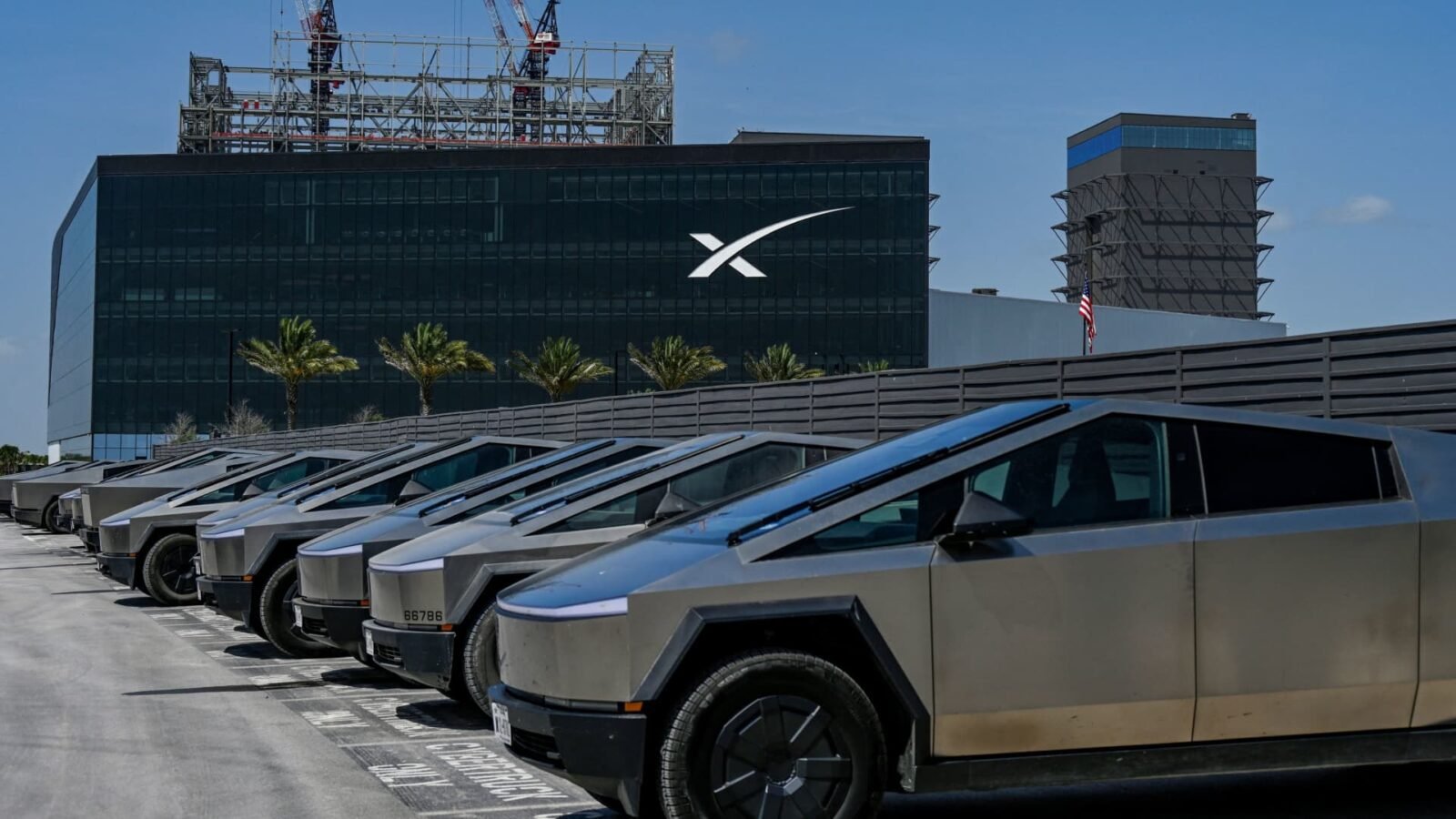
SpaceX has erased more than $1.2 trillion in market capitalization since reaching a peak share price of $225.64 in June, according to CNBC. The decline represents a loss nearly equal to the entire market value of Tesla, Elon Musk’s electric vehicle company, which recently hit near one-year lows.
The aerospace company’s shares closed at $113.50 on Monday, marking the 13th decline in the past 16 trading sessions. The stock shed more than 1% that day, extending a prolonged downturn that has cut the company’s valuation roughly in half from its summer high.
Options Activity Shows Mixed Sentiment
Despite the sustained selloff, options trading activity reveals a complex picture of market sentiment. On Monday, traders purchased 106,000 call options compared to 77,000 put options by volume, though the majority of the $442 million in options premium was tied to bearish put contracts.
According to CNBC, the most actively traded contract was the 330-strike call expiring Friday, priced at just 10 cents with roughly a one-third of 1% probability of profitability based on ThinkOrSwim data. The trade reflects what the outlet described as “small speculators” buying low-probability call options that would require the stock to quickly reverse course and double in value.
Cboe LiveVol data showed that four of the five largest trades by premium were neutral or bullish in nature. Notable transactions included two substantial put-spread sales, with one multimillion-dollar seller taking a position requiring SpaceX shares to rally. Another significant trade involved a seller collecting $1.8 million by selling 5,200 of the 100-strike puts expiring October 16 while simultaneously buying 7,000 of the 85-strike puts with the same expiration.
Broader Tech Sector Pressures
Charles Moon, a tech and momentum specialist for Prosper Trading Academy in Chicago, offered context for the decline. “As an investor it’s early – as a trader, Wall Street is now punishing the AI stocks for capex,” Moon told CNBC, suggesting the pullback reflects broader concerns about capital expenditure across technology companies rather than SpaceX-specific issues.
Lock-Up Expiration Looms
A potentially significant near-term catalyst awaits investors: SpaceX’s first earnings report since its initial public offering is scheduled for next week. The earnings release will trigger a lock-up expiration that allows investors to sell 20% of their eligible locked-up shares on the second full trading day following the announcement—August 6.
The lock-up expiration could release as many as 911.5 million shares for potential sale, adding supply pressure to an already declining stock. However, Moon expressed measured optimism about the event’s impact. “I don’t think the lock-up on SpaceX will be as bad as everyone fears,” he said, while acknowledging “it’s not going to help the cause either.”
CNBC noted that while earnings reports typically reduce volatility by providing clarity, that pattern may not hold for SpaceX given the combination of the lock-up expiration and the stock’s recent weakness.
The aerospace company’s decline stands in contrast to the typical post-IPO narrative, where newly public companies often enjoy sustained momentum. Instead, SpaceX has delivered what CNBC characterized as “one of the wildest rides in the market,” leaving investors and traders navigating significant uncertainty as the company approaches a critical reporting milestone.
Source: www.cnbc.com — https://www.cnbc.com/2026/07/27/spacex-has-now-lost-the-equivalent-of-a-full-tesla-in-market-capitalization.html
This article is for informational purposes only and does not constitute financial, investment, tax, or legal advice. Do your own research and consult a licensed professional before making financial decisions.