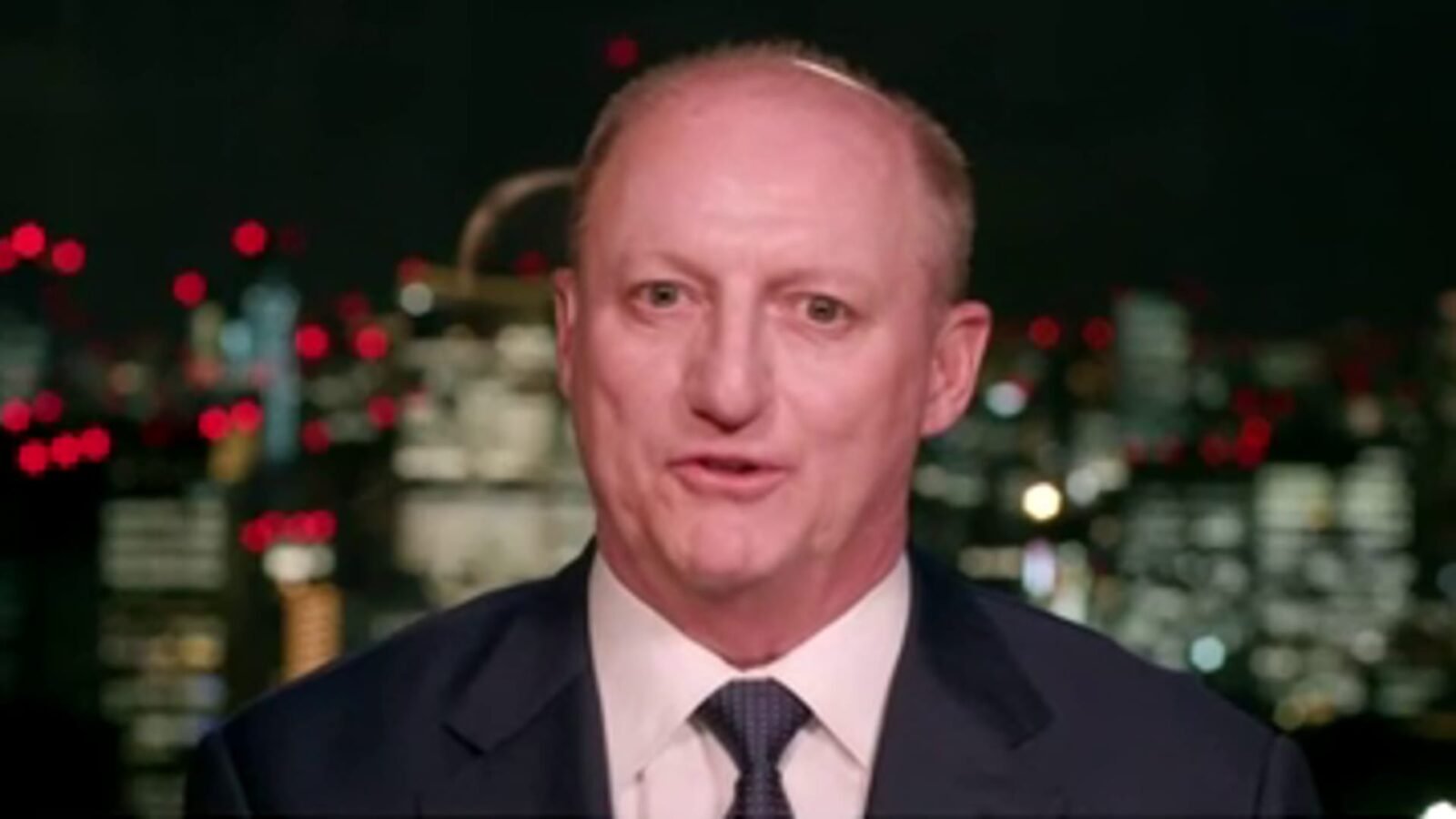
Berkshire Hathaway is looking at artificial intelligence from two angles, CEO Greg Abel told CNBC in a live “Squawk Box” interview from Japan — one rooted in the physical world of energy infrastructure, the other in equity markets.
Abel said supplying electricity to the fast-growing universe of AI data centers amounts to a “significant opportunity” for Berkshire and its utility arm, Berkshire Hathaway Energy. He’s long argued that the real bottleneck for the AI buildout isn’t computing power but the power itself — there simply may not be enough energy to run all those server farms.
Still, there’s a caveat: Abel said Berkshire would only sell energy to hyperscalers if it doesn’t push up rates for other customers. That’s a line the company isn’t willing to cross.
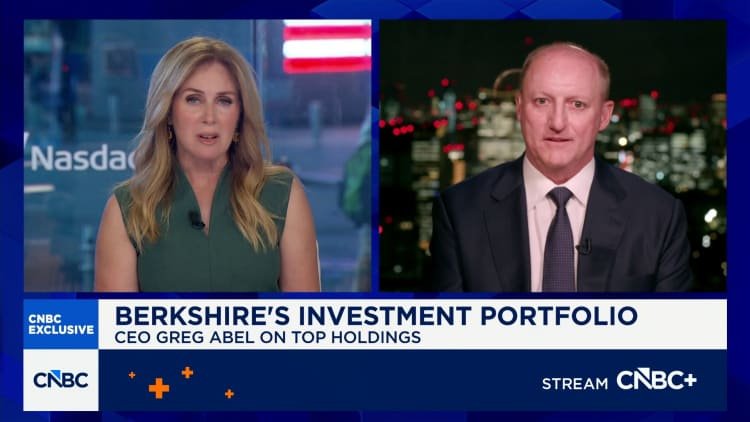
On the investment side, Abel pointed to Berkshire’s roughly $36 billion position in Alphabet, the parent of Google, a stake originally built by Warren Buffett last year. From what Berkshire’s own operating companies were experiencing, Abel said he and Buffett could see AI was “going to have a significant impact on America and businesses” — and that made Alphabet stand out. “We saw Google as a significant player,” he said.
That conviction led to a larger move this spring. Berkshire bought $10 billion of Alphabet stock directly from the company, part of an $80 billion capital raise meant to fund what Alphabet described as AI compute infrastructure to meet “unprecedented customer demand.” Abel recalled getting a call on a Sunday morning in late May, with the offer to participate in the offering. They hadn’t set the size, he said, but recommended Berkshire consider $10 billion.
Abel’s response was quick. “Very much consistent with how we manage Berkshire,” he said, he called Buffett to flag the chance to “continue to invest in Google … with a significant block.” The two were “comfortable” with the $10 billion purchase at a 6.5% discount, and the deal was done.
Community pushback on data centers
Abel also acknowledged a growing headache for the AI boom: local opposition to new data center construction.
“There is a lot more pushback in the communities across the U.S.,” he said. Abel argued that companies building these facilities need to “seriously evaluate” how communities respond and work to ease concerns — using technology that minimizes water use, for example.
He pointed to Iowa, where Berkshire runs a substantial utility operation, as a case study in how data centers can win over locals. There, he said, the facilities have provided “very, very substantial” tax relief for residents while supporting services like schools, police and fire departments. A data center, in his view, has to become a “welcomed member of the community.”
Japan, homebuilders and a glass half full
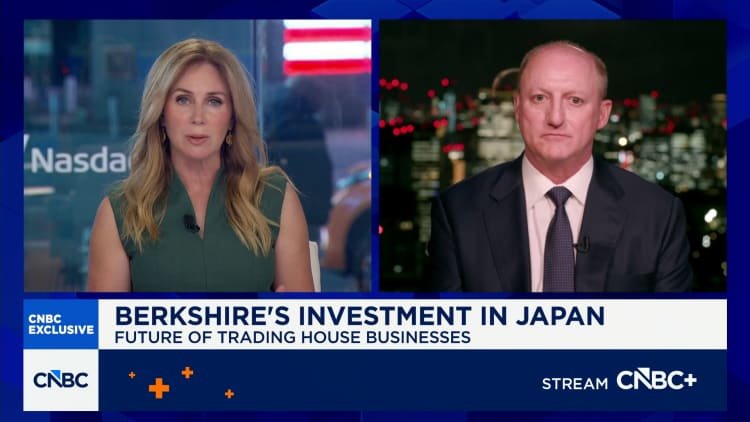
The interview came from Japan, where Abel was visiting Tungaloy, a Berkshire tool-making unit near Fukushima, and meeting with executives from the five Japanese trading houses Berkshire has invested in since 2020: Itochu, Marubeni, Mitsubishi, Mitsui and Sumitomo. Berkshire now owns more than 10% of each.
None of the trading house executives cited rising Japanese interest rates as a “fundamental challenge right now,” Abel said, despite the country’s 10-year government bond recently climbing above 3% for the first time in three decades. He noted rates in Japan are “still relatively modest” compared with the U.S., where the 10-year yield sits near 4.8%.
Abel said Berkshire will keep issuing yen-denominated bonds as needed to fund future Japanese investments and expects to hold its trading house positions “for many decades,” describing his latest talks as “just exceptional.” He declined to comment on speculation that Berkshire might team up with Tokio Marine — in which it bought a roughly 2.5% stake for $1.8 billion in March — on a major international deal. The partnership, he said, is “very broad,” with “no obligation to act on it.” But if a transaction made sense for both sides, “of course, we’d love to pursue” it.
On U.S. housing, Abel didn’t sugarcoat the near term, saying he doesn’t see “any type of immediate recovery” for homebuilders and expects “a bumpy road for a while.” But he’s optimistic about Berkshire’s newly acquired Taylor Morrison over the long run, calling it a “very strong asset” in five to ten years because “the American dream will continue to exist.”
The full interview, which ran about 22 minutes, is available for CNBC Pro subscribers.
Source: www.cnbc.com — https://www.cnbc.com/2026/09/05/abel-two-ways-berkshire-hopes-in-cash-in-on-ai.html
This article is for informational purposes only and does not constitute financial, investment, tax, or legal advice. Do your own research and consult a licensed professional before making financial decisions.