Iranian President Masoud Pezeshkian used a visit to India to deliver a defiant message to Washington, saying his country has withstood military pressure from the U.S. and Israel and has no intention of backing down, CNBC reported.
Speaking late Friday to a gathering of Indian religious leaders in New Delhi, Pezeshkian said Iran had “successfully stood against Israel and the U.S.” and would not yield “in front of bullying arrogance,” framing his country’s position as a matter of seeking truth and justice.
The remarks landed just ahead of the BRICS Summit hosted by India over the weekend, and followed comments from U.S. President Donald Trump, who argued that Iran would have overrun Israel and the wider Middle East — and struck American cities — had Washington not taken military action. Trump said Thursday that he would make the same decision again if given the choice.
Shipping lifeline under strain
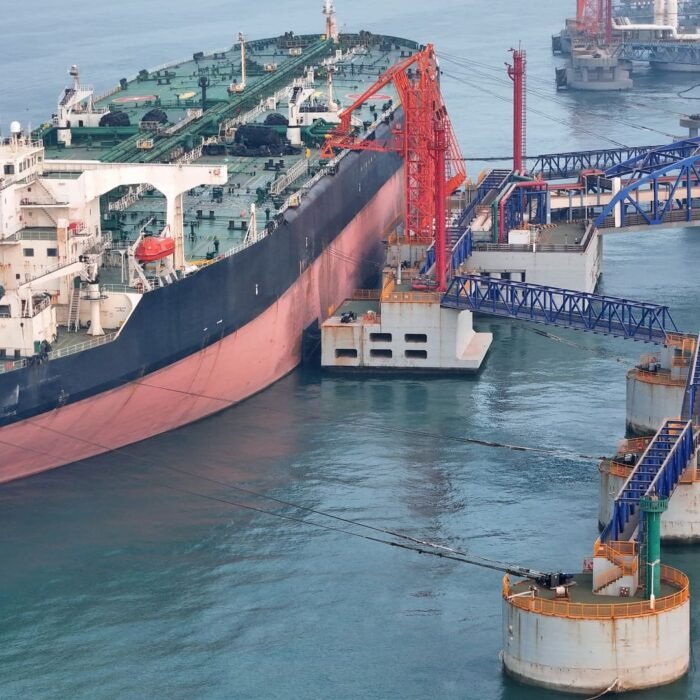
For energy traders, the rhetoric matters less than the waterway between Iran and Oman. Shipments of oil and other cargoes through the Strait of Hormuz have slowed to a trickle since the U.S. and Israel began their war on Iran on Feb. 28, leaving vessels and their crews stranded for weeks or months at a time. The chokepoint normally carries a substantial share of the world’s seaborne crude, making its partial closure a direct threat to global supply.
Crude prices have surged this month as fighting between Washington and Tehran intensified. That is unwelcome news for import-dependent economies, and few are more exposed than India.
The world’s fastest-growing major economy buys nearly 85% of its fuel from abroad and leans on the supply chain running through Hormuz, leaving it among the countries most vulnerable to the disruption. Rising energy costs feed directly into inflation and the broader cost of doing business in a country that has been a bright spot for global growth.
Modi presses for dialogue
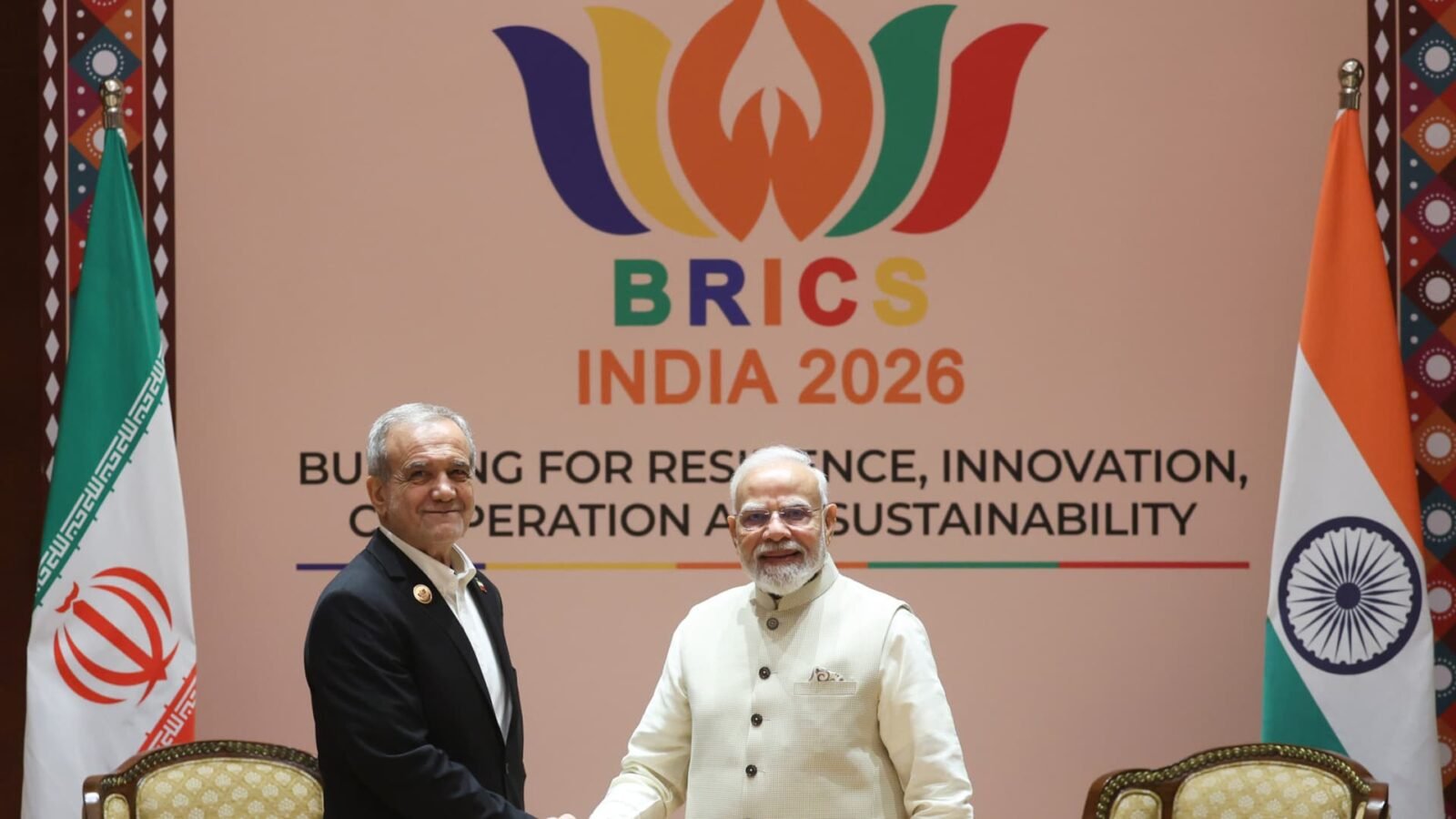
Pezeshkian met Indian Prime Minister Narendra Modi on Friday during his first visit to India. According to CNBC, Modi raised concerns about the safety of seafarers and stressed the need for peace, freedom of navigation and unimpeded commerce. He repeated his call for the Middle East conflict to be settled through “dialogue and diplomacy.”
The human toll on Indian shipping crews has been severe. In July, two vessels carrying a combined 30 Indian seafarers were attacked while transiting the strait, and the Indian government says 10 seafarers have lost their lives in the conflict.
The two leaders were photographed warmly clasping hands as they left the BRICS Business Forum on Friday. Iran’s embassy in India seized on the image, posting on X that when the leaders of two great nations join hands, it recalls the historic friendship between two great civilizations.
A delicate balancing act
The warm optics sit awkwardly alongside the strategic reality. India has long maintained ties with both Iran and Israel and has avoided taking sides in the conflict, a position that becomes harder to hold as the war drags on and its energy bill mounts.
For markets, the near-term question is whether the Strait of Hormuz reopens enough to relieve pressure on crude benchmarks, or whether the standoff between Washington and Tehran keeps tightening the flow of tankers through one of the world’s most consequential waterways. Pezeshkian’s speech, and Trump’s rejoinder, suggest neither side is looking for an off-ramp just yet.
Source: www.cnbc.com — https://www.cnbc.com/2026/09/12/iran-us-israel-war-india-brics.html
This article is for informational purposes only and does not constitute financial, investment, tax, or legal advice. Do your own research and consult a licensed professional before making financial decisions.