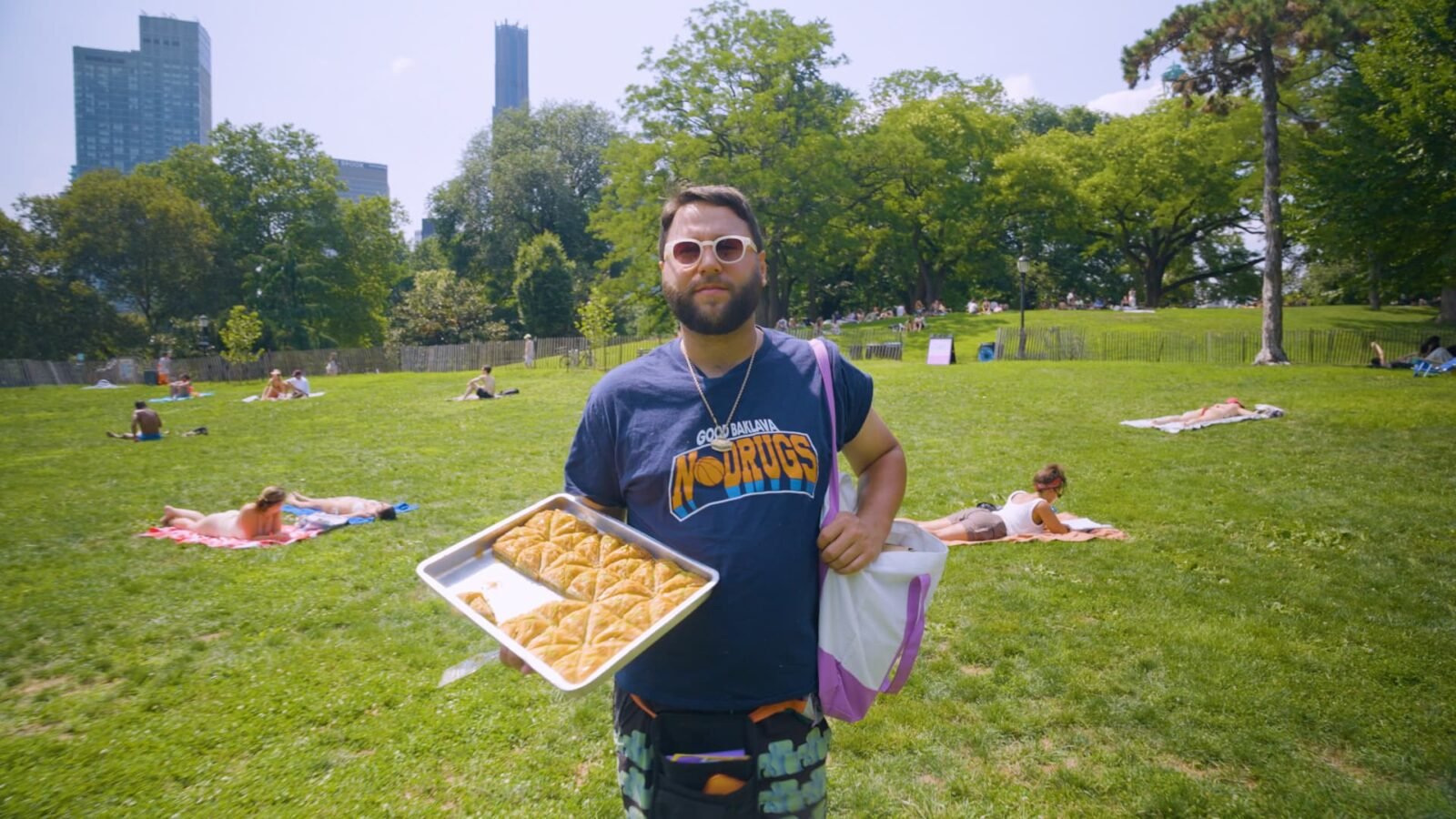
Jacob Komarow has no storefront, no concession permits in most of the places he sells, and a resume that includes dropping out of high school and a years-long struggle with addiction. What he does have is a van, a Shopify site, an imported supply of Turkish baklava, and a nickname that has become recognizable across New York City.
Komarow, 30, runs Good Baklava, a roaming pastry business he has operated for five years under the professional name Roy Donk. He sells trays of baklava from city parks, music festivals, temporary stands, the back of a van, and online. According to documents reviewed by CNBC Make It, the business averaged just over $20,000 in monthly sales across a recent nine-month stretch, drawing on street sales, occasional pop-ups, a wholesale operation supplying local cafes and shops, and online orders.
From Phish Lot to Full-Time Business
The venture started as something close to a joke. In September 2021, on his way to a Phish concert in California, Komarow stopped at a Middle Eastern grocery store and bought three trays of pre-made baklava on a whim, intending to resell them to other concert-goers for extra cash. A skeptical friend doubted he could turn a profit; Komarow says he ended up tripling his money.
The timing was less whimsical than it looked. Komarow says he was six months sober at the time and had just lost what he describes as his first real job, in online marketing for an apparel company. Freelance marketing work kept him afloat while he sold baklava at Phish shows for nearly three years before widening his reach to other outdoor events. He says he is now more than five years sober and grateful to be living in recovery.
A pistachio-laden piece of baklava from a Turkish vendor in Paterson, New Jersey, in spring 2022 proved the real turning point. Komarow says the bite left him mind blown. He bought in bulk from that vendor before eventually earning an introduction to the supplier itself, a commercial bakery in Turkey that now ships him unbaked trays monthly.
The Knicks, the Times, and a ‘Baklava Wildfire’
Komarow credits the New York Knicks’ championship run with accelerating everything. Throughout May and June, he stationed himself outside Madison Square Garden, handing out free slices to celebrating fans. Videos of those appearances went viral, and the resulting attention landed him a profile in The New York Times that, in his words, started a baklava wildfire.
Brands began reaching out to partner, he says, and Good Baklava has since worked with companies including US Mobile and Acme Smoked Fish, along with restaurants locally and nationally. Komarow told CNBC Make It that the Instagram audience grew by 20% overnight after the Times piece ran, and that the recognition was what the company had been chasing for five years simply by showing up and celebrating with New York. He doubts the business could have survived anywhere but New York City.
The financial picture is lumpier than the monthly average suggests. December 2025 was Good Baklava’s best month, at nearly $70,000, helped by holiday orders and steady foot traffic at a temporary stall in the Union Square Holiday Market. The following month brought under $10,000 in sales. Since the Knicks run and the June Times article, Komarow says revenue has consistently been at least $20,000 a month — the baseline that gives him confidence he could begin paying himself roughly $4,000 a month by the end of 2026, which would be the first salary he has drawn from the business.
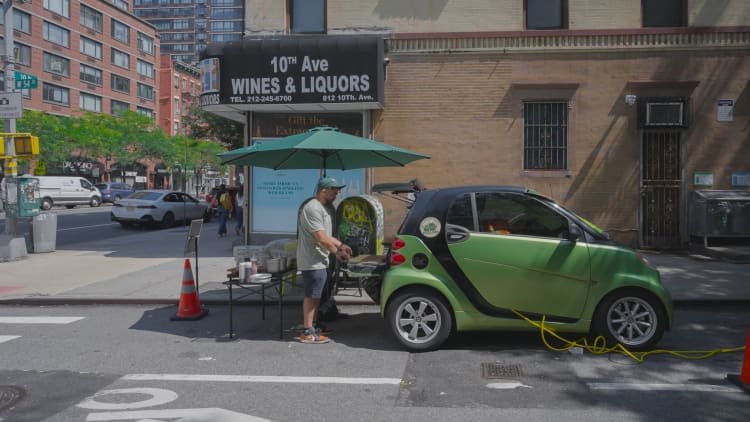
Costs include supplier payments and shipping, packaging, marketing, Shopify fees, and a roster of about 11 part-time workers who handle marketing, administrative tasks, packing, and pop-up counters as needed. The holiday market booth carried added permit and insurance expenses. Otherwise, Komarow says he sells without official city concessions permits and takes his chances, occasionally getting moved along by police but never, he says, arrested or fined.
He describes the product as distinct from the Greek style many Americans know: finely crushed pistachios and a light, lemony syrup rather than walnuts and honey, with 40 layers of dough that move from crispy to soft as they are bitten through.
Komarow now weighs corporate collaborations, special events, and more pop-ups, and has considered bringing in investors for a brick-and-mortar shop — though he is wary of losing the spontaneity that got him here. His sales approach, honed over five years, stays constant regardless of location: walk up to strangers with a fresh tray, flash the baklava tattoo he added to his arm in April 2022, and ask a simple question about whether he can try to sell them some baklava.
Source: www.cnbc.com — https://www.cnbc.com/2026/09/11/nycs-baklava-guy-brings-in-20k/month-selling-turkish-pastries.html
This article is for informational purposes only and does not constitute financial, investment, tax, or legal advice. Do your own research and consult a licensed professional before making financial decisions.