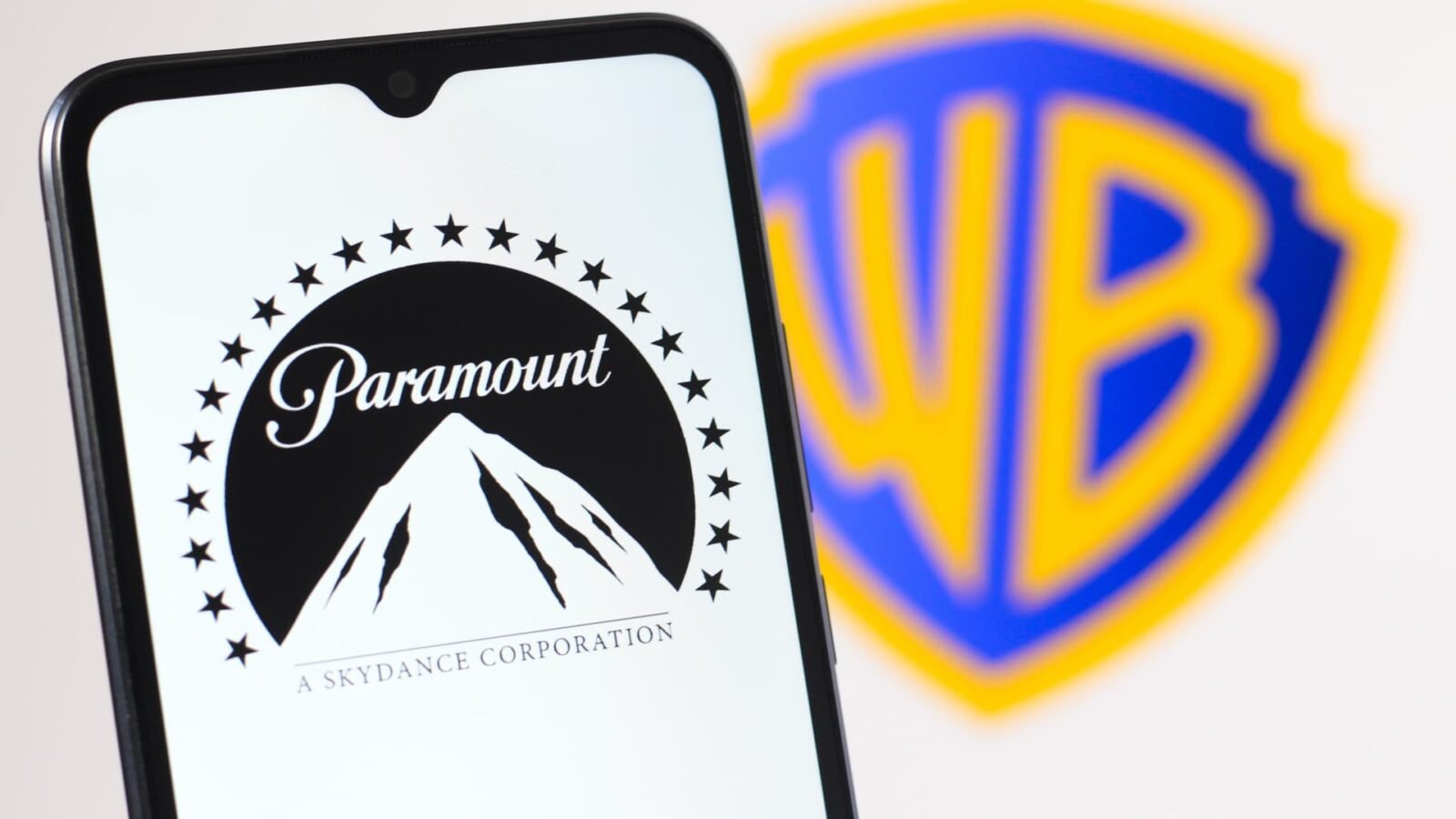
The long-awaited revival of media megadeals may be cooling fast. Industry insiders now point to the delayed $110 billion Paramount Skydance-Warner Bros. Discovery acquisition as a major reason, according to a CNBC report.
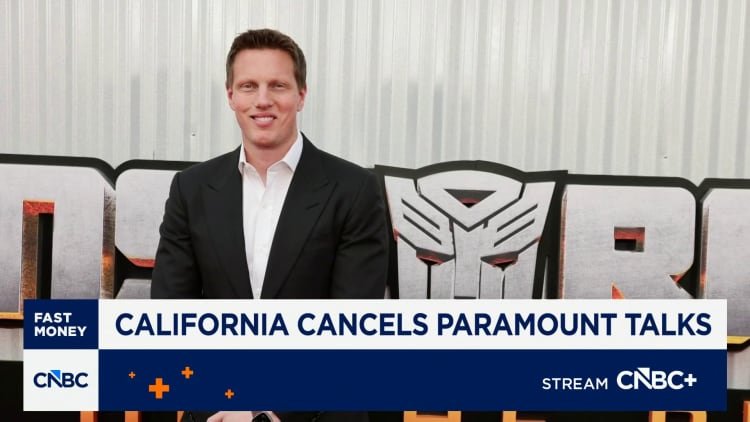
Last month, Paramount agreed to postpone its tie-up with WBD until as late as June 2027 — roughly nine months past its original planned closing — while an antitrust challenge from a group of state attorneys general heads to trial. The New York Times recently reported that Paramount and California Attorney General Rob Bonta, who is leading the challenge, would begin preliminary settlement talks, but those talks were quickly called off, per the paper.
The deal had already cleared global regulators, including the U.S. Department of Justice’s Antitrust Division.
Now media executives say the specter of state-level scrutiny and a monthslong legal slog could derail more than just Paramount’s megamerger.
“It feels like the landscape has shifted significantly in the last few weeks around larger deals and combinations,” said Jonathan Miller, CEO of Integrated Media. “I think we’re going to see a lull in deals.”
Regulatory whiplash
What once felt like a merger-friendly environment during President Donald Trump’s second term now feels hampered by the threat that states could take up the regulatory baton.
U.S. companies have inked just over 7,500 deals so far this year through Aug. 20, up from 7,015 during the same period last year, according to Dealogic. Collective deal value is up considerably too, as more megadeals get across the finish line.
Media companies have been eager to join the action as they seek to cut costs and add scale amid the bleed of pay TV subscribers. Besides Paramount’s takeover of WBD — itself announced months after David Ellison’s Skydance completed its acquisition of Paramount — the industry has seen a flurry of combinations, spinoffs and partnerships worth tens of billions of dollars in media market cap.
Fox Corp. plans to acquire Roku for $22 billion. Comcast, after separating its cable networks into Versant, is planning to spin off NBCUniversal, which recently struck a partnership between Peacock and YouTube. Netflix, long a builder rather than buyer, has also come to the negotiating table.
Fox-Roku in the crosshairs
The future of Fox and Roku’s marriage has been called into question in a recent analyst note, despite the transaction having relatively fewer antitrust concerns than Paramount-WBD.
Bernstein analysts flagged a “regulatory timing risk, particularly given the ongoing PSKY-WBD process.” While they don’t view the Roku transaction as creating meaningful horizontal or vertical concentration concerns, they noted that “current regulatory developments for [the] PSKY-WBD process indicate that transaction timing can be unpredictable even when the underlying antitrust arguments appear relatively weak.”
The Fox-Roku deal is expected to close in the first half of 2027.
A similar dynamic is playing out with broadcast station owners, CNBC previously reported. Nexstar Media Group’s $6.2 billion acquisition of Tegna closed in March, but a group of state attorneys general sued to unwind it. A trial is slated for next year.
NBCUniversal spinoff on hold
Comcast’s planned separation of NBCUniversal — expected to complete next summer — initially raised hopes of more M&A once the two entities trade independently. But executives at both companies are likely to avoid M&A discussions until the Paramount-WBD process is resolved, according to people familiar with the matter.
Internal discussions at NBCUniversal have revolved around partnerships, bundles and similar opportunities with media and tech companies, not M&A, though minority-stake opportunities could be on the table, two of the people said.
Incoming Comcast CEO Michael Angelakis, known as a dealmaker, said during an investor call he believed Comcast had the scale to compete but didn’t dismiss future M&A. While a much-speculated combination with Charter Communications doesn’t appear to be in the cards, other broadband and tech opportunities could be attractive, one of the people said.
If the Paramount-WBD deal gets blocked by the state AGs, NBCU — which has a similar portfolio of linear TV, film and streaming — could look less appealing to would-be suitors, the report noted.
Partnerships over purchases
A stall on media M&A could spur an uptick in partnerships and bundles, Integrated Media’s Miller said. NBCUniversal’s Peacock deal with YouTube, which ingests NBCU content for YouTube Premium subscribers, could serve as a model.
Streaming bundles are already common: Peacock and Apple TV offer bundled plans, Disney bundles Disney+, ESPN and Hulu, and Fox One and ESPN offer a separate bundle. NBCUniversal has had conversations with various media players about similar bundles and content partnerships, according to one person familiar.
Media companies are also likely to focus on deals with content creators and for intellectual property to bulk up their platforms and attract younger viewers.
Costly delay
One thing is certain: Ellison’s Paramount won’t merge with WBD as easily as planned. Both Ellison and WBD CEO David Zaslav have voiced confidence in the deal, but the delay carries a price.
Under the agreement, Paramount will owe WBD shareholders a “ticking fee” beginning Sept. 30, potentially around $650 million in cash value per quarter. Paramount last week filed to compel the suing states to post a $1.88 billion bond to cover the fee and other delay costs.
“The market-definition fight just got a price tag,” said Mike Proulx, vice president and research director at Forrester. “A March 2027 trial date turns what had been an abstract antitrust debate into a potential billion-dollar delay cost before the court even rules. The deal may still close, but the clean-close scenario is now gone.”
Source: www.cnbc.com — https://www.cnbc.com/2026/08/24/paramount-wbd-antitrust-media-deals.html
This article is for informational purposes only and does not constitute financial, investment, tax, or legal advice. Do your own research and consult a licensed professional before making financial decisions.