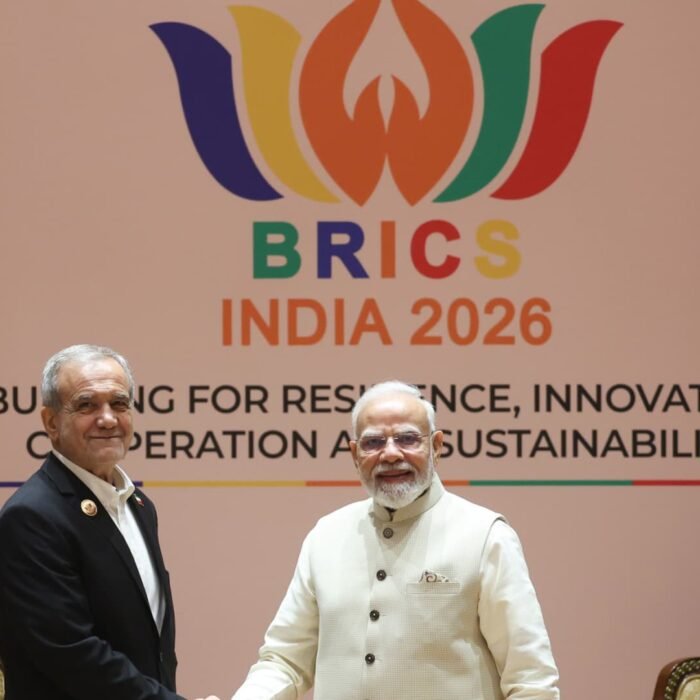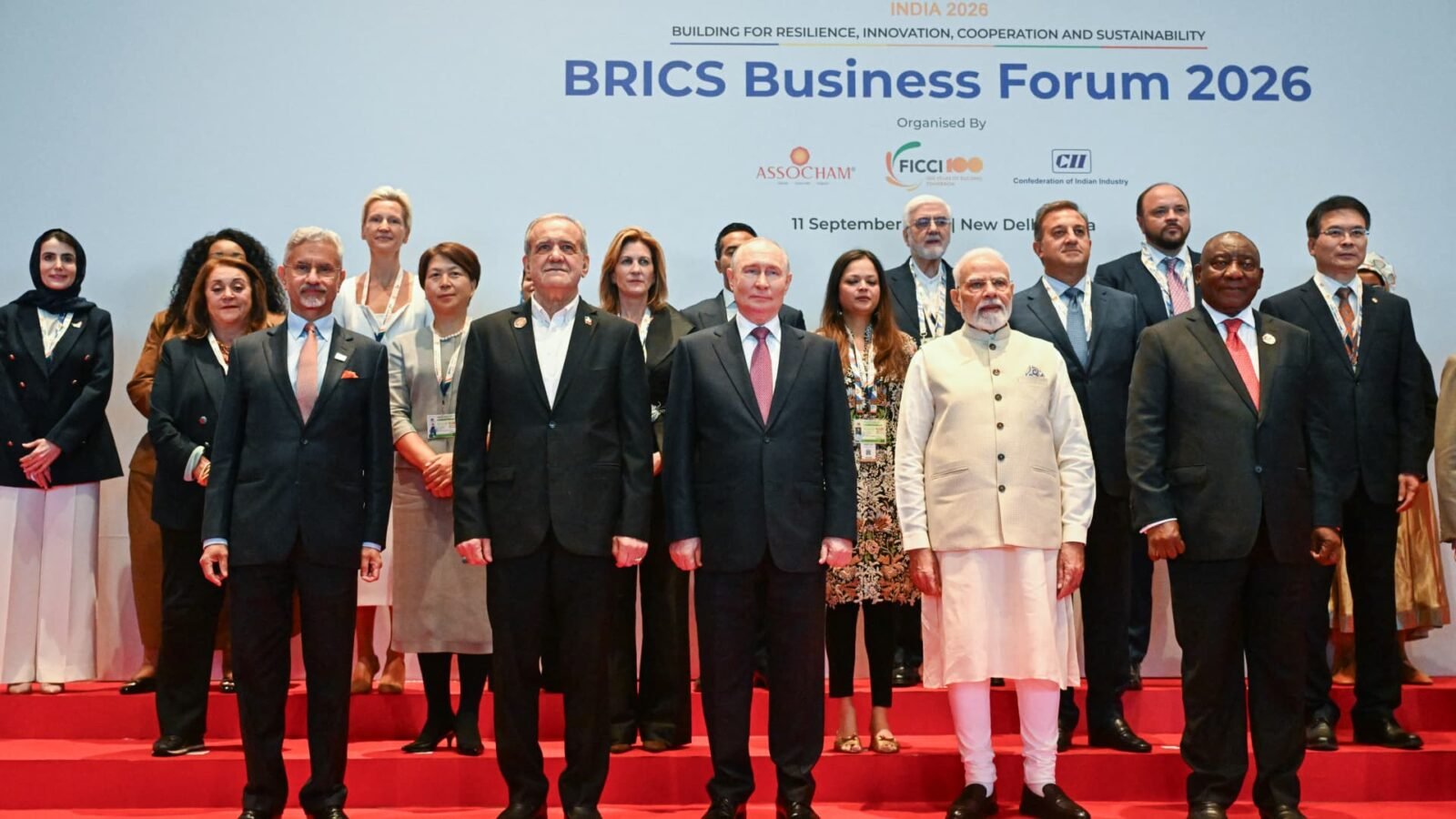
Iranian President Masoud Pezeshkian and Russian President Vladimir Putin used the BRICS Business Forum in New Delhi on Friday to assail Western sanctions on their economies and press the bloc’s members to trade more with one another, CNBC reported.
Pezeshkian called on BRICS to build a system in which no single country could cut off another’s legitimate trade by monopolizing a financial instrument or a technology, according to his remarks at the forum. The group, which has positioned itself as a vehicle for the Global South, should widen the use of member nations’ own currencies in cross-border transactions, he said.
The Iranian president said pressure on Tehran had moved into a “dangerous phase,” describing a shift from sanctions toward military action by the U.S. and Israel. He added that the war’s effects were not confined to Iran, spilling into regional and global stability.
Energy markets take the hit
The fighting has already reshaped fuel markets. U.S. diesel prices reached $6 per gallon on Friday for the first time ever, as supply disruptions tied to the wars in Ukraine and Iran drove up transportation costs across the economy.
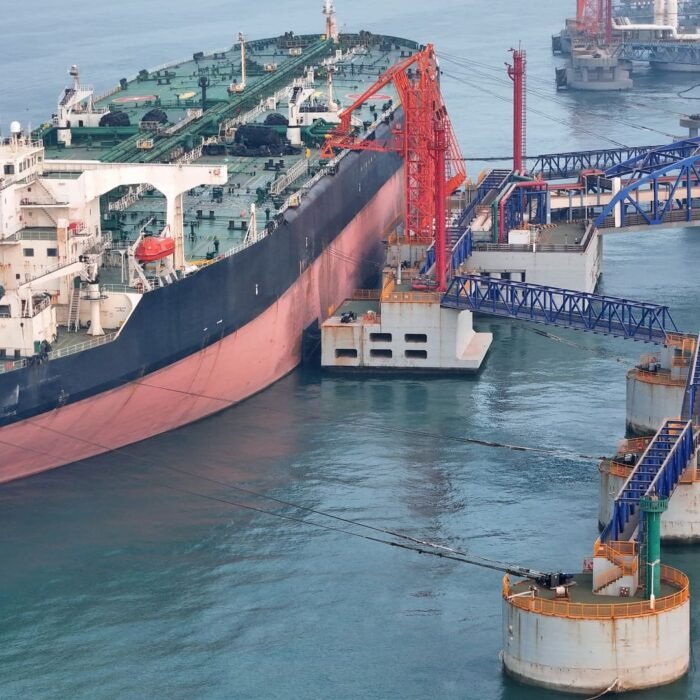
Global energy prices have climbed sharply since the Iran war began, with shipping through the Strait of Hormuz — a critical artery for Middle Eastern crude and gas — severely disrupted. U.S. crude futures topped $100 a barrel on Thursday, the first time since May, following a steep escalation in U.S.-Iran hostilities this month.
Pezeshkian framed the stakes in broader terms. Food and energy security, he said, are two fundamental pillars of economic security, and Iran — with its large energy reserves — stands ready to act as a strategic partner.
Putin counts the sanctions
Russia faces its own extensive Western penalties over the war in Ukraine, and Moscow resumed airstrikes on major Ukrainian cities after a brief pause during a weekend visit by U.S. peace negotiators.
President Donald Trump said Wednesday that a swift end to the Ukraine war could open the door to fully restoring trade and economic ties between Washington and Moscow. Putin, speaking Friday, showed little appetite for conciliation, portraying the sanctions as a tool of competitive protection.
More than 30,000 sanctions have been imposed on Russia, Putin said — twice the number leveled against all other countries in the world combined. He argued that nations dealing with industrial decline and budget deficits were using sanctions against Russia and Iran to defend their own competitive edge.
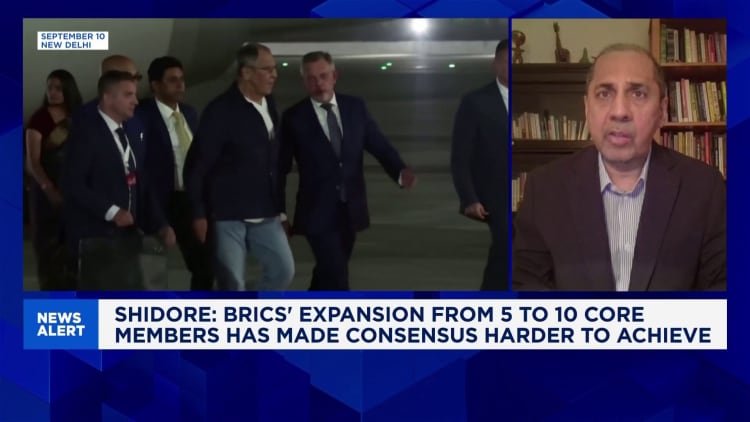
Putin also offered a statistic meant to underscore the bloc’s rising weight: over the past five years, he said, BRICS countries produced more than 40% of the world’s incremental GDP, while the G7 accounted for 29%.
He described BRICS as a resilient and viable platform for global growth and said Moscow wants to pursue promising initiatives in tourism, trade and private-sector investment with partners across the Global South.
The forum remarks land at a moment when the economic cost of the conflicts is visible in everyday prices, from the fuel pump to freight bills, giving both leaders a concrete argument as they court Global South economies skeptical of the Western financial order.
Source: www.cnbc.com — https://www.cnbc.com/2026/09/11/iran-russia-brics-sanctions-energy.html
This article is for informational purposes only and does not constitute financial, investment, tax, or legal advice. Do your own research and consult a licensed professional before making financial decisions.