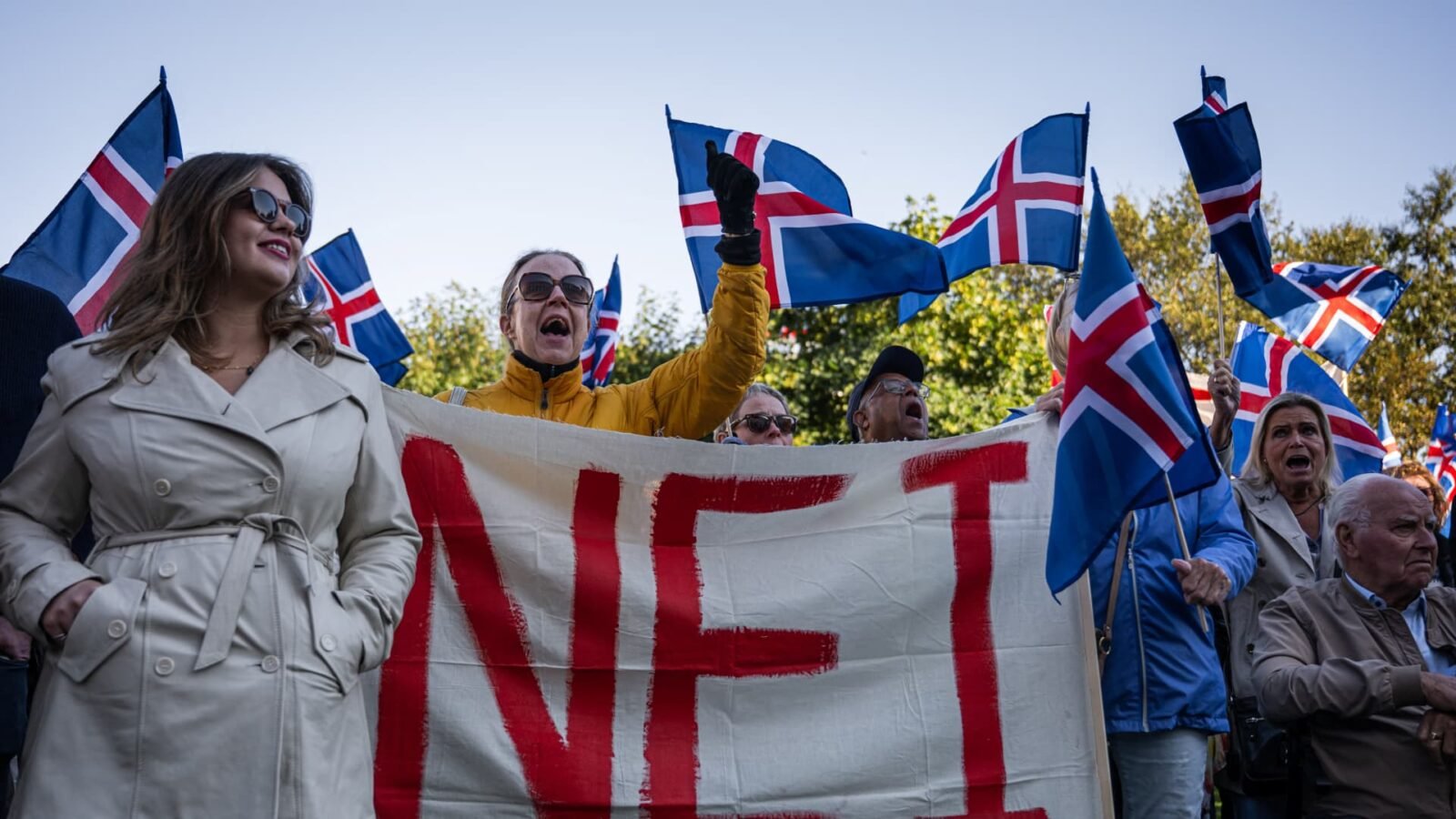
Icelanders have voted to reject resuming talks on joining the European Union, according to broadcaster RUV, with concerns about control over the country’s fishing industry and national identity outweighing debates over Arctic security.
The referendum asked the Nordic nation of nearly 400,000 people whether the government should relaunch accession negotiations with the EU. If the “yes” side had won, any negotiated agreement would have gone to a second referendum for final approval.
RUV reported that 52.8% of voters opposed reopening talks, while 47.2% backed the proposal.
Fisheries and sovereignty at the core
The result underscored the enduring power of Iceland’s fishing industry in shaping national identity, even as its economic weight has declined over the decades. Marine products and farmed fish accounted for nearly 47% of Iceland’s exports between August 2025 and July 2026, according to Statistics Iceland.
But the sector’s role in the broader economy has shrunk markedly. Production fell from a peak of 2.2 million tons in 1997 to 1.1 million tons in 2024, World Bank data shows. Agriculture, forestry and fishing contributed 9.1% of GDP in 1995, but only 3.7% by 2025, as manufacturing and services expanded.
Eiríkur Bergmann, professor of politics at Bifröst University, said the “No” side succeeded by tapping into a deep-seated demand for self-governance.
“This is inextricably linked to control over natural resources and fisheries, which forms the very heart of the Icelandic understanding of sovereignty,” he said.
Geopolitical backdrop
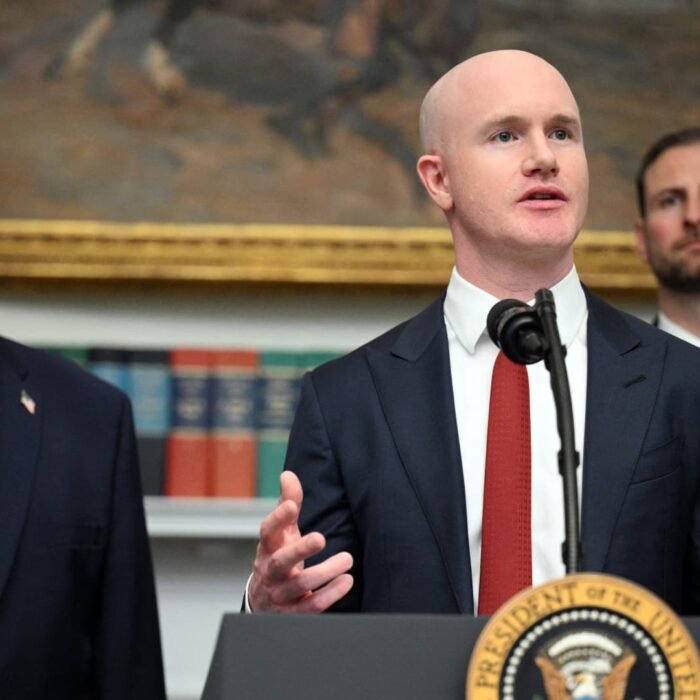
The vote took place against a shifting security landscape in the North Atlantic, with U.S. President Donald Trump’s interest in Greenland raising questions about Arctic governance. Trump has repeatedly argued for U.S. control over Greenland on national security grounds, and earlier this year appeared to mix up Greenland and Iceland during an address at the World Economic Forum in Davos, Switzerland.
Iceland, a founding member of NATO, is the only ally without its own military forces. It sits astride the GIUK Gap, a naval choke point between Greenland, Iceland and the U.K. that links the Arctic to the Atlantic Ocean.
Despite these pressures, Bergmann said global realities never fully penetrated the public debate.
“What is perhaps most striking about this referendum is that despite the profound geopolitical upheaval around us – including rapidly shifting security paradigms in the North Atlantic – these global realities never really filtered properly through into the public debate,” he said.
The “Yes” campaign, he added, “ran a highly technical and, frankly, passionless campaign.”
A history of stop-start EU relations
Iceland first applied to join the EU in 2009, following the global financial crisis. A euroskeptic government suspended negotiations in 2013, and the process was formally ended in 2015.
The country is already deeply integrated with Europe through its membership of the European Economic Area, which grants access to the EU’s single market without full membership, and the Schengen Area, allowing passport-free travel.
At the start of the year, Foreign Minister Thorgerdur Gunnarsdottir said closer collaboration with the EU would be key to protecting Iceland’s interests.
“It is clear that the international system we have lived in since the end of World War II is in turmoil,” she wrote in an article for Icelandic newspaper Visir, according to a Google translation.
Source: www.cnbc.com — https://www.cnbc.com/2026/08/30/iceland-eu-accession-referendum-result.html
This article is for informational purposes only and does not constitute financial, investment, tax, or legal advice. Do your own research and consult a licensed professional before making financial decisions.