The far-right Alternative for Germany (AfD) secured a landslide victory in the eastern state of Saxony-Anhalt over the weekend, a result that is sending shockwaves through Europe and heaping pressure on Chancellor Friedrich Merz’s federal government.
According to preliminary results, the AfD took 43.8% of the vote, far ahead of the 17.2% won by the Christian Democratic Union (CDU) — the party that leads the national coalition under Merz. The AfD is set to take 39 of the 83 seats in the state parliament, three short of an outright majority and leaving its ability to form a government uncertain.
Germany’s political “firewall” has long prevented other parties from cooperating with the far-right in a way that would grant it power. But AfD candidate Ulrich Siegmund said on Monday that the party would hold talks with “individual parliamentary groups or individual MPs” to see if they would back it in governing.
Speaking at a press conference, Merz acknowledged the election showed the need for reform but insisted Germany’s “institutions were resilient and stable.” His remarks were directed at allies abroad, according to a Reuters report, with Merz saying: “This message is also directed at our friends in Europe and across the globe.”
Mujtaba Rahman, managing director for Europe at consultancy Eurasia Group, called the result “extraordinary” and potentially the “most consequential German state-election result of the postwar era.”
A historic breakthrough
While the AfD has grown steadily in popularity for years, especially in eastern Germany, this outcome raises the prospect of the hard right taking power in a German state for the first time since the Nazi era.
At the state level, the party has pledged a stringently anti-refugee and anti-migrant agenda, including accelerating deportations and separating refugee children into different classrooms. It has also floated incentives for small and medium-sized enterprises to adopt AI rather than hire migrant workers, alongside financial incentives for families to have more children.
Rahman noted that voters seeking “a genuinely radical break” turned to the AfD, while liberal and left-wing voters swung to the Greens and the Social Democratic Party (SPD). The CDU, he said, was squeezed from both sides. If that dynamic persists, he warned, upcoming elections in Mecklenburg-Western Pomerania and Berlin could turn “a regional earthquake into a rolling national crisis.”
Economic roots of discontent
Saxony-Anhalt, a traditional hub for Germany’s chemicals and motor-supply industries, has “suffered disproportionately” from the post-unification collapse of East German industry and recent spikes in energy prices, said Holger Schmieding, chief economist at Berenberg, in a Monday note.
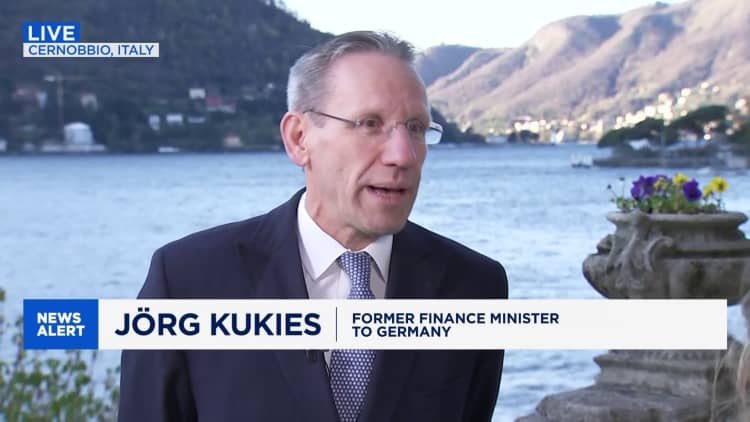
The electoral race was dominated by questions over the future of German industry, innovation, and welfare, former CDU Economics Minister Peter Altmaier told CNBC. Although it was a state election, Altmaier said dissatisfaction with national-level answers to those questions contributed heavily to the result.
The public is “furious” and turning to challenger parties on both extremes after five years of economic stagnation and weak job creation, Altmaier said. “We expected the worst, but this result yesterday night was a kind of disaster … and of course it will affect political debates across the country and upcoming state elections in other states.”
“Saxony-Anhalt is one of the smallest states, of course, and German democracy is strong and resilient,” he added. “But this is unprecedented, and it will be a matter of concern not only for us but also for our neighbors in Europe.”
Limited market reaction, but risks remain
Polish and French ministers, who face their own far-right challenges, called the German result worrying, according to local media reports.
Economists largely expect the state result alone to be insufficient to derail Germany’s planned increases in defense and infrastructure spending, or the package of unpopular cuts and pro-growth reforms set for this fall. These include pension savings, tax and health-care reforms, bureaucracy reduction, and higher defense and infrastructure outlays.
Schmieding argued that avoiding reforms to strengthen Germany’s growth potential “would likely be even worse for the outlook for the coalition parties in the long run.” He also said it seemed “more likely than not” that Merz’s coalition would “soldier on” until its term ends in early 2029 — but largely because there is no obvious alternative. The result remains a “huge blow” to the chancellor and adds to the risk of the government falling apart, Schmieding observed.
German markets were calm on Monday, with bund yields slightly higher in line with the rest of Europe. But George Lagarias, chief economist at Forvis Mazars, cautioned that the risk in Saxony and across Germany is “a loss of centrist consensus which could hamstring decision-making and exacerbate present economic dislocations.”
He added that rising debt for defense, challenges to the export-driven model, and geopolitical upheaval could eventually challenge Bunds’ status as Europe’s risk-free asset. “As it sits at the heart of the euro zone, worries over the German economy could reverberate across Europe,” Lagarias told CNBC. “We are not there yet. But we shouldn’t be completely comforted by the mild initial reaction as a proof of long-term stability either.”
Source: www.cnbc.com — https://www.cnbc.com/2026/09/07/afd-germany-economy-merz.html
This article is for informational purposes only and does not constitute financial, investment, tax, or legal advice. Do your own research and consult a licensed professional before making financial decisions.