For years, China was a growth engine for American brands, a market of 1.4 billion people that seemed to offer endless opportunity. But that narrative is shifting. A growing number of U.S. consumer companies — including Nike, Starbucks, Estée Lauder and General Motors — are seeing their influence in China dwindle, according to a CNBC report.
The reasons are complex: rising geopolitical tensions, a surge in domestic competition, and a widening disconnect between global brands and Chinese consumers. Aaron Cheris, head of global retail practice at Bain & Company, told CNBC that many American companies never fully adapted to the local market.
“China is such a big market. The numbers are so big so quickly when you talk about China that sort of everybody has wanted to try, and that’s why all brands went there,” Cheris said. “If anything, the question isn’t what’s going wrong in China — it’s why isn’t that happening in the rest of the world.”
Cheris argued that price premiums for American products are often hard to justify for Chinese consumers, while domestic brands have faster innovation cycles and better local distribution. “We’re just not nearly as developed. Our brands don’t necessarily think and develop quite in the same way,” he said.
The political backdrop hasn’t helped. Escalating U.S.-China tensions, including President Donald Trump’s tariff policies, have coincided with a rise in Chinese consumer pride in domestic brands. Some local companies have disrupted entire industries, resetting innovation cycles and triggering price wars.
Yet not all U.S. brands are struggling. Lululemon, Ralph Lauren and Kentucky Fried Chicken have found success in China, a difference Cheris attributes to “the basics” of their strategies.
“Am I coming in with a good value? Did I have a compelling product that felt locally relevant? Am I advertising and making it available in the channels and stores that are winning in that market?” he said. “It really is a blocking and tackling and running your brand right kind of story.”
Nike’s China slide
Nike has been one of the biggest casualties. The sneaker giant’s China business has shrunk 30% since 2021, with annual revenue hitting its lowest level in eight years this spring. Once Nike’s fastest-growing region, China now sees shoppers gravitating toward domestic brands. Nike has been overhauling its distribution model in the country, but recovery remains uncertain.
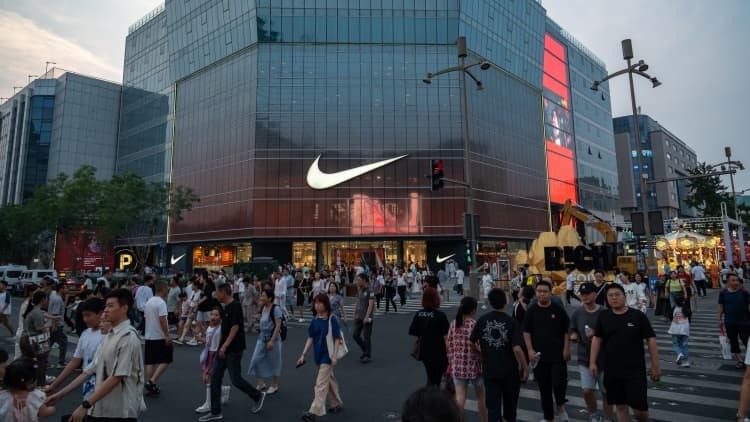
On its most recent earnings call in June, outgoing CFO Matt Friend said he couldn’t determine when the China business would return to growth. Yaling Jiang, founder of consumer research firm ApertureChina, previously told CNBC that Nike has “just become irrelevant” in China, even as Adidas gains traction. This comes despite a broader sports renaissance in China — the country’s sportswear market has more than doubled over the past decade, according to GlobalData.
Starbucks, Estée Lauder, Gap struggle
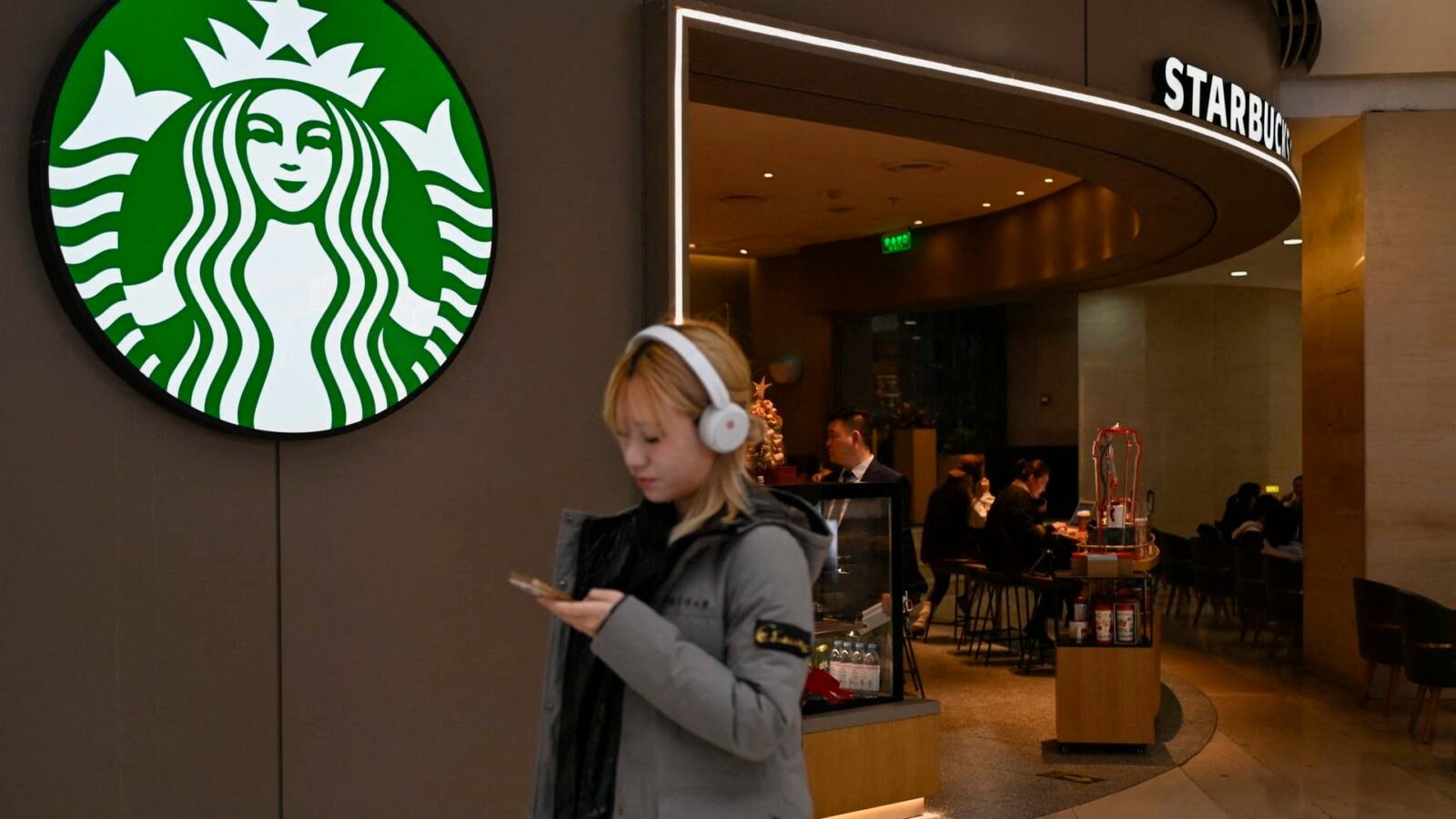
Starbucks entered mainland China in 1999 and made it its second-largest market by 2015. But the pandemic sparked a downturn, and Chinese consumers began seeking out lower-priced local alternatives. Luckin Coffee now has more than three times the number of Starbucks stores in China and sells drinks at steep discounts.
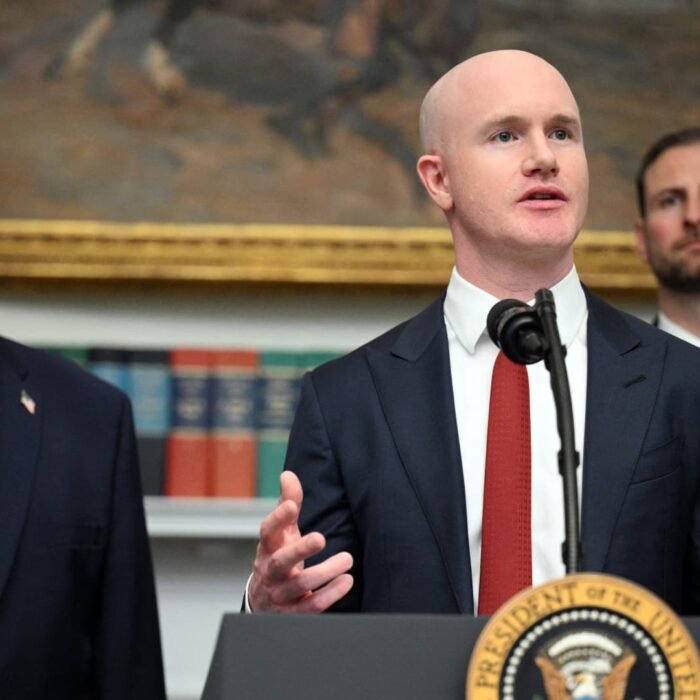
In response, Starbucks CEO Brian Niccol created a joint venture with Boyu Capital to run the China business. Boyu holds a roughly 60% stake and aims to use local expertise to revive sales.
Estée Lauder has also faced headwinds, with CEO Stéphane de La Faverie saying in early June he didn’t expect China to return to double-digit growth soon. However, on an earnings call on Wednesday, he noted net sales growth in mainland China and said “the market is strong.”
Gap sold its China business to e-commerce firm Baozun in 2022 in a $40 million all-cash deal after struggling to connect with local consumers. Under Baozun, Gap refined its strategy and broke even for the first time earlier this year, with plans to open 50 new stores in mainland China in 2026. Abercrombie & Fitch is reportedly seeking local partners to hand off its China operations.
P&G and the auto industry
Procter & Gamble, whose China business is its second-largest market, has seen product sales struggle. CEO Shailesh Jejurikar said on an earnings call in late July that Greater China was “a depressed market” coming out of Covid. Sales of its premium SK-II skincare brand have been volatile, hampered by reduced Chinese travel and, in late 2023, anti-Japanese sentiment.
Still, P&G says it’s gaining share in China for the first time in 15 quarters, driven by fundamental changes. “We are now growing share in China for the first time in 15 quarters, driven by fundamental changes we made similar to what we’re doing in the company,” Jejurikar told analysts.
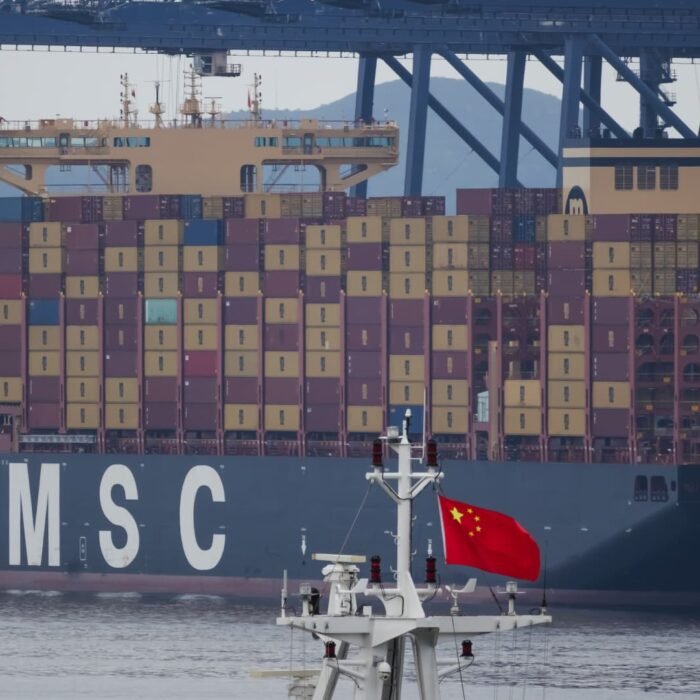
The U.S. auto industry has been hit even harder. Detroit’s “Big Three” — GM, Ford and Stellantis — have collectively fallen from a 21.4% global market share in 2019 to an estimated 15.7% in 2025, according to S&P Global Mobility. General Motors, the longest-standing U.S. automaker in China, saw its regional earnings drop from around $2 billion annually in 2018 to two consecutive years of losses in 2024 and 2025, as domestic competitors and overcapacity fueled a price war.
For brands hoping to turn things around, Cheris said the key is building real local capability. “The key will be which brands take it seriously enough and really build enough local capability to do that, rather than just saying, ‘I’m going to take what I built globally and try to sell it to a Chinese consumer,'” he said.
Source: www.cnbc.com — https://www.cnbc.com/2026/08/21/us-brands-china-competition.html
This article is for informational purposes only and does not constitute financial, investment, tax, or legal advice. Do your own research and consult a licensed professional before making financial decisions.