President Donald Trump’s sweeping oil agreement with Venezuela will not deliver the quick drop in U.S. gasoline prices that he promised, according to energy experts, who note that any meaningful production increase is years away and hinges on massive investment and unresolved legal questions.
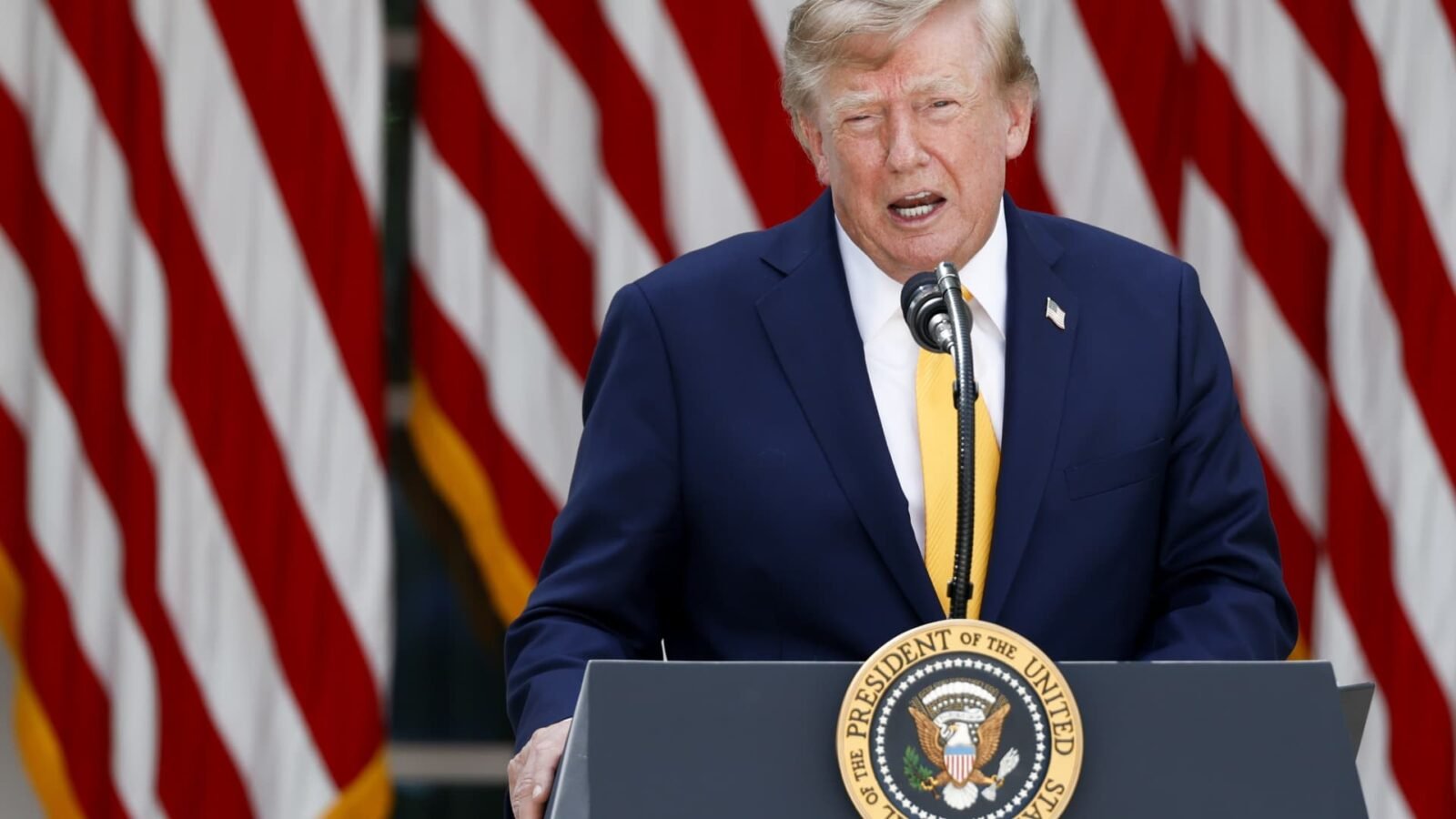
Trump announced Friday that the U.S. had secured majority control over 65 billion barrels of Venezuela’s proven oil reserves—roughly 20% of the 303 billion barrels the South American nation is estimated to hold. The president said the deal would “substantially lower gas prices for all Americans, long into the future.”
But analysts and former officials caution that the agreement is more a long-term bet than a quick fix. The terms have not been made public, leaving the deal’s legality and durability in doubt.
“Nothing has been published, so we’re really still operating on Tweets and rumors,” said David Goldwyn, who served as a State Department special envoy for international energy affairs under President Barack Obama.
No relief at the pump
The timing is particularly sensitive. The national average for a gallon of regular gasoline stood at $4.08 on Monday, nearly 30% higher than a year earlier, according to AAA data. Rising prices reflect ongoing Ukrainian attacks on Russian refineries and supply disruptions tied to the Middle East conflict involving Iran.
Patrick De Haan, head of petroleum analysis at GasBuddy, said it is all but certain that gas prices will set a new Labor Day record. The previous high for the holiday was $3.83 per gallon in 2012.
“Unless we get some sort of magical 20 cent drop, which is next to impossible, it’ll be a record setting Labor Day in terms of the national average,” De Haan said. “Gas prices have never been this high this late into the year unfortunately.”
Venezuelan oil will not ease that pressure. The country’s production has fallen from a peak of 3.5 million barrels per day in the late 1990s to around 1.2 million bpd today, following years of mismanagement and disrepair across its energy infrastructure.
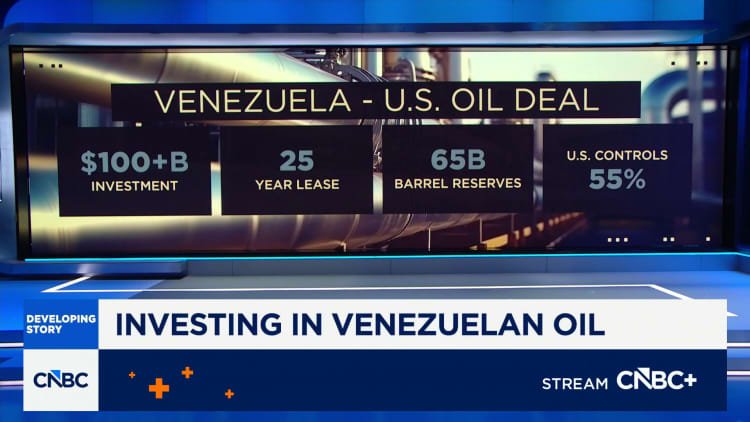
Rystad Energy estimated in January that bringing Venezuela back to peak output would require roughly $180 billion of investment through 2040. Secretary of State Marco Rubio said Friday that Trump’s deal would attract nearly $100 billion in private-sector investment.
“This will have absolutely no impact on gasoline prices or Venezuelan production for that matter for years to come,” Goldwyn said.
Infrastructure bottlenecks
Even if investment flows in, Venezuela’s export terminals are a major constraint. Tankers are currently waiting up to 30 days to load crude because of aging infrastructure and power outages that have disrupted ports, according to Andy Lipow, president of Lipow Oil Associates.
“The terminals would have to be expanded in order to handle more production,” Goldwyn said. “It’s unclear who’s taking on that project.”
Chevron is the only major U.S. oil company active in Venezuela, operating through joint ventures with state-owned PDVSA. Its production there has risen 15% this year to 280,000 bpd, CFO Eimear Bonner said on the company’s July 31 earnings call. Chevron expects to grow output by up to 50% by 2028, which would put it at roughly 400,000 bpd in about two years.
Venezuela’s interim President Delcy Rodriguez said Saturday that the 25-year agreement would develop 17 oil fields and initially lift production to 1.5 million bpd. Most of the reserves sit in eight blocks in the Orinoco Belt, with the remainder in the Lake Maracaibo region.
But the Orinoco fields have little or no existing infrastructure, Goldwyn noted. “Those fields will take five to seven years, at best, to deliver increased production for the market,” he said.
Political risk
Long-term viability is far from assured. Bob McNally, president of Rapidan Energy, said the deal faces significant political risk in both Washington and Caracas. A Democratic president taking office in 2029 could reconsider or terminate the agreement, he said. And even if a Republican wins, a future Venezuelan government could tear it up, as Caracas has done before.
McNally acknowledged that Venezuelan oil could add substantial supplies to global markets in the coming decades if everything goes well. But for now, he said, it is “not a major factor near term in terms of pump prices.”
Source: www.cnbc.com — https://www.cnbc.com/2026/08/31/trump-venezuela-oil-gas-price.html
This article is for informational purposes only and does not constitute financial, investment, tax, or legal advice. Do your own research and consult a licensed professional before making financial decisions.