The national conversation about AI data centers tends to focus on electricity bills, water use, and who ultimately profits from the buildout. But one industry is quietly seeing a business boost from the AI surge: trucking.
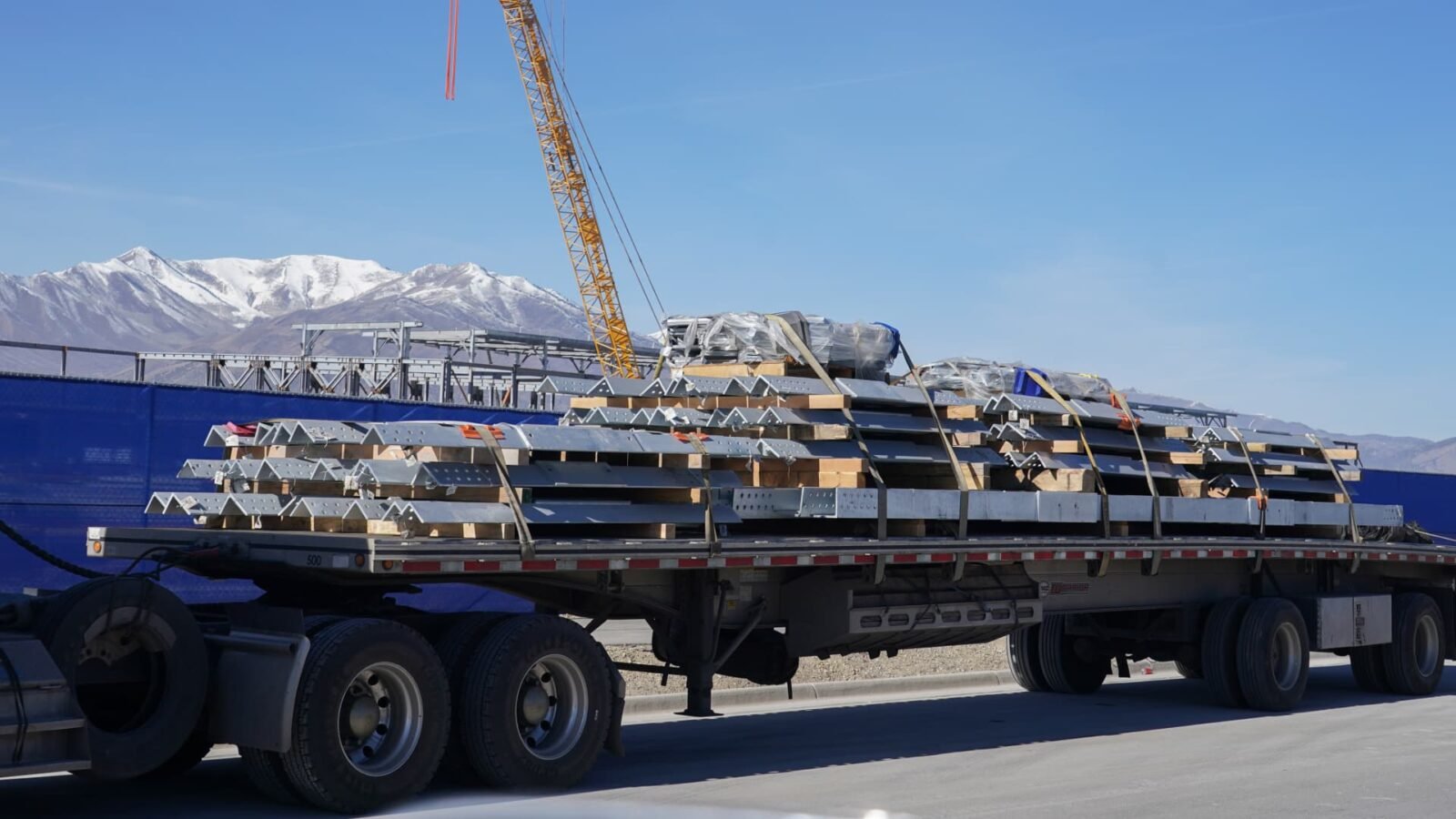
Data centers don’t assemble themselves. The HVAC systems, wiring, tubing, semiconductors, and concrete that go into a sprawling facility mostly arrive by truck — sometimes after a train ride, but always with a truck at the end. For a freight sector already battered by trade-war tariffs and surging diesel prices — which hit an all-time high of $5.85 a gallon on Friday amid the Iran war — AI is offering a measure of relief.
“Against that backdrop, AI and data center activity presents an opportunity for fleets,” said Patrick Brennan, senior vice president at fleet management solutions provider Cox Fleet. Overall freight demand remains uneven, he said, but AI is providing some stability. Equipment-led growth, whether for data centers or defense and semiconductor projects, is inherently more freight-intensive.
Some corners of trucking are benefiting more than others. Flatbed and heavy-haul carriers, in particular, have seen spot rates hit multiyear highs this summer, with capacity tightest in construction-heavy markets.
“Flatbed and heavy haul have been on an absolute tear since last year, and that’s where demand from the buildout is most concentrated,” Brennan said.
Data center site decisions — driven by power availability and land costs — are also reshaping traditional freight lanes. Much of this new freight is moving into markets that were never freight hubs. “This reshapes routes as much as it adds volume,” Brennan said.
More than just drivers
The construction surge is also fueling demand for skilled transportation talent beyond CDL drivers — diesel technicians, fleet maintenance professionals, and logistics personnel are all in short supply.
“These projects require moving heavy equipment, generators, transformers, cooling systems, construction materials, and supporting infrastructure,” Brennan said. The scramble for workers in an already shrinking pool is lengthening hiring timelines for specialized roles and boosting demand for maintenance capacity as fleets clock more miles.
Smaller carriers are getting in on the boom, but not without friction. Jennifer Lockett, freight factoring operations manager at transportation financing firm altLINE, said data center construction is creating new work for carriers that move massive transformers, generators, and concrete. But those specialized, oversized loads can demand extra trucks and equipment, putting pressure on cash flow when carriers take on larger customers or pay upfront for fuel, labor, and maintenance before getting paid.
“Still, the bigger story is how much new freight activity these projects can generate for trucking businesses,” Lockett said.
Rural routes, regional ripple effects
The effects are spreading far beyond project sites. Janelle Griffith, global logistics practice leader at Marsh, said trucking traffic spikes are showing up now in Georgia and Texas — much of it rural. Research shows 67% of planned data center developments are in rural areas, and 39% are in counties that currently have none.
“If we think about the supply chain, the data centers are not the end of the supply chain, but the center,” Griffith said. “They create rippling effects” that spread to truckers, storage facilities, and warehouses.
Even rail-served projects still require trucks for the final leg from the terminal to the site. Kyle Roberts, vice chairman at Newmark Mountain West, noted that this short-haul component has been a particular lift for the less-than-truckload (LTL) segment, which has struggled since Yellow Trucking’s 2024 bankruptcy.
Caution ahead
Experts warn, though, that the AI freight boom has an expiration date. Roberts described an “extraordinary drop off” in truck traffic once a data center is built — far less than a typical 200,000-square-foot warehouse with 80 dock doors and two turns per day.
“Unlike warehouses that support large retailers or other physical goods delivery, data centers required comparatively little logistics support after they have been built,” said Kyre Lahtinen, associate teaching professor of finance at Wake Forest University. Communities should be careful about overbuilding infrastructure for a freight surge that may not persist.
For now, the AI ecosystem remains so active that truckers simply move on to the next job. “There is a massive ecosystem that sits around, all of those components have trucking demands,” Roberts said. “It’s a very positive impact.”
Source: www.cnbc.com — https://www.cnbc.com/2026/09/05/ai-data-centers-cost-economy.html
This article is for informational purposes only and does not constitute financial, investment, tax, or legal advice. Do your own research and consult a licensed professional before making financial decisions.