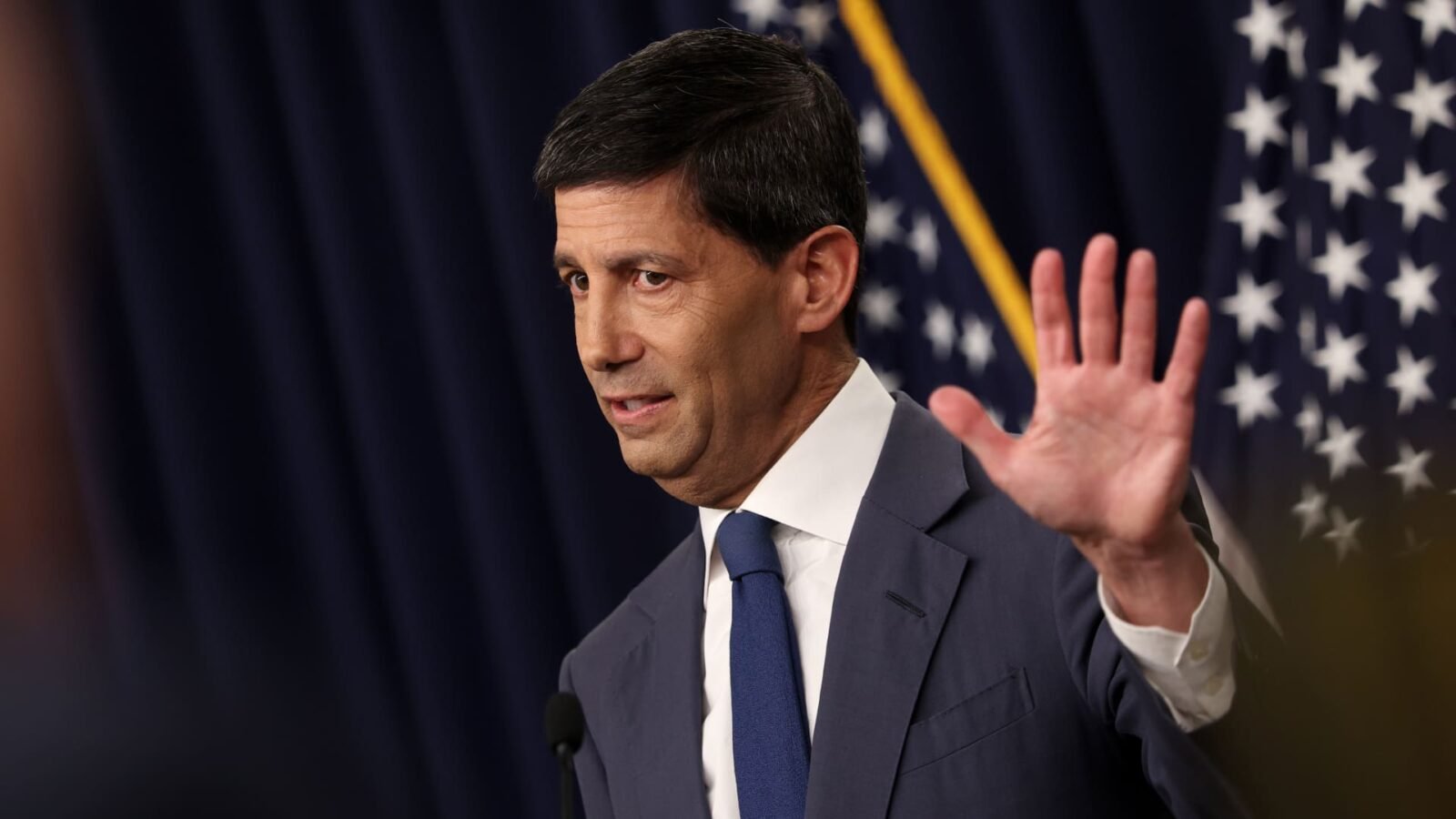
The Federal Reserve may be drawn into the Trump administration’s effort to support Japan’s currency, as Treasury Secretary Scott Bessent seeks to expand a specialized lending facility that would allow Tokyo to defend the yen without selling off its massive Treasury holdings.
The request comes as Fed Chairman Kevin Warsh is looking to reshape the relationship between the central bank and the Treasury Department, a shift that could have significant implications for the $29 trillion Treasury market and the Fed’s role in U.S. financial diplomacy. The Fed declined to comment, and the Treasury did not respond to requests for comment about its plans.
Rare U.S. Intervention
Bessent announced Sunday on X that the U.S. had intervened in foreign exchange markets to support the Japanese yen on Friday. Such action is exceptionally uncommon — the last time the U.S. joined a coordinated effort to support Japan’s currency was in 2011 following a devastating earthquake and tsunami.
According to the Financial Times, the Treasury sold euros from its Exchange Stabilization Fund to purchase yen. The intervention came after the yen had weakened dramatically, reaching nearly 164 per dollar last week, its weakest level since 1986 according to FactSet data. By Monday afternoon U.S. time, the yen had strengthened to just under 157, a retreat of 3.5% from its low.
The yen has declined sharply since 2022, when U.S. interest rates climbed while Japan’s remained low. Factors contributing to the slide include Japan’s substantial government debt, a shrinking and aging population that weighs on growth, and costly energy imports.
Treasury Market Concerns
The intervention appears designed not only to stabilize the yen but also to protect the U.S. Treasury market. The interest rate differential between the two countries has fueled a long-running “carry trade,” in which investors borrow cheaply in yen to invest in higher-yielding Treasurys or U.S. stocks.
“The yen carry trade has broken down,” Torsten Slok, chief economist at Apollo Global Management, wrote in a research note published Sunday. President Donald Trump’s tariffs and other policies have prompted global investors to hedge their dollar positions, casting doubt on the future of this trade.
Stabilizing the yen could help maintain demand for Treasurys. When holders sell Treasury securities, prices fall and yields rise. The 10-year Treasury note climbed above 4.7% last week before the intervention, then pulled back slightly. Higher Treasury yields translate to more expensive borrowing for consumers and businesses, a metric Bessent has said he monitors closely.
The FIMA Facility Request
Bessent’s choice to sell euros rather than dollars for yen purchases suggests Treasury market concerns were central to his strategy. He also said he wants Japan to utilize the Foreign and International Monetary Authorities Repo Facility, or FIMA, going forward.
The FIMA Facility allows foreign central banks to temporarily lend their Treasury holdings to the Fed for cash rather than selling the securities outright, thereby avoiding upward pressure on yields. Bessent indicated he wants the facility “upsized.” Currently, the repo facility has a per-counterparty limit of $60 billion per day. Japan held approximately $1.1 trillion in U.S. Treasurys as of May, according to U.S. data. Estimates place Japan’s recent intervention at $60 billion to $80 billion.
Whether the long-term pressure on Japan’s currency constitutes the kind of market stress the Fed typically addresses remains unclear. Japan has access to a Fed dollar swap line, which allows it to exchange yen for dollars, but did not use that facility this time.
Brad Setser, a former Treasury official now with the Council on Foreign Relations, wrote on X that “the current norm is that the central bank swaps are used to fund dollar lender of last resort type activity, not intervention.”
Broader Implications
Expanding the FIMA facility would require a vote by the Federal Open Market Committee. It’s uncertain how much support Warsh has within the Fed for such changes.
Before becoming chairman, Warsh said he wanted to rewrite the Treasury-Fed Accord, the framework governing the relationship between the two institutions. During his Senate confirmation process in April, he suggested the Fed should defer to Treasury on certain matters. “Fed officials are not entitled to the same special deference in areas affecting international finance, among other matters,” Warsh wrote. “In those matters, the Fed will work with the Administration and with Congress.”
This collaborative approach could extend beyond the yen issue. The United Arab Emirates has requested its own swap line, a decision that would normally fall to the Fed alone. Warsh’s deference stance suggests he might be open to considering such requests in coordination with Treasury. Warsh told the Senate that he and Bessent talk frequently beyond their weekly scheduled breakfasts.
Source: www.cnbc.com — https://www.cnbc.com/2026/08/03/bessent-fed-japan-yen-fima-repo-facility.html
This article is for informational purposes only and does not constitute financial, investment, tax, or legal advice. Do your own research and consult a licensed professional before making financial decisions.