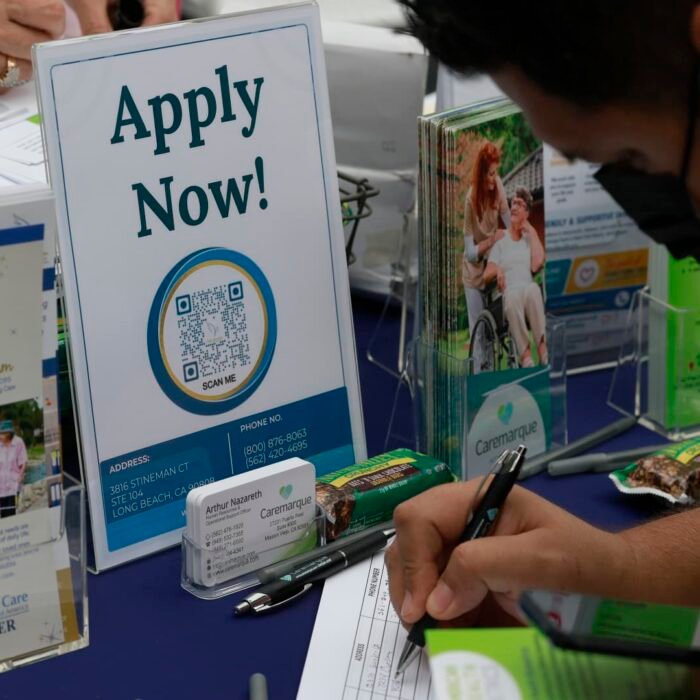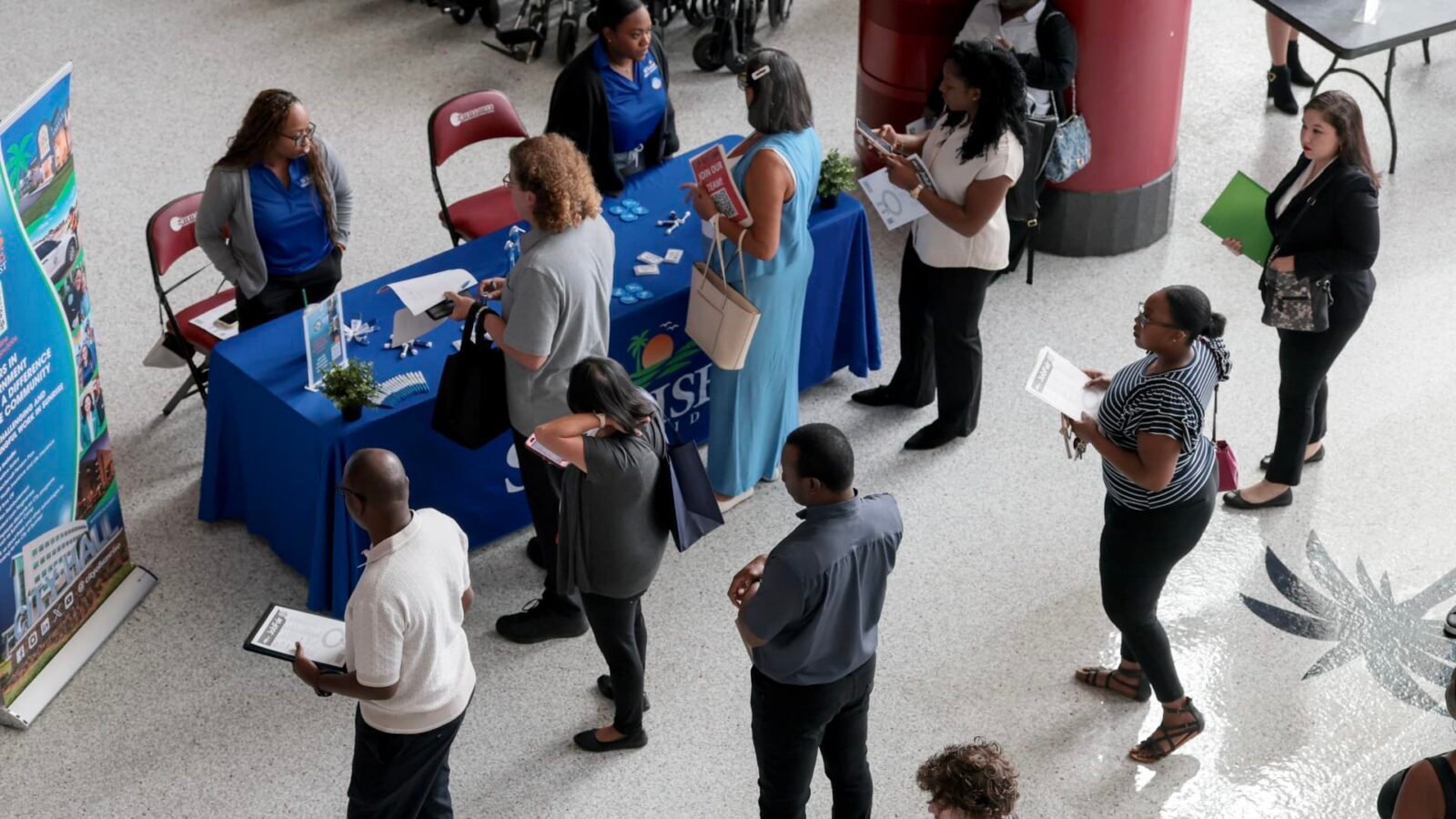
June’s decline in the unemployment rate to 4.2% might seem like welcome news, but economists warn the drop reflects a worrying trend rather than genuine economic strength. According to Bureau of Labor Statistics data released Thursday, the decline came primarily from workers leaving the labor force altogether, rather than finding employment.
The labor force participation rate — which measures the share of working-age Americans either employed or actively seeking work — fell to 61.5% in June. That marks the lowest level since March 2021, and excluding the pandemic period, represents the weakest participation rate in exactly 50 years.
A Mass Exodus from the Job Market
Mike Reid, head of U.S. economics at RBC, described the shift as a “massive exodus” reflecting multiple underlying factors. The numbers tell a stark story: in June alone, the labor force contracted by 720,000 people, while the ranks of those classified as not in the labor force swelled by 832,000.
The disconnect between different measures of employment is particularly striking. While the establishment survey, which counts jobs filled by employers, showed modest growth of 57,000 positions, the household survey, which counts actual workers, tumbled by 507,000.
Over the past year, the labor force has shrunk by just over 1 million people. During that same period, the number of employed Americans has fallen by 1.06 million, while the unemployed count has risen by only 40,000. The employment-to-population ratio slipped to 59% in June, its lowest reading since October 2021.
Prime-Age Workers Leading the Decline
The drop in participation is often attributed to demographic factors like retiring baby boomers and Gen Xers, or changes in immigration patterns. But June’s data challenges that narrative.
The biggest decline came from “prime age” workers — those between 25 and 54 years old. That participation rate fell 0.6 percentage point to 83.3%, marking the lowest level since December 2023.
“Looking at the statistics now, that argument doesn’t hold up so well,” said Dan North, senior economist for North America at Allianz, referring to retirement and immigration explanations. He noted that while he hesitates to use the word “alarming,” the numbers are certainly cause for concern.
North emphasized that the participation rate matters more than the headline unemployment figure in this context. The unemployment rate has risen by just one-tenth of a percentage point to 4.2% over the past year, even as the labor force has contracted significantly.
Questions About Data Quality
Some economists suggested the June figures may contain statistical noise. The large decline in leisure and hospitality workers was cited as a potential sign of data irregularities.
However, the participation numbers fit within a broader trend. Heather Long, chief economist at Navy Federal Credit Union, wrote that it was “shocking to see 720,000 people stop looking for work entirely and the hospitality sector shed jobs.” While acknowledging the job market remains better than a year ago, Long noted that “opportunities are limited.”
The June report underscores growing concerns about labor market health beneath the surface-level unemployment rate. Whether driven by discouragement among job seekers, early retirements, or other factors, the sustained decline in participation suggests deeper challenges in the economy’s ability to engage available workers.
Source: www.cnbc.com — https://www.cnbc.com/2026/07/02/job-seekers-giving-up-labor-force-participation-rate-falls-to-lowest-in-50-years-outside-of-covid-era.html
This article is for informational purposes only and does not constitute financial, investment, tax, or legal advice. Do your own research and consult a licensed professional before making financial decisions.