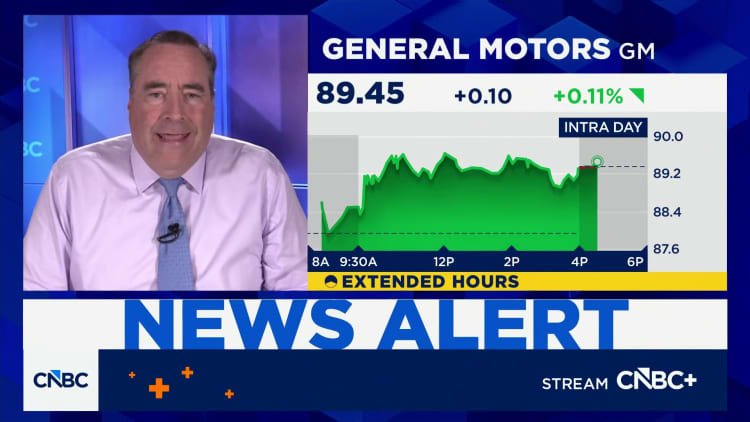
General Motors unveiled a multibillion-dollar parts purchasing arrangement Tuesday, a move designed to preserve cash and guard against supply chain shocks that have battered the global auto industry over the past several years.
In a public filing, GM said the facility — worth up to $4.5 billion — involves Procura Auto Parts, a company specializing in sourcing rare or critical components. Procura will receive funding through a bank syndicate led by JPMorgan Chase and Banco Santander, allowing it to prepay select suppliers on GM’s behalf.
In return, GM issues formal promises known as IPUs to repay Procura after the parts are used in production, with payment due no later than July 31, 2029.
The structure lets GM keep inventory costs off its balance sheet while more tightly securing future parts supply, according to the filing.
How the deal works
GM pays interest plus an agreed-upon premium on the parts it actually uses, along with a customary annual fee on any unused portion during the year, the filing said.
For accounting purposes, the prepayments appear as an asset, and each purchase is booked as unsecured debt. Cash flows are recorded as though GM paid suppliers directly.
Importantly, these payments are excluded from adjusted automotive free cash flow until GM actually takes possession of the inventory. The company typically books the capital within 90 days of purchase.
Why now
GM declined to disclose which parts the deal targets. But the industry has struggled with shortages of semiconductor chips, including DRAM memory, rare earths, and wire harnesses in recent years.
The arrangement follows years of global supply chain turbulence and comes as GM and other automakers have re-evaluated their sourcing strategies in response to U.S. tariffs and a broader push to reduce reliance on Chinese suppliers.
GM finalized the deal with Procura and the banks on Friday, according to the filing.
Source: www.cnbc.com — https://www.cnbc.com/2026/08/11/gm-makes-4point5-billion-parts-deal-to-bolster-supply-chain.html
This article is for informational purposes only and does not constitute financial, investment, tax, or legal advice. Do your own research and consult a licensed professional before making financial decisions.