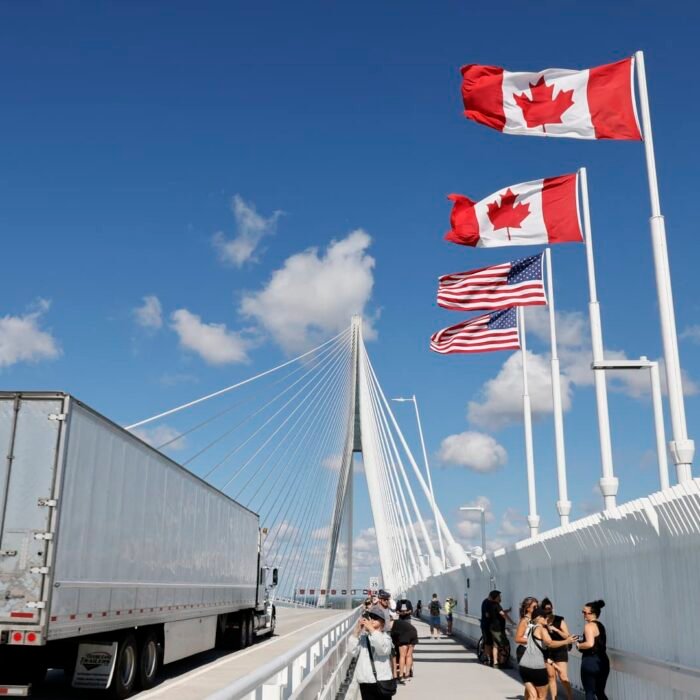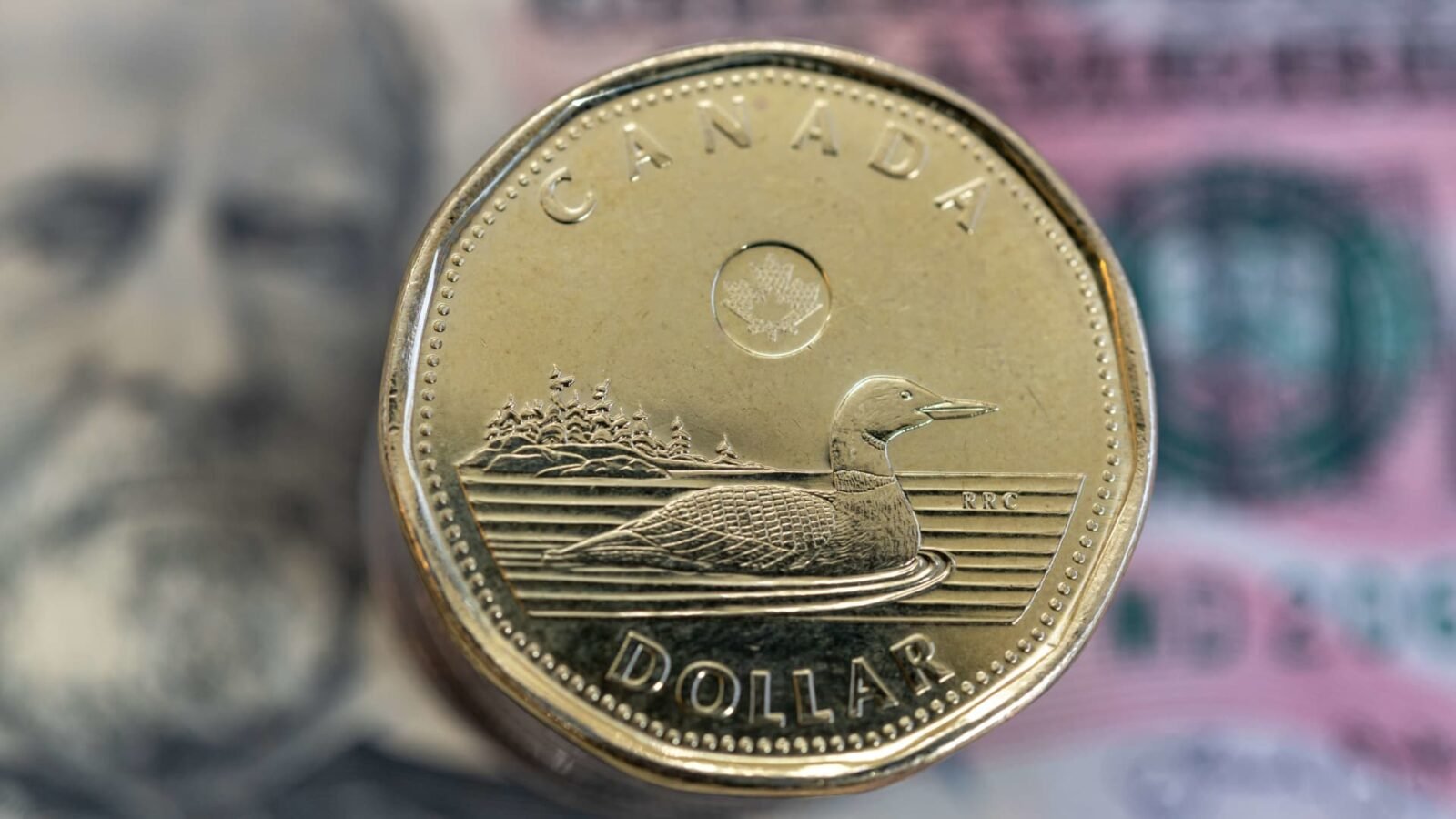
The Canadian dollar slid on Monday morning after trade talks between Ottawa and Washington collapsed, ushering in a new phase of tariffs that could raise prices on a wide range of imported goods and weigh on Canada’s economic growth.
The U.S. imposed 50% tariffs on about $20 billion worth of imports from Canada over the weekend, hitting goods like dairy, wine, wood products, furniture, cement, ceramics and more. Canada, the U.S.’s second-biggest trading partner after Mexico, was caught off guard as negotiators had been working to reach a deal throughout the week.
Failed talks and sharp words
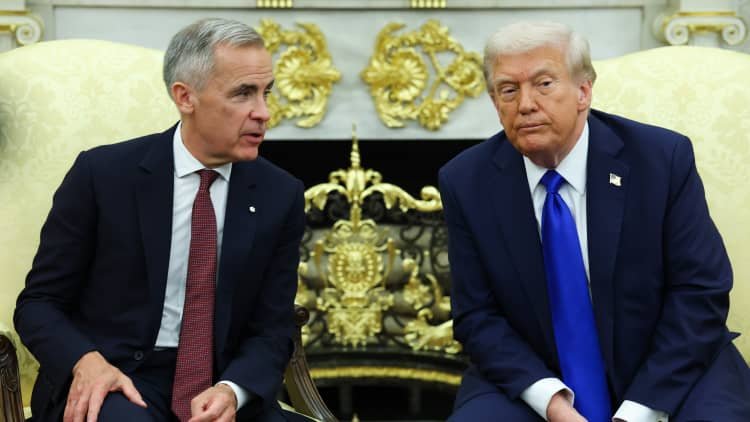
By Saturday, the tone had soured. Canadian Prime Minister Mark Carney said he would retaliate “dollar for dollar” with tariffs starting Sept. 8, targeting steel, dairy, agricultural equipment, paper and electronics. Details are expected in the coming days.
“We were not prepared to compromise Canada’s sovereignty or undermine our key industries,” Carney said.
When a reporter asked why it felt like Canada was entering a trade war, Carney replied: “Because we got attacked. You’re at war when you get attacked. We got attacked.”
U.S. Trade Representative Jamieson Greer told CNBC that a deal had been close, but the Canadians “wanted more” than Washington was willing to offer. He said the U.S. had proposed cutting tariffs in half on steel and aluminum, and extensively reducing them on autos and softwood lumber.
“They simply … wanted more,” Greer said. “I don’t know if it was political for them. It certainly doesn’t make economic sense.”
President Donald Trump weighed in on Truth Social, writing: “Canada wants the benefits of being a State, without being one!!!”
Market reaction and economic impact
The Canadian dollar fell 0.58% against the U.S. dollar by 8 a.m. ET Monday, and also dipped against the euro, pound and yen.
The $20 billion in targeted U.S. imports represent only about 0.6% of total U.S. goods imports, which Greer said markets understand. But for Canada, the picture is more complicated.
The tariffs apply to roughly 5% of Canada’s goods exports to the U.S. “It isn’t a hammer blow, but for many individual companies it will be devastating,” said James Knightley, chief international economist at ING.
Bradley Saunders, North America economist at Capital Economics, noted that the most exposed Canadian industries “could be crippled” by the high levies. While the targeted goods equal about 0.6% of Canada’s GDP, “a collapse in exports would still be enough to push already-weak GDP growth back towards zero,” he said.
Saunders also warned that if Washington retaliates against Canada’s countermeasures, the situation could escalate. Extending a 50% tariff rate to a fifth of Canada’s U.S. goods exports—up from the current 5%—could knock around 2% from Canadian GDP and push the economy into recession.
Still, the existing package is unlikely to have a major effect on the U.S., said Christian Lawrence, chief cross-asset strategist at Rabobank. The bigger risk is if Ottawa takes a more aggressive stance on other goods, he said, but Canada has limited options: “Diversifying away from the world’s largest consumer sitting on your doorstep is impossible to do in a truly meaningful way.”
Sticking points and political stakes
Key issues in the talks included tariff details for autos, steel and aluminum, as well as Canadian protections over French language use and the ability to strike separate trade deals.
The U.S. and Canada export tens of billions in agricultural products to each other annually, and their auto industries are deeply integrated. The U.S.’s $48.3 billion trade deficit with Canada largely reflects imports of Canadian natural gas, electricity and crude oil.
Ottawa argues that its trade relationship with the U.S. shifts into deficit once services are included—a position similar to that taken by the European Union in its own negotiations with the Trump administration.
Notably, the new tariffs include no exemption for goods that comply with production rules under the United States-Mexico-Canada Agreement, a break from previous tariff rounds since April 2025’s “liberation day.”
Despite the economic pain, Carney’s hard line has support at home. Recent polling suggests a majority of Canadians back a tough stance, though more are worried about job security. Canadian economist Trevor Tombe estimates ongoing 50% U.S. tariffs could cause around 90,000 job losses.
Carney, elected in March 2025 partly on a promise to stand up to the White House, faces opposition from Conservative leader Pierre Poilievre, who said Saturday that Canada “cannot accept one-sided tariffs that will deindustrialize our country.”
Source: www.cnbc.com — https://www.cnbc.com/2026/08/24/canada-us-trade-war-deal.html
This article is for informational purposes only and does not constitute financial, investment, tax, or legal advice. Do your own research and consult a licensed professional before making financial decisions.