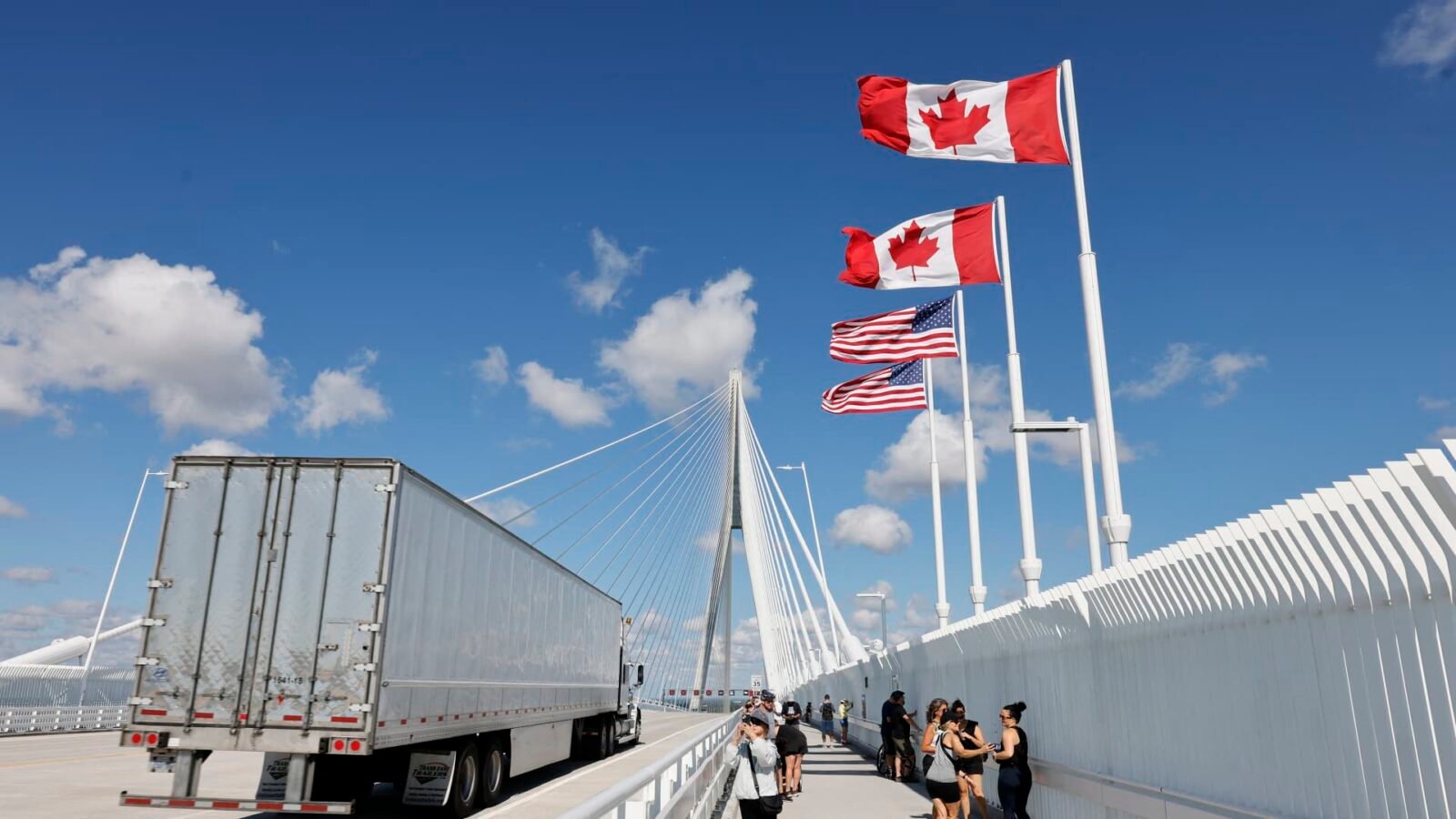
Canada’s retaliatory tariffs on a broad range of U.S. goods took effect on Tuesday, escalating a trade war that shows no sign of cooling after talks between Washington and Ottawa collapsed last month. The duties, which range from 15% to 50%, apply to $27.6 billion worth of U.S. products, including dairy, agricultural equipment, paper, household appliances and electronics, according to CNBC.
Canadian tariffs on U.S. steel, aluminum and iron products doubled to 50%, while furniture and clothing were also hit with the highest rate. Ottawa described the measures as a “dollar for dollar” response to U.S. levies on Canadian goods, which have been targeted under Section 338 tariffs. Canada’s Department of Finance said the move would protect Canadian workers, producers and manufacturers by giving them a better chance to compete with U.S. products sold in the domestic market.
The new duties come on top of existing Canadian counter-tariffs against the U.S., including a 25% levy on autos — a politically sensitive sector that has been a flashpoint in the dispute. Trade talks between the longstanding allies fell apart at the end of August, with officials from each side blaming the other for the failure and publicly disagreeing over which issues proved impossible to bridge.
The friction has spilled into open hostility at the highest levels. U.S. President Donald Trump on Monday called for a boycott of Canadian airplane manufacturer Bombardier, posting on Truth Social: “NO MORE SELLING BOMBARDIER IN THE UNITED STATES!”
The two countries are deeply intertwined economically. The U.S. exported $333.6 billion in goods to Canada and imported $381.9 billion from its northern neighbor, with much of the trade concentrated in the same sectors — energy, vehicles, heavy machinery, aircraft, pharmaceuticals, gems and jewelry, furniture, clothing, and a wide range of foods and drinks.
Economists caution that while the newly targeted goods represent a relatively small slice of overall bilateral trade, the impact will be severe for small- to medium-sized businesses and for companies in the most-affected sectors. The ripple effects could be felt far beyond the factory floor, as supply chains that have long crossed the border are disrupted.
In a bid to cushion the blow, Ottawa announced a $7.5 billion support package for businesses and workers last month, adding to an existing $25 billion in aid it provided in response to the U.S. global tariff offensive that began in April 2025. That earlier round of U.S. tariffs, applied to a wide range of trading partners, has already forced Canadian firms to adapt to a new, more hostile trade environment.
For now, neither side appears ready to blink. The collapse of talks leaves the two neighbors locked in a standoff with significant economic consequences, and the latest tariffs signal that Ottawa is prepared to match U.S. pressure dollar for dollar — even as businesses on both sides of the border brace for further disruption.
Source: www.cnbc.com — https://www.cnbc.com/2026/09/08/canada-retaliatory-tariffs.html
This article is for informational purposes only and does not constitute financial, investment, tax, or legal advice. Do your own research and consult a licensed professional before making financial decisions.