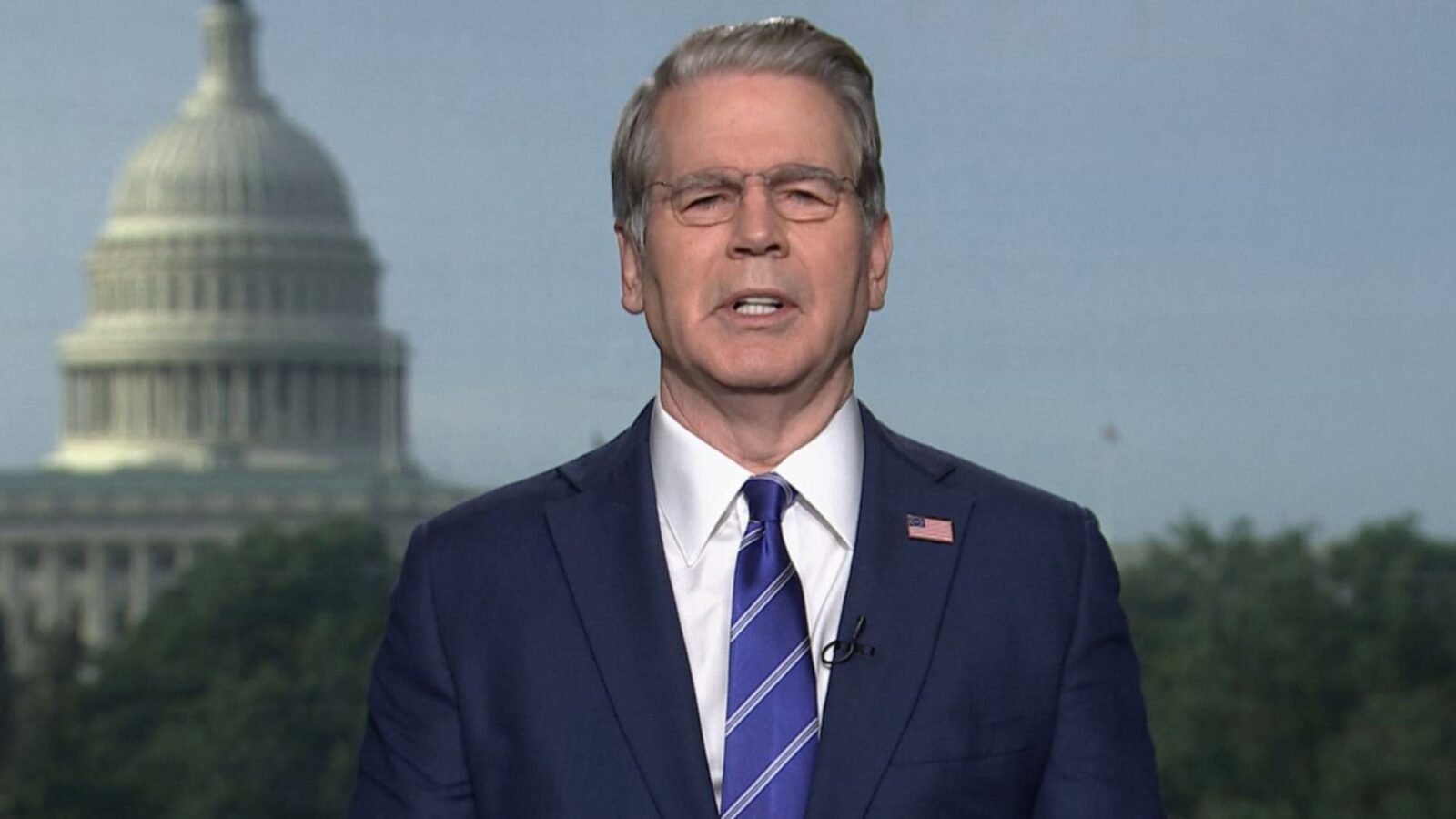
Treasury Secretary Scott Bessent said Thursday there is a “very good chance” that the U.S. budget deficit under President Donald Trump has already peaked, according to an exclusive interview with CNBC’s Sara Eisen.
Speaking a day after the Treasury Department’s extraordinary debt buyback announcement, Bessent said the administration is “going to be laser focused” on fiscal consolidation. He pointed to himself, Trump, and Russell Vought, director of the Office of Management and Budget, as leaders working on measures that could save “several hundreds of billions of dollars.”
Deficit and debt hit fresh highs
The comments come as fresh data underscore the scale of the challenge. The monthly U.S. budget deficit topped $432 billion in July, its highest level in more than half a decade, the Treasury Department reported last week. That report also showed the fiscal year-to-date gap climbed to nearly $1.8 trillion, above the level at the same point a year earlier.
This week, the Treasury announced that the U.S. government debt pile used to fund those deficits hit a new record above $40 trillion. The total has more than doubled over the last decade, intensifying concerns about the country’s financial health.
Tariff revenue outlook
The White House has marketed its broad and steep tariffs on trading partners as a revenue driver that could help shrink the national debt. But those levies have faced repeated legal roadblocks, most notably the Supreme Court’s decision to strike many of them down.
Despite those challenges, Bessent said he expects this year’s tariff revenue to come in around the same level as 2025’s, after levies were re-implemented. He added that those revenues should not have to be refunded to companies this time.
“There’s nothing magic about the 40-trillion number,” Bessent said. “We can grow our way out of that.”
Source: www.cnbc.com — https://www.cnbc.com/2026/08/20/bessent-budget-deficit-trump.html
This article is for informational purposes only and does not constitute financial, investment, tax, or legal advice. Do your own research and consult a licensed professional before making financial decisions.