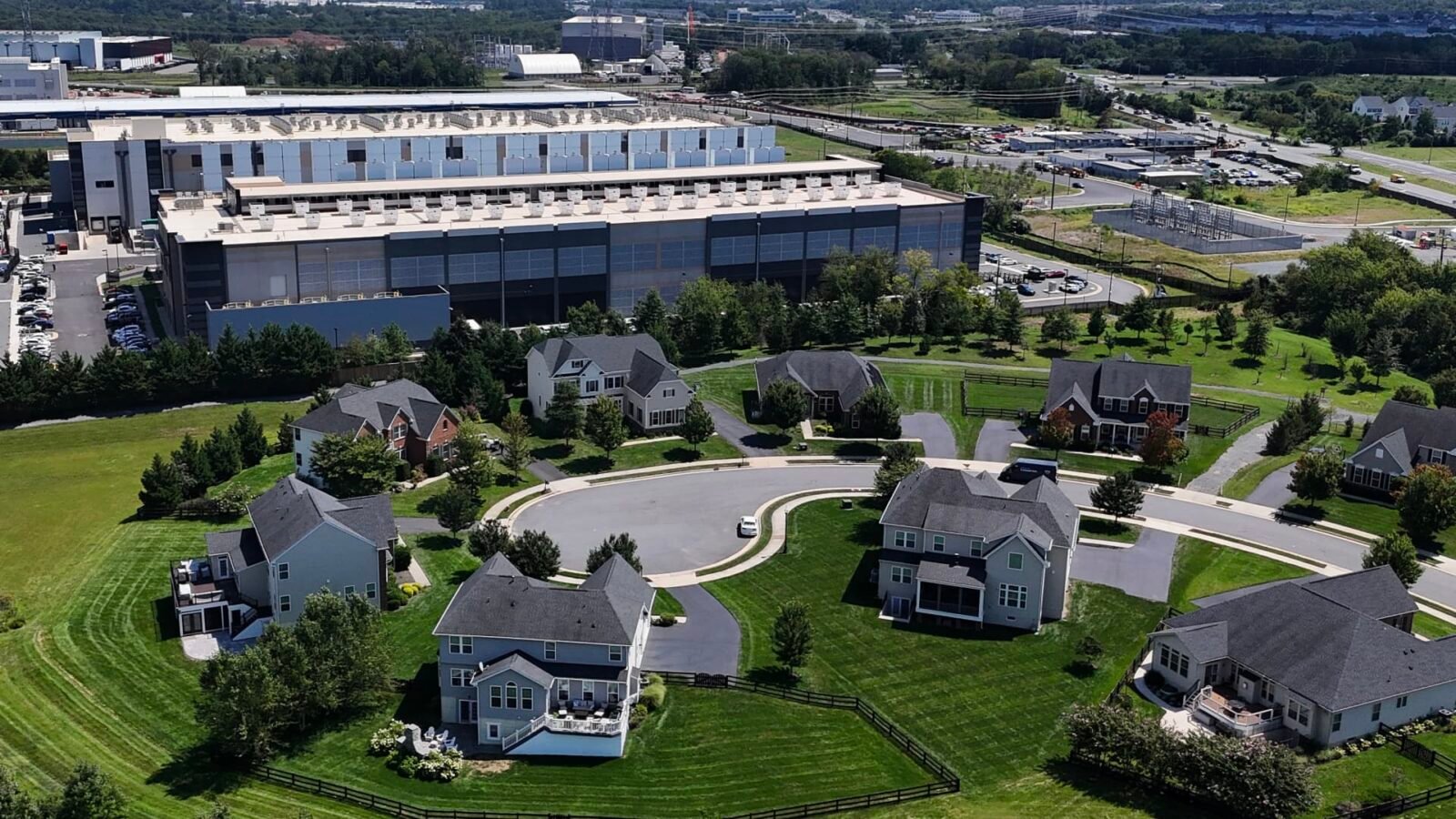
Artificial intelligence is redrawing the map of rural America, as data center developers pour billions into farmland and remote acreage — and increasingly collide with residents worried about losing their land, water and way of life.
Land purchases for future data centers hit about $6 billion in the first half of 2026, a 79% jump from the same period last year, according to commercial real estate firm Avison Young. Data centers now account for 27% of all development sites in the U.S. this year — the second-largest category after apartment buildings, ahead of industrial, office, retail and mixed-use projects.
That tally only counts the data centers themselves. When related construction — power plants, water facilities and worker housing — is added in, the total share of AI-driven land investment is likely far higher, according to the firm.
Powered land commands eye-popping prices
The most valuable parcels are those with reliable access to regional power grids. In Northern Virginia and the Northeast, site costs surpassed $8 million per acre last year, according to real estate firm CBRE. In Loudoun County, Virginia, one developer reportedly offered $4.4 million per acre — a figure that towers over the county’s 2025 median land price of $125,000 per acre, noted the National Association of Home Builders in a July brief.
“Home builders cannot bid in that market, because a builder’s land budget is capped by what home buyers can afford,” the NAHB says. “A data center operator faces no such constraint. The result is not more expensive homes on that parcel. It is no homes at all.”
State Agriculture Commissioner Sid Miller voiced a similar complaint at a July protest in Lubbock, Texas, describing what has become a familiar dynamic in dozens of states.
“When [data centers] first started popping up, nobody really knew much about them,” Miller said. “I found out real quick that they were taking up our very best farmland. … And [developers] give sometimes 10 times the value, so it’s hard for farmers to turn that down.”
Communities push back over water, power and open space
Residents in many regions say they fear data centers will drain local water and energy infrastructure — and that electricity bills for everyone else will rise to cover the cost.
In Lancaster, Pennsylvania, cloud computing company CoreWeave is building a data center less than 20 miles from Bobbi Thompson’s Mount Joy Township home. She and her sister, Michelle Kennedy, have received dozens of offers over the past year for their 45-acre family farm. Their next-door neighbors have applied to rezone their land into an industrial complex with more than 1 million square feet of manufacturing space and room for about 1,000 employees.
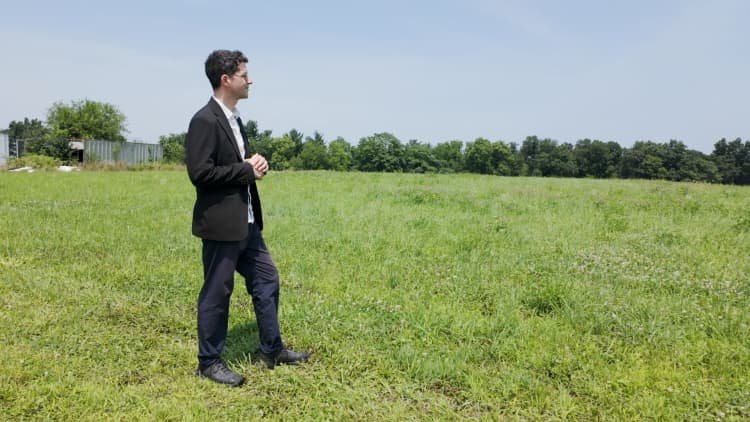
“Can you imagine if you had a thousand vehicles parked 24/7?” Kennedy told CNBC. “Cows don’t produce milk if they’re not relaxed.”
The sisters placed a conservation easement on their property to prevent future industrial development. “It becomes our legal and fiduciary responsibility then to monitor, steward and enforce that conservation easement,” Jeff Swinehart, chief operating officer of the Lancaster Farmland Trust, told CNBC.
Electricity cost concerns are backed by data. A May report from Monitoring Analytics, which monitors the PJM wholesale electricity market covering parts of 13 states, found that existing and forecast data center load growth is “the primary reason” for “high prices” in capacity markets. The group estimates data center load growth will add $23.1 billion in capacity market revenues through 2028.
From farm fields to boom towns
In Boise, Idaho — a hub of the computing boom with Meta building a data center in nearby Kuna and Micron constructing two semiconductor factories — the transformation is visible in real time.
“It’s a little depressing, as far as the outlook, to physically see the farmland go away,” said Lindsey Dodge, a Boise resident.
Mike Adler, founder and CEO of Adler Industrial, a major commercial developer in Idaho’s Treasure Valley, has embraced the change. “All of a sudden … I realized that what felt like the middle of nowhere was really the center of the valley,” he said. “People wanted to be here.”
Harry Sawyer, a fifth-generation Idahoan and vice president at CBRE, said families are wrestling with life-changing decisions as property values soar. “‘Do we keep on farming? Do we sell and do something else?’ We’re seeing it everywhere, but especially here,” he said.
Hostility escalates in some communities
In Saline Township, Michigan, the battle over a multibillion-dollar data center known as The Barn — being built by Related Digital for Oracle and OpenAI — has turned dangerous. Township clerk Kelly Marion told CNBC she and other officials have received death threats over the project.
“We’ve got a lot of recorded messages wishing us dead,” Marion said. “What they say is, ‘We want you dead.'” Some threats appeared to come from outside the state, she added. A recall effort has been launched against board members who supported the project.
Wall Street is taking note. Investment bank Mizuho said in a Sept. 1 analysis that as many as nine states have pending moratoriums on new data center development. That’s on top of New York, where Gov. Kathy Hochul in July issued a one-year moratorium on new hyperscale data centers, arguing the development “threatens” the state’s climate goals.
Source: www.cnbc.com — https://www.cnbc.com/2026/09/06/ai-data-centers-are-transforming-rural-land-markets-fueling-backlash.html
This article is for informational purposes only and does not constitute financial, investment, tax, or legal advice. Do your own research and consult a licensed professional before making financial decisions.