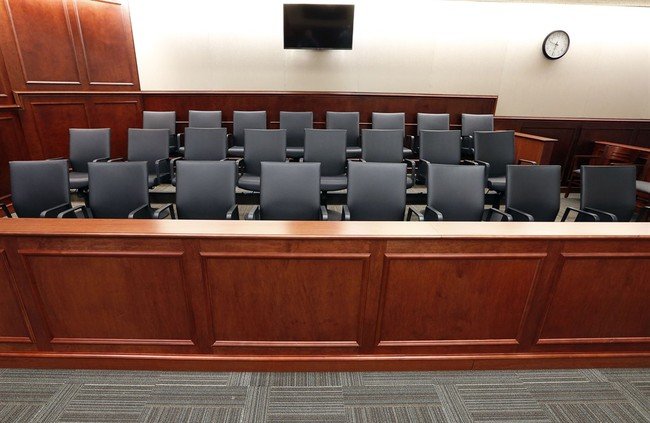
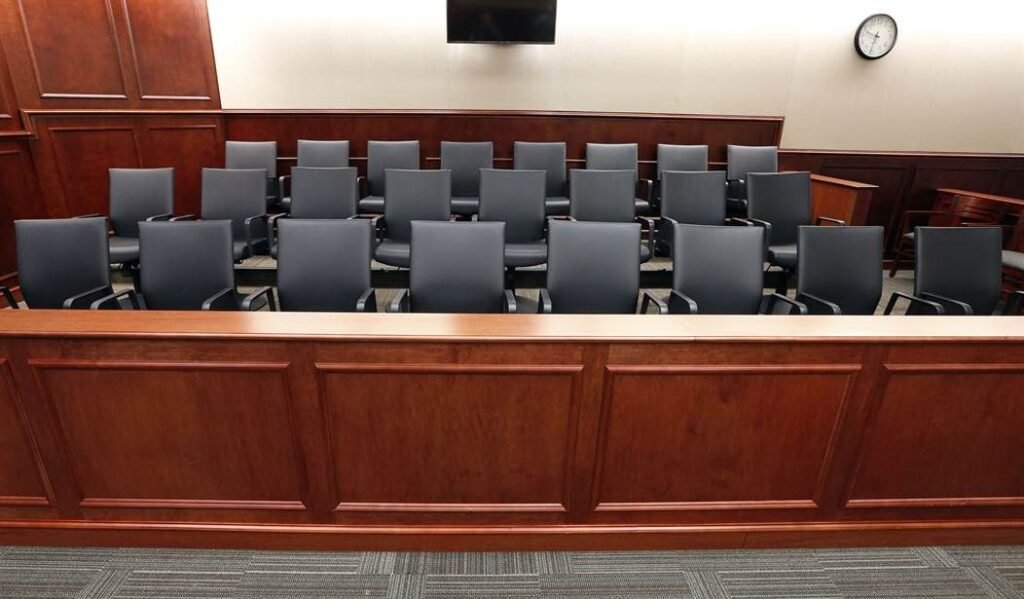
The Department of Homeland Security has flagged New Jersey’s jury selection process as an indicator of potential issues with the state’s voter registration system, noting that approximately 75,000 noncitizens are summoned for jury duty in the state each year.
According to a DHS social media post, the agency raised concerns about the reliability of New Jersey’s government databases in ensuring only citizens participate in jury pools and vote in elections. The connection between jury duty and voter registration has become a focal point because voter rolls serve as a primary source for compiling lists of prospective jurors.
Pennsylvania Investigation Reveals Similar Pattern
Election integrity advocate Scott Presler has been working to obtain non-juror lists from Pennsylvania counties, which contain names of individuals who have been summoned for jury duty but identified themselves as noncitizens. In Chester County alone, Presler reported finding over 3,500 noncitizens on the non-juror list, which he described as spanning 65 pages.
Presler has identified noncitizens on non-juror lists across multiple Pennsylvania counties, including Pike, Mifflin, Centre, Carbon, Indiana, Chester, Dauphin, Jefferson, Columbia, Susquehanna, and Westmoreland. Notably, many of these counties are Republican-leaning, suggesting the issue crosses partisan lines.
New Jersey’s Voter Roll Discrepancies
New Jersey Governor Mikie Sherrill acknowledged on July 21 that at least 6,600 noncitizens are registered to vote in the state, with approximately 400 having cast ballots in an election. However, these figures represent only individuals who voluntarily disclosed their noncitizen status, suggesting the actual number could be substantially higher.
Following President Donald Trump’s declassification of documents related to election integrity earlier this month, DHS announced preliminary findings indicating at least 35,152 noncitizens are registered to vote in New Jersey. The agency characterized these as preliminary results, noting that state officials have not fully cooperated with federal investigators.
Sanctuary State Policies Under Scrutiny
New Jersey operates as a sanctuary state with policies that limit cooperation with federal immigration enforcement. Critics argue these policies have contributed to the scale of the noncitizen registration issue. The state government has defended its approach, with Democratic leadership maintaining protections for undocumented immigrants.
The discrepancy between the 75,000 noncitizens receiving jury summons annually and the documented noncitizen voter registrations has raised questions about database accuracy. While officials use multiple sources beyond voter rolls to compile jury lists, the overlap between the two systems means that individuals improperly registered to vote may also appear on jury duty lists.
The potential impact on election outcomes remains a subject of debate. With preliminary DHS findings suggesting tens of thousands of noncitizen registrations, election integrity advocates argue the numbers could be significant enough to influence close races, though the extent to which these registrations translate into actual votes cast remains unclear.
The investigation into New Jersey’s voter rolls is ongoing, with federal authorities seeking greater cooperation from state officials to determine the full scope of noncitizen registrations.
Source: pjmedia.com — https://pjmedia.com/catherinesalgado/2026/07/25/dhs-finds-another-voter-fraud-indicator-75000-noncitizen-jurors-in-new-jersey-n4955458
This article is for informational purposes only and does not constitute financial, investment, tax, or legal advice. Do your own research and consult a licensed professional before making financial decisions.