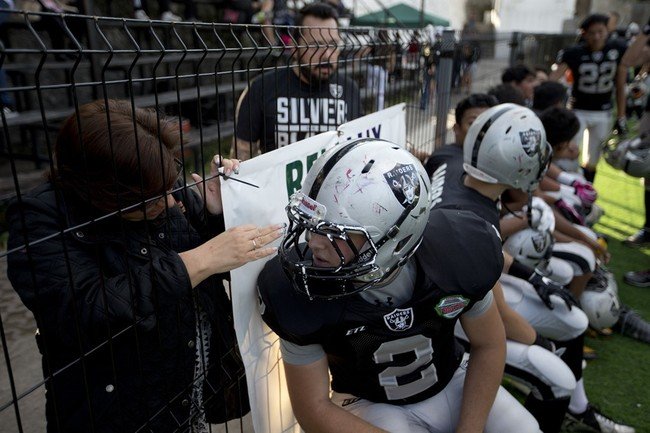
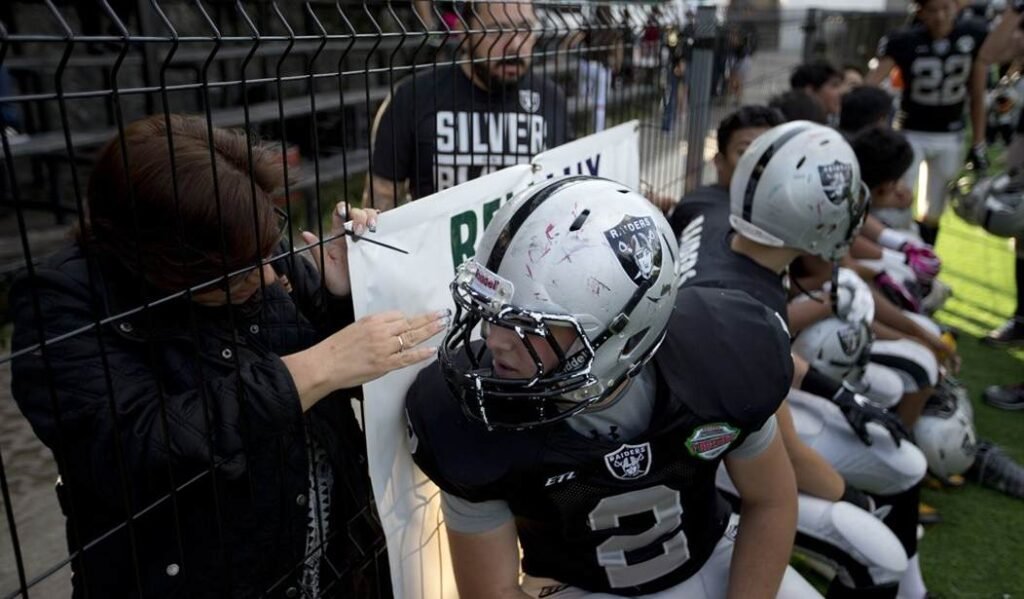
It’s easy to blame youth football’s troubles on a win-at-all-costs culture. But according to a new column at PJ Media, that’s not the real problem. The actual issue, the author argues, is far closer to home: it’s the parents, especially the dads.
The piece, written by Tim O’Brien, takes a hard look at the adults who run youth football programs, and it doesn’t pull many punches. The biggest challenge, O’Brien says, is that leagues depend on dads coaching their own sons — and that dynamic creates a host of problems that have nothing to do with teaching kids how to play the game.
The Dads Who Coach Without Ever Having Played
O’Brien points out that many youth football coaches never played the sport beyond youth leagues or middle school themselves. Their entire understanding of football, he says, comes from ESPN’s SportsCenter, fantasy football, and the Madden video game. That leads to well-meaning but fundamentally flawed coaching — teaching safeties to get into a three-point stance, or instructing players to catch the ball with the crook of their elbow instead of their hands.
Worse, he writes, these coaches often teach dangerous techniques like arm-tackling or tackling with the head down, putting kids at risk of serious head and neck injuries. They don’t know what they don’t know, and they don’t care to learn.
The Hype Machine: Walk-Up Music and Recruiting Videos
The third problem O’Brien identifies is the modern hype environment surrounding youth sports. Little League players now have walk-up music. Youth football players have recruiting videos. Team photos look less like a guy with a tripod and more like a Marvel Comics poster — with an 80-pound kid in a Nike uniform turned into the Incredible Hulk by AI.
All of that, O’Brien argues, is noise. It won’t matter if the kid isn’t having fun and improving once the ball is snapped. And none of it helps the boys actually get better at football.
Not Win-at-All-Costs, But Something Worse
The stereotype is that youth coaches are obsessed with winning. O’Brien says that’s rarely the case. Instead, he says, many dad-coaches don’t mind losing — so long as their son is the starting quarterback, running back, or wide receiver. If winning meant their son would have to play on the line or ride the bench, they’d probably quit.
That attitude is just as unhealthy as the win-at-all-costs approach, O’Brien says. It puts the parent’s ego ahead of the child’s development.
The result: kids are pressured to perform on any given day, while the adults lose sight of the fact that youth football is supposed to be an early learning phase. “Did he win?” and “How’d he do?” are the knee-jerk questions from family members. Nobody asks, “Did he have fun?” or “What did he learn?”
The Quit Rate Is Staggering
O’Brien cites statistics from StriveOn.com showing that 55.4% of children aged 6 to 17 participate in organized sports, but that number skews heavily toward younger kids. By high school age, roughly 40% of them have already dropped out.
Among the reasons cited for quitting: lack of enjoyment from pressure and criticism, intense training versus the fun of the game, lack of improvement, social pressures, competing priorities like academics, and cost and access issues.
There’s no one-size-fits-all fix, O’Brien admits. Some kids quit because they’re over-pressured; others quit because they aren’t challenged enough. But the one thing they don’t need, he says, is an over-the-top hype environment.
One Dad’s Approach: Stay Off the Field
O’Brien writes that he deliberately chose not to coach his own kids’ teams, even though he had played the game himself. Instead, he made it his job to be their biggest fan — at practices and games, and in quiet moments away from the field.
He says he watched one coach yell “Come on!” at players who missed tackles or blocks, as if they were supposed to know something the coach never actually taught them. Over time, at least a third of that team would quit at the end of the season.
The worst thing a dad can do, O’Brien says, is to do a post-game post-mortem the way they do in high school, college, or the pros. For a kid who isn’t wired for that intensity yet, it’s morale-killing and leads to burnout.
In his own family, the strategy worked: his kids played through high school, and one played four years of college. But O’Brien says their youth football experiences barely prepared them for the next level — and on numerous occasions, dad-coaches did plenty, intentionally or not, to discourage his kids from wanting to continue playing a game they loved.
The takeaway, he says, is that youth football is supposed to be a beginning, not an end. Too many parents and coaches are treating it like the Super Bowl.
As O’Brien puts it, all too often it’s not about the kids at all — it’s about the parents. Some are reliving their younger days; others are trying to experience the game for the first time through their kids. That’s how you end up with dads running onto the field and tripping 9-year-olds.
Source: pjmedia.com — https://pjmedia.com/tim-o-brien/2026/08/31/the-problem-with-youth-football-is-parents-n4956724
This article is for informational purposes only and does not constitute financial, investment, tax, or legal advice. Do your own research and consult a licensed professional before making financial decisions.