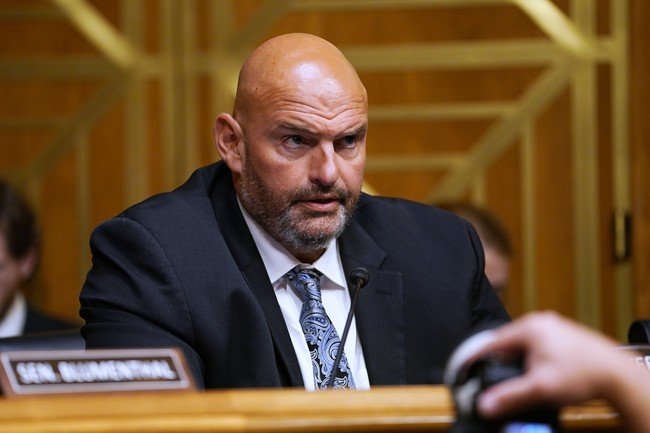
The Democratic National Committee’s decision to make South Carolina the first Democratic presidential primary state in 2028 has been billed as a step toward racial inclusivity. But according to a new analysis from PJ Media’s Daniel McCarthy, the move is less about diversity and more about keeping the party’s left wing at bay — and protecting the establishment’s grip on power.
McCarthy argues that South Carolina has served as the party establishment’s firewall against Bernie Sanders-style insurgencies not once, but twice. In 2016, Sanders nearly upset Hillary Clinton in Iowa’s caucuses and then beat her outright in New Hampshire — only to be crushed in South Carolina, where nearly three-quarters of the state’s Democratic primary voters chose Clinton. Four years later, Sanders briefly looked like the frontrunner before getting clobbered by Joe Biden in the Palmetto State, this time by a margin of more than two to one.
The racial dynamics of that firewall are central to McCarthy’s argument. South Carolina’s primary electorate is significantly more diverse than Iowa’s or New Hampshire’s, which makes it easy for the DNC to frame the calendar change as an empowerment of Black voters. But McCarthy notes that Black voters in the state are also markedly less radical than the party’s activist core, and he points to the Democratic Socialists of America as a largely white faction — citing DSA’s own membership polling showing that even its New York City chapter is 60% white, in a city that is only 34% white.
A Fault Line Within the Party
That split between the party’s most ideologically intense supporters and its elite establishment — which has relied on Black voter loyalty to hold power — is a fault line McCarthy says could reshape American politics. The establishment’s preferred candidates going forward, he argues, fit a familiar profile: a Californian like Kamala Harris or Gavin Newsom, with Harris benefiting from name recognition as a former vice president and the party’s 2024 nominee, plus her racial and gender identity credentials.
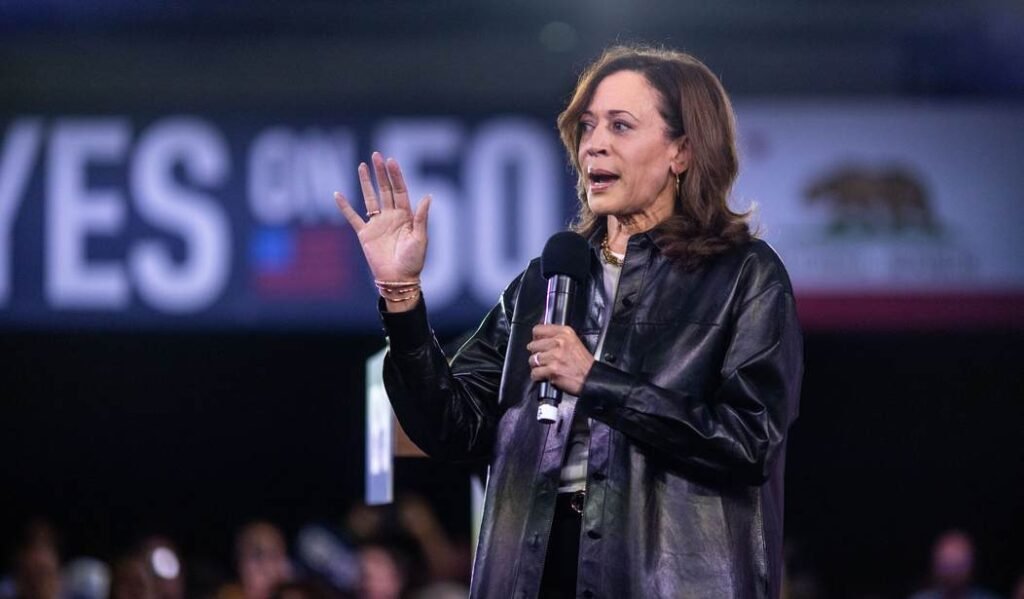
McCarthy doesn’t expect DSA members to bolt the party in November 2028 — he suggests they’re unlikely to sit out and hand the presidency to another Republican. But he argues that if an establishment candidate goes on to lose again, the party will be “ripe for a revolution,” raising a key question: will Black voters who have resisted Sanders-style socialism be equally content with a DSA-led party as they have been with the old guard?
The Southern Electoral Math
Beyond the internal party fight, McCarthy frames the South Carolina decision as the opening move in a broader Democratic strategy to reclaim the South. With Republican states growing while blue states like California shed population and businesses, Democrats face what McCarthy calls a “terminal problem” in the Electoral College and the House of Representatives. Each decennial census, he notes, is likely to shift more seats and electoral votes toward the GOP.
Georgia is the test case for a possible Southern comeback. McCarthy credits Republican leadership for the state’s prosperity but says that growth has fueled Atlanta’s expansion and turned its suburbs blue. Virginia, he notes, has already become a purple state, with deep-blue D.C. suburbs extending ever further into the state’s interior — a dynamic not unlike the one Atlanta is producing in Georgia. North Carolina, he adds, is another weak link in the GOP’s Southern wall.
A Knife Fight to Come
McCarthy is skeptical, however, that the Democrats can hold their coalition together while executing this strategy. The establishment is comfortable giving the DSA much of what it wants on policy, he argues — noting that elite Democrats are more allergic to the socialist label than to socialist policies — and both factions are devoted to identity politics. But the pieces won’t fit easily, and he describes the internal situation as a “knife fight for control of the party.”
That, he argues, gives Republicans an opening — provided they stop taking the South for granted and treat it as a battleground region. They’ll also need to slow the leftward drift of urban politics. South Carolina itself may not be in play anytime soon, McCarthy concedes, but the Democrats’ decision to plant their first 2028 primary there is the first move in a grand strategy that Republicans must be ready to counter.
Source: pjmedia.com — https://pjmedia.com/daniel-mccarthy/2026/08/17/democrats-southern-strategy-n4956253
This article is for informational purposes only and does not constitute financial, investment, tax, or legal advice. Do your own research and consult a licensed professional before making financial decisions.