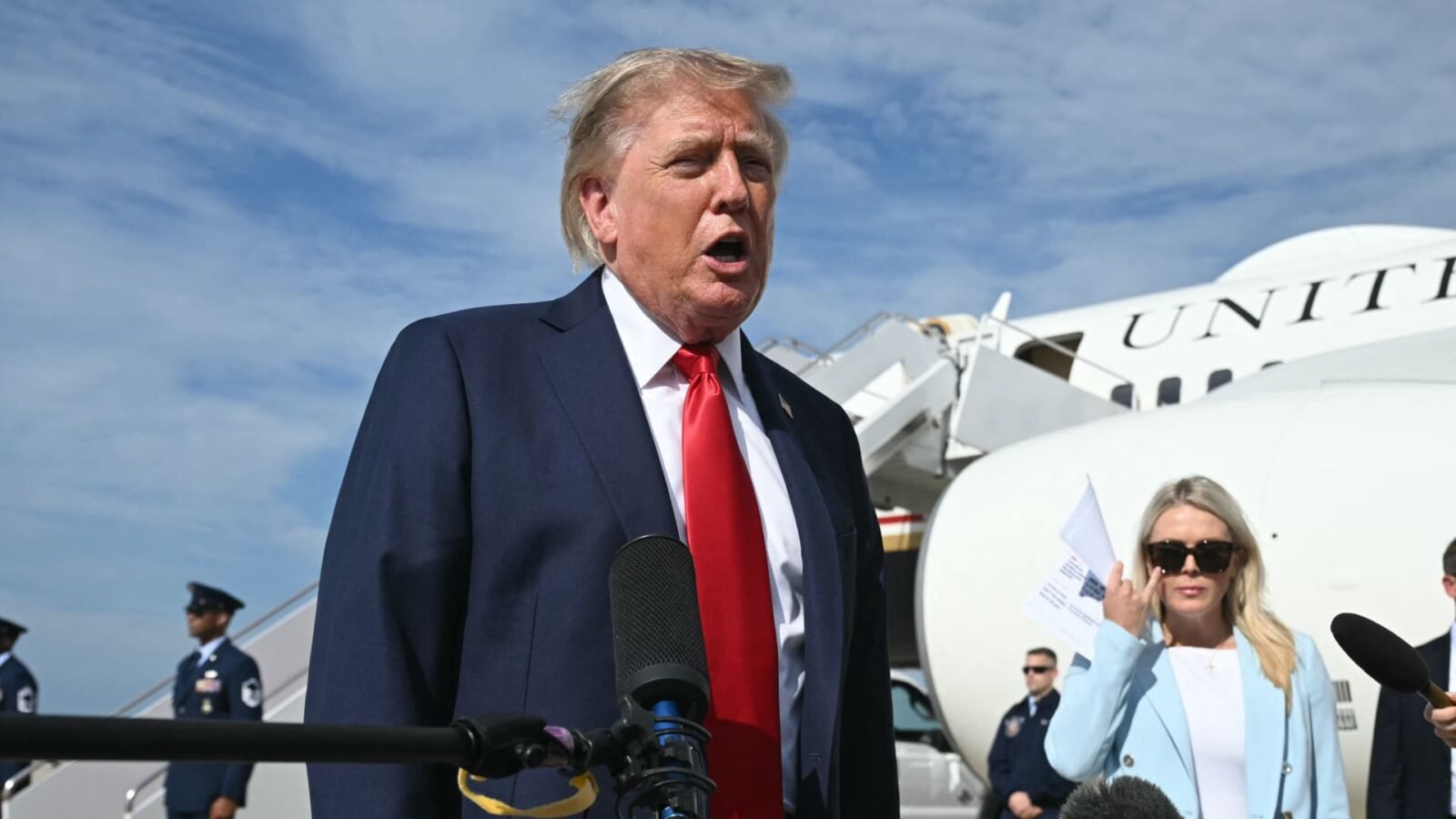
President Donald Trump on Monday said the U.S. will raise tariffs on cars, trucks, and auto parts imported from Canada to 50% starting Jan. 1, 2027, following the breakdown of trade negotiations last week.
In a Truth Social post, Trump accused Canada of “ripping off the United States of America for years,” claiming Canadian tariff policies have hurt U.S. farmers. He wrote that the situation is “not sustainable, and NOT ANYMORE!” and specified that tariffs on all cars, trucks—both large and small—automotive parts, and steel would increase to 50%.
The announcement would double the current top-line U.S. tariff of 25% on Canadian auto imports. Canada had sought to lower those duties as part of a new trade deal that appeared close to completion before talks fell apart Friday night. U.S. tariffs on Canadian steel imports are already at 50%.
Escalating rhetoric
Trump later returned to Truth Social to attack Ontario Premier Doug Ford, who had threatened to escalate the trade war by cutting off U.S. access to electricity and critical minerals. Trump called Ford a “Flunky” of Canadian Prime Minister Mark Carney and wrote that someone should get “these clowns to ‘fall in line’ or the consequences for Canada will be far WORSE!”
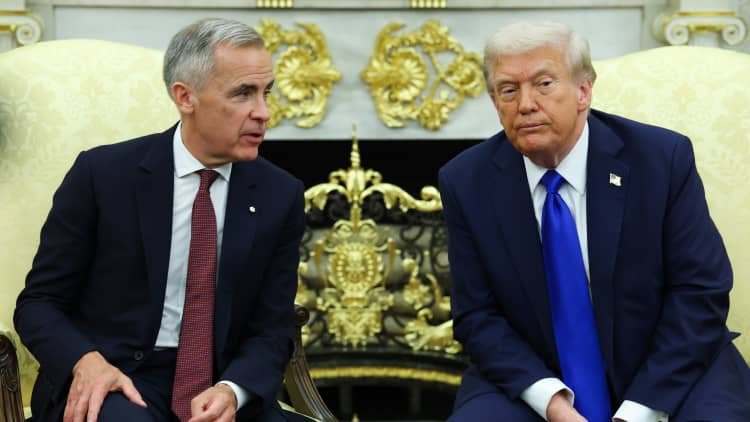
Ford responded by calling Trump a “bully” and a “dictator.”
On Saturday, the U.S. imposed 50% tariffs on roughly $20 billion of Canadian goods, including wine, cement, and hockey sticks, in retaliation for alleged Canadian trade discrimination against U.S. cars, alcohol, and dairy. Those duties would have been avoided if a deal had been reached, but Canadian negotiators left Washington empty-handed Friday evening. Both sides blame each other for trying to make unreasonable last-minute changes.
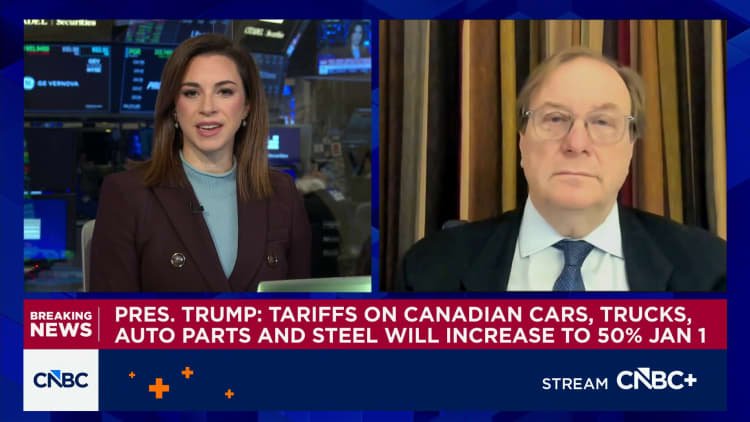
“In the last hours, I think there were things that the Canadians just—you know, they wanted more,” U.S. Trade Representative Jamieson Greer told CNBC’s “Squawk Box” on Monday morning.
Carney has vowed to retaliate “dollar for dollar” against the new U.S. tariffs.
Trade imbalance and auto industry impact
Trump declared that Canada “will be treated like a State no longer!” and called it “among the worst Nations in the World to deal with” on trade. He argued that Canada does 95% of its business with the U.S., while the U.S. does not need Canada—”They need us!” he wrote.
The Canadian auto market is much smaller than the U.S. market: fewer than 2 million new vehicles were sold in Canada in 2025, compared with more than 16 million in the U.S. Vehicles produced in Canada accounted for only 5.4%—or 861,000—of U.S. sales last year, according to GlobalData.
Detroit automakers have shrunk their vehicle assembly in Canada, while Japanese automakers Toyota and Honda have expanded production significantly. Toyota and Honda represented 76.5% of Canada’s vehicle production in 2025, and each produced more vehicles in Canada than Ford, General Motors, and Stellantis combined, according to a leading trade organization representing non-Detroit automakers.
Trump’s on-again, off-again tariff agenda has created major uncertainty for automakers, whose supply chains were built on free trade between the countries. Automotive parts can cross borders multiple times in different forms before being installed in a new vehicle, potentially exposing them to repeated tariff charges.
Source: www.cnbc.com — https://www.cnbc.com/2026/08/24/trump-canada-auto-tariffs-trade-war.html
This article is for informational purposes only and does not constitute financial, investment, tax, or legal advice. Do your own research and consult a licensed professional before making financial decisions.