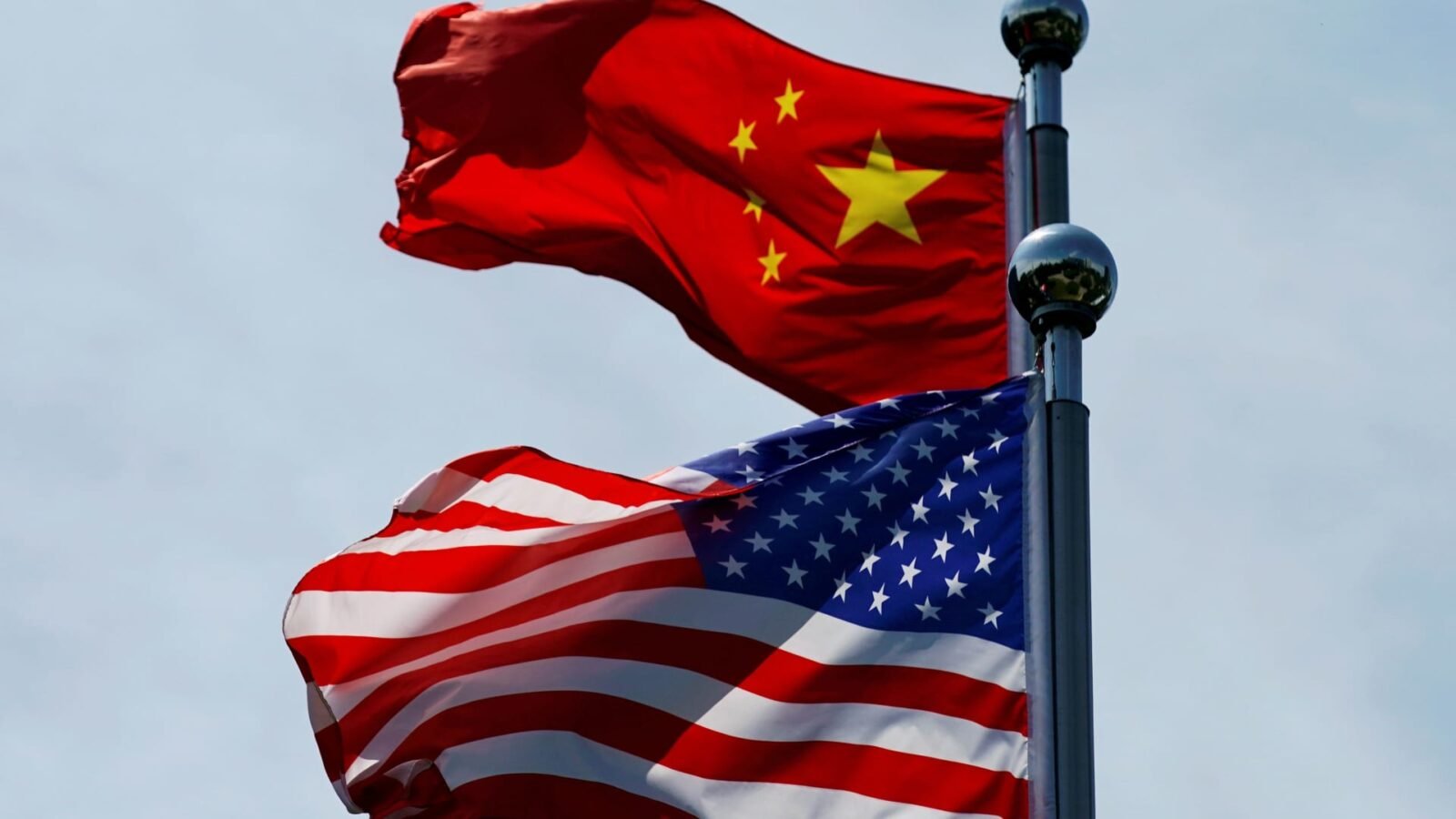
The Trump administration on Thursday escalated its rhetoric against Beijing, with President Donald Trump signaling he could sanction Chinese banks, even as officials from both countries met to prepare for President Xi Jinping’s upcoming state visit to Washington.
Speaking to reporters, Trump said, according to a Fox News stream, “I don’t have to announce everything,” when asked about potential actions against Chinese financial institutions. The comments came just a day after U.S. and Chinese officials held talks in Beijing on Wednesday, according to official announcements.
High-level preparations continue
U.S. Ambassador to China David Perdue said in a social media post that he met with China’s Foreign Minister Wang Yi and three other Chinese officials to discuss Xi’s state visit. China’s readout of the meeting noted Perdue’s comment on “preparing well for the next stage of important high-level interactions,” according to a CNBC translation.
Trump added Thursday that Xi would be coming “in a few weeks,” underscoring that the two sides remain engaged despite the tough talk.
Sanctions warnings and muted response
The heightened rhetoric follows Treasury Secretary Scott Bessent’s Monday warning that Chinese banks “will be targeted” if they are “part of the ecosystem that turns Iranian oil into money, into repression.” The comments were part of Trump’s broader “economic D-Day” announcements against Iran.
But beyond Bessent’s statements, there are few specifics on actions, according to Jodie Wen, a postdoctoral fellow at Tsinghua University’s Center for International Security and Strategy. She described the warning as “more of a warning” than a concrete threat.
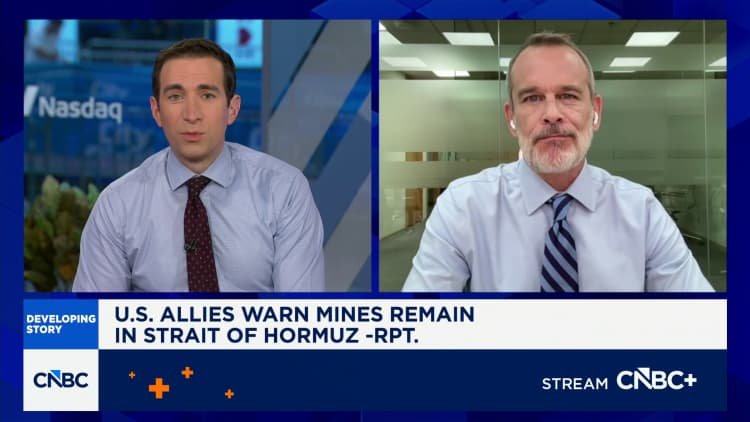
Beijing’s official response has been muted. The government said it would “take all necessary measures” to protect itself, without elaborating. When asked about communication with the U.S. on Iran, a foreign ministry spokesperson said there was no information to share, though the spokesperson confirmed the two countries were in talks about a Trump-Xi meeting.
Analysts see room for cooperation
Ryan Hass, director of the China center and Chair in Taiwan studies at Brookings, suggested Beijing may view the threats as largely performative. “Beijing will note the lack of groundwork laid ahead of Bessent’s ‘D-Day’ announcement, and they will conclude that this is largely performative,” Hass said in a social media post.
Hass, who advised the Obama administration as director for China, Taiwan and Mongolia at the National Security Council, pointed to Bessent’s own comment, “Why would I want to blow up the global financial system?” as a signal that the U.S. is not going to go after major Chinese financial institutions.
He expects the U.S.-China trade truce to hold because the “alternative is worse for both sides.”
Beijing may also find ways to comply with U.S. sanctions while advancing its own interests, noted Han Shen Lin, China managing director for The Asia Group and a former Wells Fargo Bank executive in China. China has built a legal mechanism that essentially tells its companies that foreign bankers must comply with U.S. rules, but inside the country, Chinese law takes precedence.
The balancing act reflects what Wen described as a shift toward “controlled competition” following the Trump-Xi summit in May, compared with the Biden administration’s “strategic adversary” approach.
Source: www.cnbc.com — https://www.cnbc.com/2026/08/28/trump-x-meeting-us-china-iran-sanctions.html
This article is for informational purposes only and does not constitute financial, investment, tax, or legal advice. Do your own research and consult a licensed professional before making financial decisions.