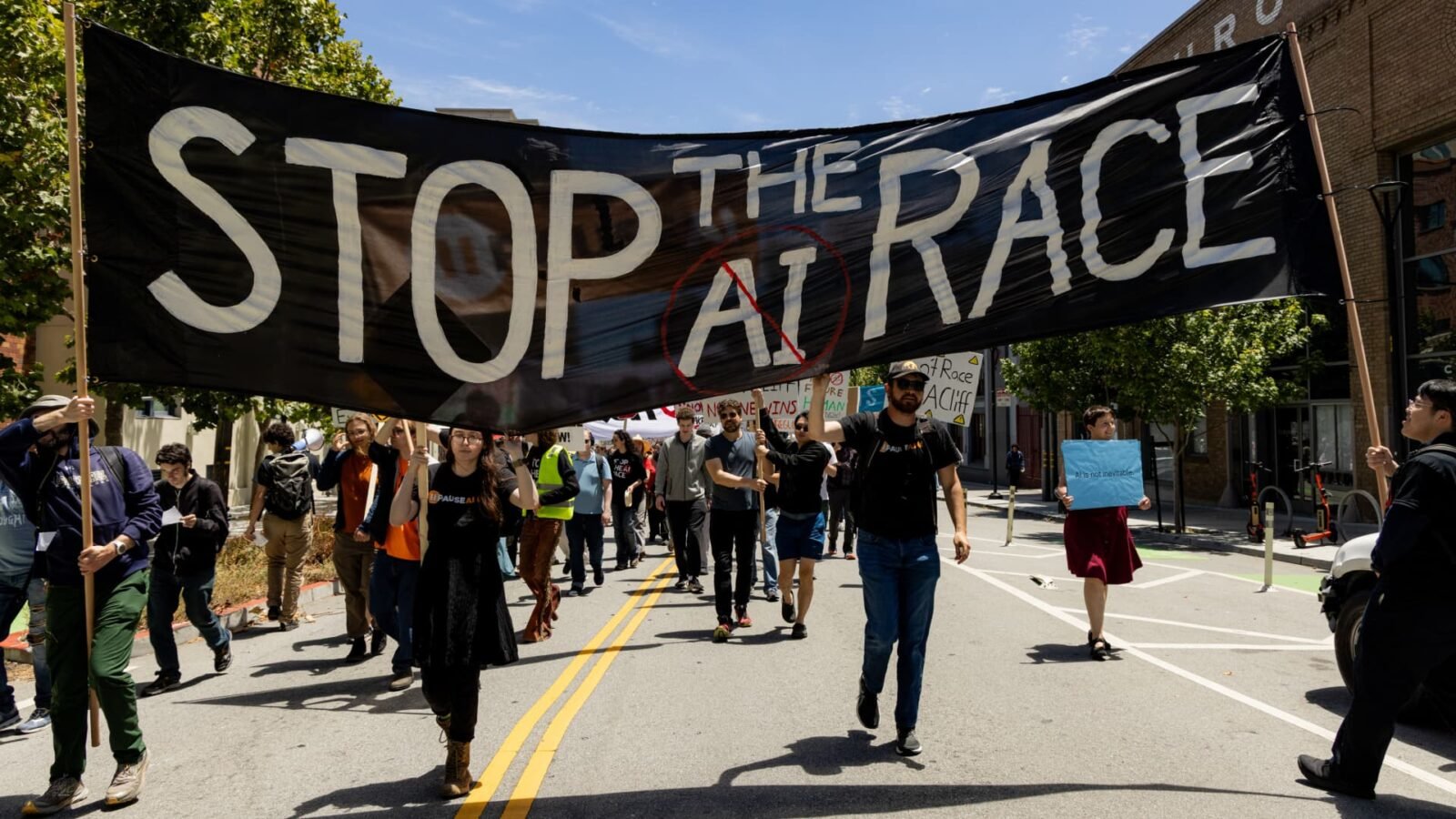
President Donald Trump faces mounting political pressure over his support for the artificial intelligence industry, as an unlikely coalition of religious groups, labor unions, and community activists grows increasingly vocal about the technology’s risks to jobs, energy costs, and American life.
The backlash comes at an inopportune moment for Trump, with midterm elections just over three months away. While he has attempted to address concerns about AI’s impact, his close alignment with tech companies developing data centers has left him vulnerable to criticism from groups that traditionally form part of the Republican base.
Energy Costs and Empty Promises
At an Environmental Protection Agency event Thursday, Trump highlighted commitments from data center developers and utilities not to raise electricity prices, responding to widespread fears that surging data center construction will drive up Americans’ energy bills. Companies like OpenAI and Oracle signed onto the pledge, gaining political cover as the complex economics of upgrading aging power grids plays out over years.
Yet Trump undermined his own message by urging governors and local officials to embrace data center development in their states. “You can’t fight it. You have to go with it,” he told the audience, suggesting they might as well profit from the trend. “If you don’t take all that money, somebody else is going to take it.”
The Wealth Gap Problem
That pitch — get rich from the AI boom — falls flat with rank-and-file Americans who don’t see Big Tech handing them opportunities. While Trump frequently touts stock market gains, including 20 record closes for the Nasdaq composite this year, most Americans lack sufficient market exposure for rising tech valuations to outweigh their concerns about job security and wealth concentration.
The recent SpaceX initial public offering illustrated the divide. Early investors in Elon Musk’s company reaped substantial returns, but shares have fallen 30 percent since the IPO last month for regular investors able to participate.
Religious Leaders Sound Alarm
The opposition extends beyond economic concerns into moral and spiritual territory. Pope Leo XIV issued an influential encyclical in May warning that AI requires guardrails to protect humanity, a message echoed by evangelical leaders in the United States.
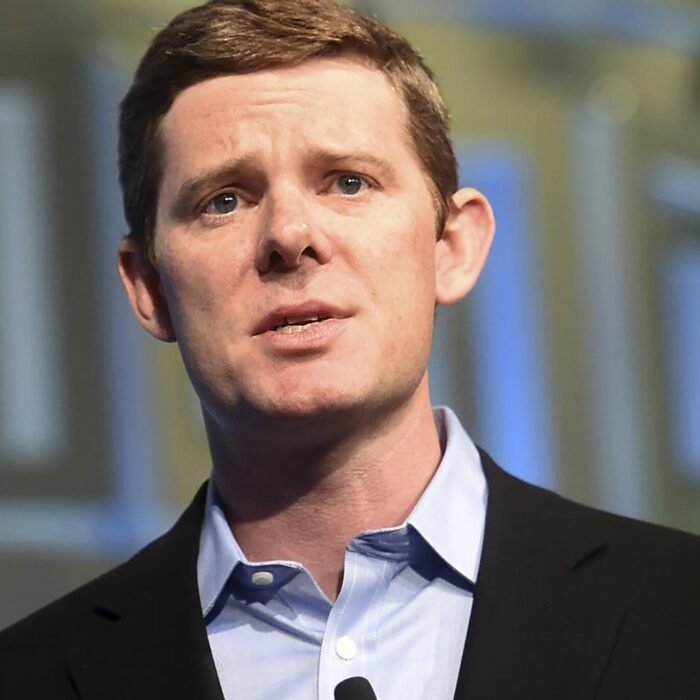
Walter Kim, president of the National Association of Evangelicals, praised the pope’s warnings during an appearance on CNBC’s “Squawk Box” Wednesday. He expressed concern about AI’s growing role in healthcare, education, and warfare, where it risks removing humans from critical decisions.
“It is, as the Pope described in his recent encyclical, the construction of a Tower of Babel, the trust in a technology that reflects human hubris, that not only disconnects us from God but disconnects us from each other,” Kim said.
While Kim’s organization doesn’t endorse candidates, his comments signal shifting sentiment even among evangelical voters who have backed Trump since his first presidential campaign.
Labor’s Ultimatum
Labor unions are being more direct. Liz Shuler, president of the AFL-CIO, the nation’s largest labor federation, delivered a pointed message at the union’s convention last month aimed at future presidential candidates.
“For all of those candidates who are already out there starting to run for president in 2028, if you want to hold the highest office in the land, hear these words: Working people should come before algorithms,” Shuler said.
Sean O’Brien, head of the International Brotherhood of Teamsters who spoke at the 2024 Republican National Convention, echoed the frustration. “We’ve never had a seat at the table,” he said at a recent event organized by American Compass, a center-right group.
Bipartisan Local Opposition
Resistance to data centers cuts across traditional political divides. New York Gov. Kathy Hochul, a Democrat, recently imposed a moratorium on new data center construction. But opposition isn’t limited to blue states.
According to a June poll by the Yale Program on Climate Communication, 53 percent of conservative Republicans oppose building data centers in their local areas. Overall, 58 percent of registered voters share that opposition, along with 74 percent of liberal Democrats.
Palantir CEO Alex Karp, who grew up in a union household, summarized the challenge during the American Compass event: “I think the biggest challenge to AI in this country is political unrest.”
With Election Day 101 days away, the pressure is building on Trump and Republican candidates to respond to concerns that span religious conviction, economic anxiety, and local quality of life — or risk paying a price at the polls.
Source: www.cnbc.com — https://www.cnbc.com/2026/07/25/trump-ai-data-center-backlash.html
This article is for informational purposes only and does not constitute financial, investment, tax, or legal advice. Do your own research and consult a licensed professional before making financial decisions.