Tesla reported weaker-than-expected earnings for the second quarter on Wednesday, even as revenue came in above Wall Street forecasts. The stock fell nearly 3% in extended trading following the results.
The electric vehicle maker posted net income of $1.11 billion, or 32 cents per share, down 5% from $1.17 billion, or 33 cents per share, a year earlier. Revenue climbed 26% to $28.24 billion from $22.5 billion in the same period last year.
The earnings report arrives amid a difficult period for Tesla’s stock, which has declined roughly 11% this month and 17% year-to-date. The slide has coincided with weakness in SpaceX, Elon Musk’s other trillion-dollar company, which has lost more than 40% of its value since its peak close following a record market debut in June.
Margin Pressure and Rising Costs
Despite beating revenue expectations, Tesla faced margin pressure that disappointed investors. Gross margin slipped to 16.8% from 17.2% a year earlier, falling short of the 19.4% analysts had anticipated, according to StreetAccount. The decline came as average selling prices per vehicle decreased and regulatory credit revenue dropped.
During the quarter, Tesla began selling lower-cost versions of its popular Model 3 and Y vehicles after discontinuing its more expensive flagship Model S and X offerings.
Operating expenses climbed significantly faster than revenue, surging 47% to $4.35 billion in the second quarter as the company invested heavily in artificial intelligence and other research and development initiatives.
Segment Performance
Tesla’s core automotive segment generated $20.52 billion in revenue, up 23% from the prior year. The energy business, which includes solar and battery energy storage systems, saw revenue increase 13% to $3.14 billion. The services and other segment, which covers fees for out-of-warranty vehicle repairs, jumped 50% to $4.58 billion.
Cash Flow Turns Negative
Free cash flow swung to a deficit of $1.1 billion in the quarter, compared with positive free cash flow of $146 million a year ago and $1.44 billion in the first quarter of 2026.
Capital expenditures soared 142% to $5.79 billion from $2.39 billion in the same quarter last year. CFO Vaibhav Taneja told shareholders during the company’s April earnings call that capex would exceed $25 billion this year.
Tesla said in its shareholder materials that it “will manage the business such that we ensure a strong balance sheet, maintaining sufficient liquidity to fund our product roadmap, long-term capacity expansion plans – including further vertical integration – and other expenses.”
The company explained that capacity buildout related to multi-year infrastructure initiatives is underway, including AI compute, solar, battery material and semiconductor manufacturing.
Strategic Pivot
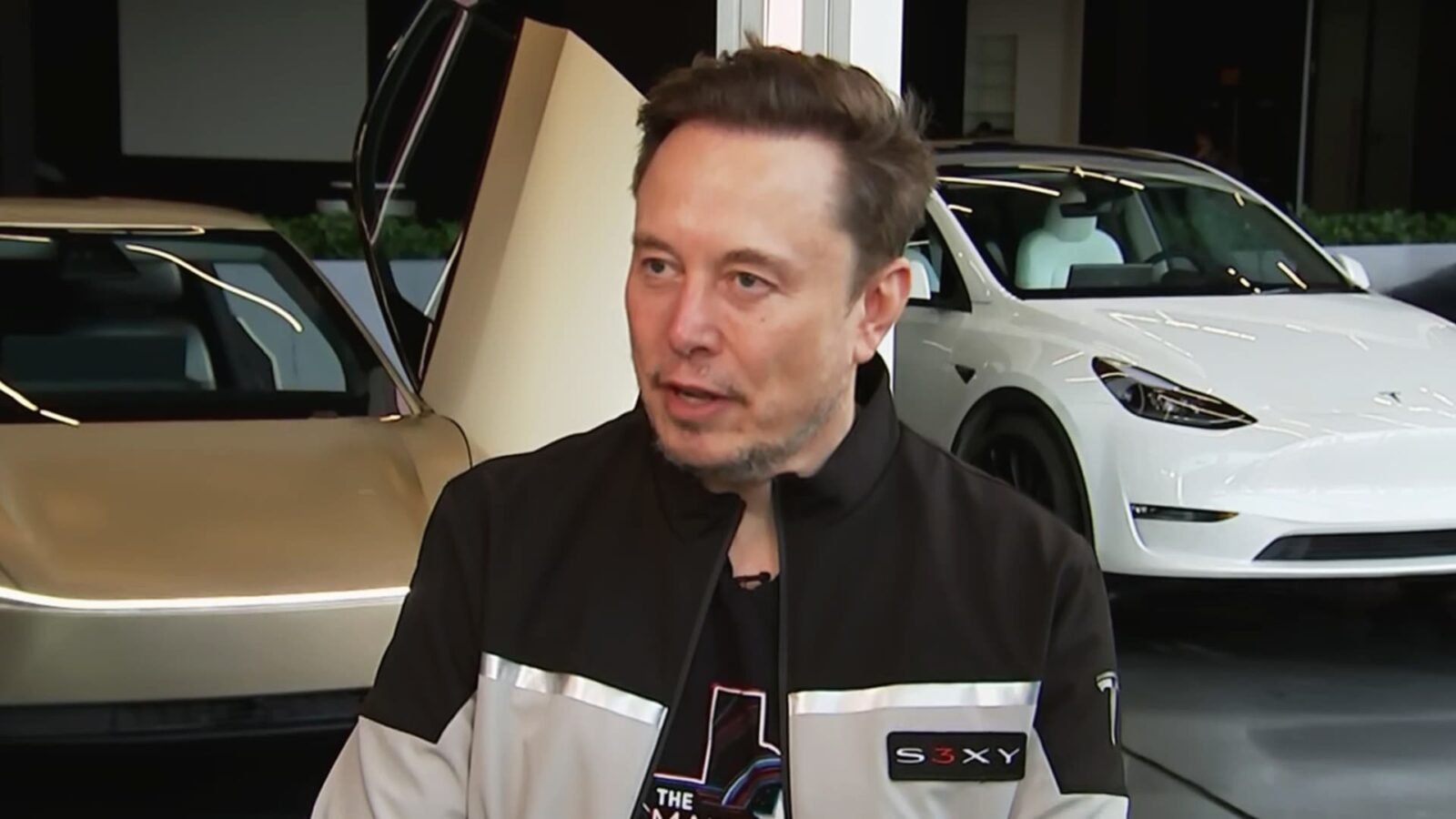
Musk has increasingly shifted Tesla’s focus away from traditional vehicle sales toward its driverless Robotaxi service, ramping up production of the company’s driverless Cybercab and retrofitting older factory lines in Fremont, California, to manufacture Optimus humanoid robots. Musk has promised shareholders an AI-powered robot capable of serving as a babysitter, factory worker or world-class surgeon.
Source: www.cnbc.com — https://www.cnbc.com/2026/07/22/tesla-tsla-q2-2026-earnings-report.html
This article is for informational purposes only and does not constitute financial, investment, tax, or legal advice. Do your own research and consult a licensed professional before making financial decisions.