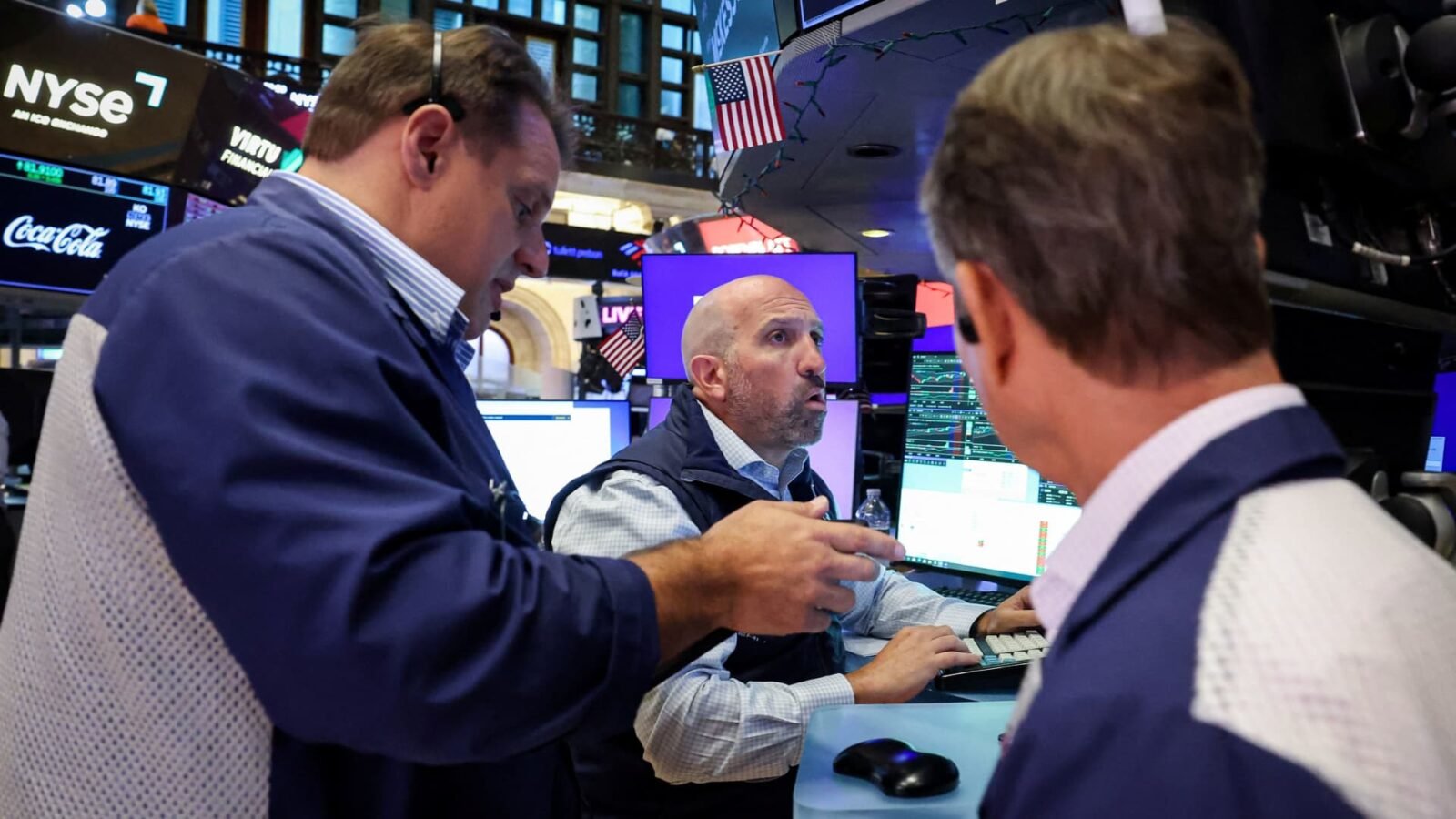
Major U.S. stock indexes declined Thursday as investors shifted away from their recent optimism about Middle East tensions, confronting the reality of sustained conflict and its economic consequences. The S&P 500 headed for its largest drop in a month as oil prices surged and Treasury yields climbed to levels that strategists said were impossible to overlook.
Despite twelve consecutive nights of U.S. strikes against Iran sending oil prices and Treasury yields higher, domestic equities had mostly remained flat. That dynamic shifted Thursday when reports of attacks against tankers off the coast of Saudi Arabia sent Brent crude futures above $100 per barrel and pushed the 10-year Treasury yield past 4.7%, its highest level since January 2025.
“These problems became too big to ignore,” said Steve Sosnick, chief strategist at Interactive Brokers. “It’s too hard to ignore $100 oil. It’s too hard to ignore 10-year rates that are above 4.70%. It’s too hard for the stock market to ignore 30-year rates that are solidly above 5%.”
West Texas Intermediate crude futures jumped 6% to $92 per barrel, climbing more than 28% from lows below $70 per barrel reached earlier this month. The S&P 500 has fallen approximately 2% since the consecutive strikes began on July 12.
Echoes of March Decline
The market turmoil recalls a previous selloff in March when the conflict initially escalated. At that time, the S&P 500 fell more than 7.5% at its low point as oil surged nearly 70%, raising fears of stagflation — a scenario where higher energy prices fuel inflation while elevated costs at the pump weigh on consumer spending.
A strong rebound followed in April and May, driven by de-escalation announcements and renewed enthusiasm for artificial intelligence stocks. A key factor supporting that rally was investor confidence that President Donald Trump would seek an exit strategy from the conflict rather than endure the economic and political fallout of prolonged hostilities.
JPMorgan equity strategists wrote earlier this month that they had “consistently argued since 2nd half of March to use the equity weakness brought on by the Iran conflict to buy into, as the off-ramp and the eventual deal were likely.” The firm advised investors to “keep using any dips on the back of adverse geopolitical headlines in order to add.”
Renewed Economic Concerns
Sameer Samana, senior global market strategist at Wells Fargo Investment Institute, now believes traders need to revisit the economic concerns that emerged in March. Investors should worry about both higher inflation and the impact of elevated gas prices on consumers, according to Samana, who added that the reignited conflict warrants preparation for a larger equity drawdown.
Sosnick noted that stocks Thursday were also likely pricing in a tighter borrowing environment for companies. According to CME’s FedWatch tool, the probability of a Federal Reserve rate hike next week has climbed to nearly 38%, while odds for a hike at the September meeting exceed 80%. A week earlier, those probabilities stood at approximately 12% and 53%, respectively.
Long-Term Outlook Remains Split
Some market observers maintain a more measured view. Michael Tanney, CEO at investment advisory firm Pereon Wealth, suggested the U.S. economy remains better positioned than in past cycles to handle energy shocks.
“In the short term, the elevated spike is more meaningful to the headlines than client portfolios,” Tanney said. “If we have a sustained price above $120, that’s the breaking point where you’ll see serious trickle down effects.”
That threshold would mark a significant escalation from current levels and test whether the resilience many analysts saw earlier this year can hold under more extreme conditions.
Source: www.cnbc.com — https://www.cnbc.com/2026/07/23/short-sighted-stock-market-can-no-longer-brush-off-war-investors-say.html
This article is for informational purposes only and does not constitute financial, investment, tax, or legal advice. Do your own research and consult a licensed professional before making financial decisions.