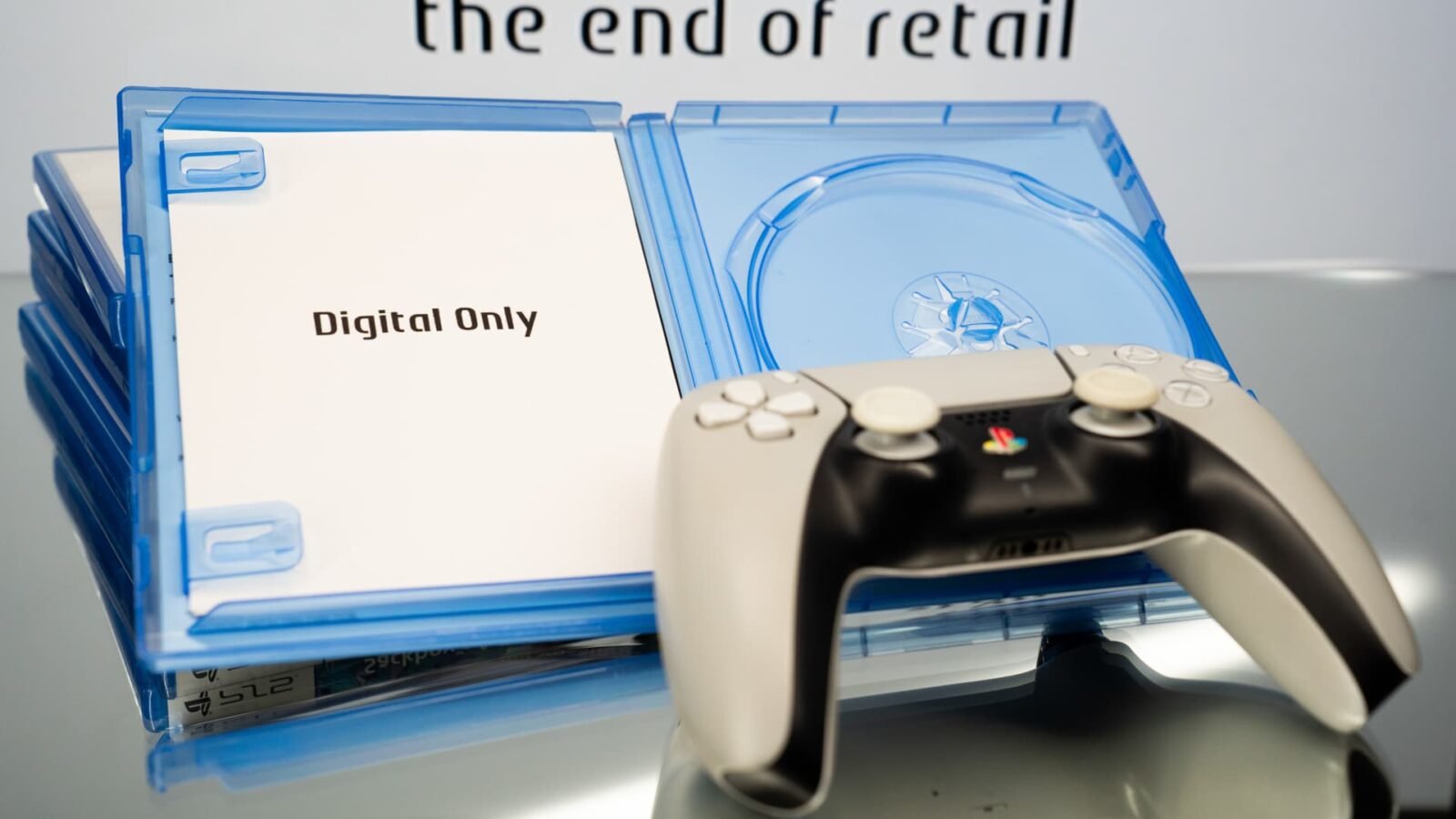
Sony has announced it will end physical disc production for new games released on PlayStation consoles beginning in January 2028, a decision that reverses the company’s celebrated consumer-friendly position from over a decade ago and threatens a multi-billion-dollar resale market.
The move means new PlayStation releases will be digital-only. Boxed retail versions, if sold at all, will contain download codes rather than physical discs. Take-Two Interactive’s Grand Theft Auto 6, slated for release later this year through Rockstar Games, is reportedly among the first titles that will use this model.
The decision stands in sharp contrast to Sony’s 2013 messaging, when the company mocked rival Microsoft Xbox’s restrictive game-sharing policies. At that year’s E3 conference, then-Sony executive Jack Tretton told the audience that PlayStation disc buyers would have the right to “trade in the game at retail, sell it to another person, lend it to a friend, or keep it forever.” The statement sparked a standing ovation and helped force Xbox to roll back its policies.
“This is a truly ironic turn of events,” Kazunori Ito, director of equity research at Morningstar, told CNBC. Sony had won goodwill by presenting physical discs as the simple, consumer-friendly option, he noted.
Economic Impact on Resale Market
The shift has direct implications for the second-hand gaming economy. According to Dataintelo, the global second-hand game platform market was worth $7.2 billion in 2025 and is projected to reach $13.8 billion by 2034. That market encompasses pre-owned games, consoles, accessories and peripherals.
Michael Pachter, managing director of strategic planning at Wedbush Securities, told CNBC that at least one-third of games have historically been sold as used copies. Those used games also provided currency for gamers who traded them in for cash to purchase new titles.
“Brick and mortar game retail is doomed,” Pachter said, though he acknowledged the move will save Sony money through reduced manufacturing costs.
Loss of Consumer Options
The elimination of physical discs removes several options from consumers. A disc can be resold, traded in, lent to friends, given as gifts, kept on a shelf, or preserved after a digital storefront shuts down. Download codes offer none of those possibilities.
Without physical discs, gamers lose the ability to buy cheaper used games or recoup money from titles they’ve finished. The change gives Sony tighter control over where games are sold, when they’re discounted, and how long consumers can access them.
“This is an extremely anti-consumer decision that has no legitimate justification and communicates a disdain for players in their ecosystem,” Michael Futter, founder of video game industry consultancy F-Squared, told CNBC.
Futter emphasized that consoles are closed ecosystems controlled by the platform holder, unlike PC gaming where players can purchase through multiple marketplaces like Steam or the Epic Games Store.
Sony’s Defense and Market Reality
Sony defended its decision by citing changing consumer behavior. The company’s full-year 2025 results showed that revenue from PlayStation 4 and 5 physical games was almost 10 times less than revenue from digital downloads of full games. Sony stated the decision was a “natural direction” to adapt to consumer trends as preference for digital media significantly outpaces physical discs.
Existing physical games and titles released on disc before the January 2028 cutoff will not be affected. However, Ito expects the second-hand market for games to “keep shrinking and eventually disappear.”
The announcement has sparked concerns about digital ownership more broadly. Sony recently revealed that over 500 previously purchased movies will be removed from users’ PlayStation libraries due to licensing agreements, with no mention of compensation. The company also announced that PlayStation Store purchasing on PS3 and PS Vita will close in most countries in July 2027.
“What’s to stop PlayStation from taking the same actions with games we’ve purchased?” Futter asked, highlighting broader anxieties about digital content ownership.
Sony and PlayStation did not respond to CNBC’s requests for comment.
Source: www.cnbc.com — https://www.cnbc.com/2026/07/22/sonys-playstation-disc-decision-threatens-a-7-billion-resale-market-.html
This article is for informational purposes only and does not constitute financial, investment, tax, or legal advice. Do your own research and consult a licensed professional before making financial decisions.