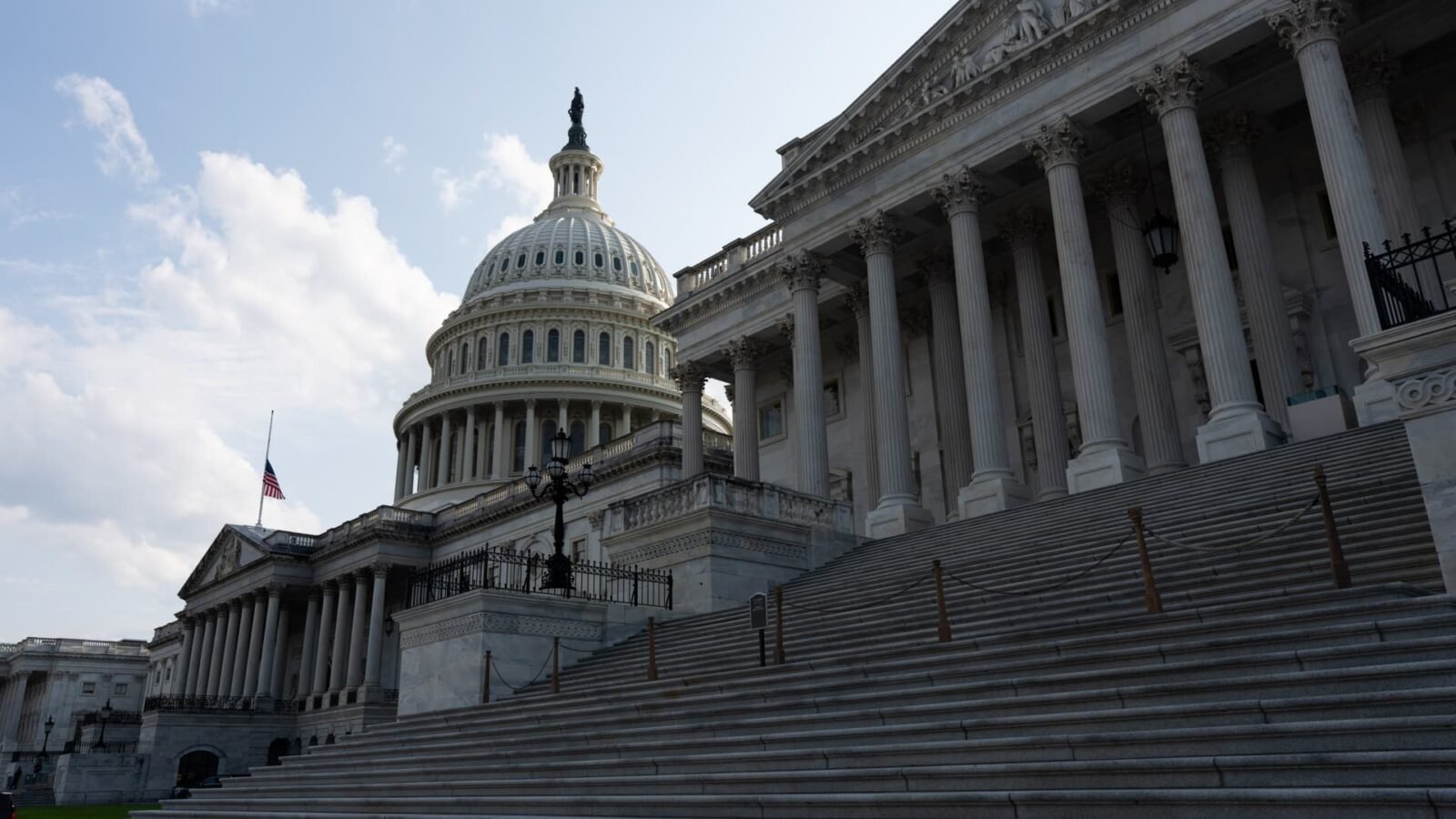
Congress split along largely partisan lines Thursday on measures intended to force President Donald Trump to withdraw from military operations in Iran, as the renewed conflict drives oil prices above $100 per barrel and threatens to reshape the political landscape ahead of midterm elections.
The Senate voted 47-49 to reject a joint resolution under the War Powers Act that would have compelled Trump to cease hostilities with Iran. The vote came hours after the House approved a similar but non-binding measure by a 214-208 margin.
The congressional votes mark the first legislative action since Trump notified lawmakers that he had restarted military operations against Iran following failed peace negotiations. The conflict’s resurgence after weeks of fragile ceasefire arrives just months before midterm elections that could determine control of Congress, where Republicans hold narrow majorities in both chambers.
Political Dynamics
Sen. Chris Van Hollen, a Maryland Democrat who introduced the Senate resolution, framed the vote as a chance for Congress to reassert its constitutional authority over military action. “There is no good way out of a bad war,” Van Hollen said, according to CNBC. “This is an opportunity for this Congress to finally take responsibility.”
The vote exposed fissures within both parties. Sen. Susan Collins of Maine was the lone Republican to support the measure, a decision likely influenced by her competitive reelection race in a state that has become reliably Democratic. Meanwhile, Pennsylvania Sen. John Fetterman broke with his party as the only Democrat voting against the resolution.
Republicans argued that constraining the administration’s military options would undermine American credibility on the world stage. Sen. John Kennedy of Louisiana warned that forcing a withdrawal “would be a huge blow to American credibility.” He also downplayed the war’s electoral significance, suggesting the midterms would ultimately be decided by economic concerns rather than foreign policy.
Limited Impact
Even if both chambers had passed matching resolutions, Trump would likely veto any measure that reached his desk. The House’s concurrent resolution carries no legal weight and serves only as an expression of congressional disapproval, meaning it would never require the president’s signature.
Energy Market Shock
The conflict’s intensification has sent shockwaves through energy markets. International benchmark Brent crude oil topped $100 per barrel Thursday, while U.S. crude surged above $91 per barrel. The spike in oil prices has translated directly to American consumers, with gasoline prices climbing to $4.09 per gallon on average nationwide, according to AAA data.
The energy price surge adds another layer of economic concern for voters already focused on cost-of-living issues, potentially complicating the political calculus for lawmakers from both parties as they head into campaign season.
Source: www.cnbc.com — https://www.cnbc.com/2026/07/23/congress-pushes-war-powers-resolutions-tells-trump-to-abandon-iran-war.html
This article is for informational purposes only and does not constitute financial, investment, tax, or legal advice. Do your own research and consult a licensed professional before making financial decisions.