More than one in five American workers now need the government’s permission to do their jobs, according to a new report from the Federal Reserve Bank of Minneapolis, and the resulting patchwork of state licensing rules is drawing fresh scrutiny from economists and policymakers.
The December 2025 Fed report found that 22 percent of employed Americans hold a government-issued license, spanning professions from physical therapy and cosmetology to public school teaching. Many of those jobs are entry-level or considered low-skilled, raising concerns that licensing requirements are blocking lower-income workers from finding gainful employment.
The findings align with the Archbridge Institute’s 2026 State Occupational Licensing Index, which ranks the most and least restrictive states. According to Archbridge, workers seeking to enter one of 102 lower-income occupations must, on average, give up nearly a year to education and on-the-job training, pass at least one exam, and pay nearly $300 in fees.
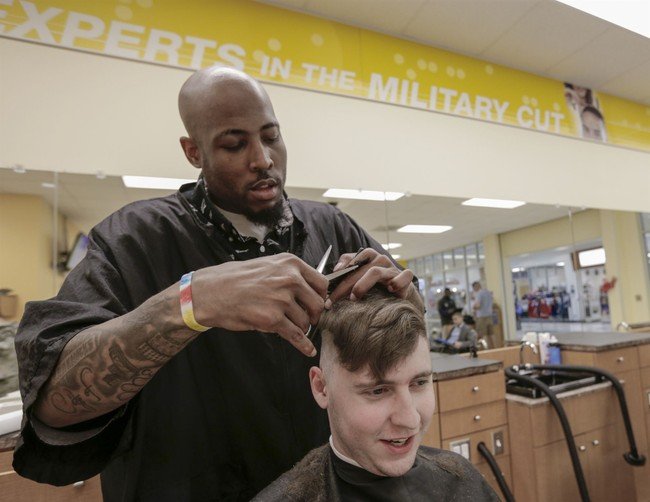
Some examples illustrate the scale of the burden. In Illinois, aspiring cosmetologists face licensing fees of $225 to $240, but tuition and supplies for cosmetology school can run anywhere from $10,000 to $18,000. At least 1,500 hours of instruction are required before a candidate can even sit for the licensing exam.
Critics argue that many licensing requirements have little to do with public safety. “While licensing advocates claim that getting government permission is necessary to protect health and safety, that argument becomes less credible when many occupations are licensed in some states and not others,” wrote JD Tuccille of Reason.com. He pointed out that Arizona and Nevada do not require electricians to navigate California-style credentialing, asking whether those states suffer as a result.
The Archbridge report highlights other inconsistencies. Alabama requires all acupuncturists to be licensed physicians, effectively barring the occupation unless a practitioner holds a medical degree. In several states, shampooers must obtain full cosmetology licenses to work. Medical doctors are licensed in every state, but so are nail technicians—for reasons that are unclear, the report notes. Meanwhile, security guards are licensed in only half of states, and mold remediation workers need a license only in Texas.
Archbridge identified Oregon, Texas, Tennessee, Arkansas, and New Jersey as the five most burdensome states for workers. Missouri, Kansas, New York, Indiana, and Colorado put the fewest bureaucratic hurdles in the way of employment.

The economic stakes are significant. “Too often, the occupational licensure laws on the books do not reflect the world we actually live in,” Alanna Wilson cautioned in Governing magazine. The requirements raise costs for consumers by limiting competition and force workers to spend time and money on credentials that may not be necessary.
Spence Purnell, then of the Reason Foundation, wrote in 2018 that “a broad ideological spectrum of analysts and economists mostly agrees—occupational licensing does not improve public health in any scientifically rigorous or statistically significant manner.”
So why do the requirements persist? Special interests play a role, the report suggests. Professional associations protect their members by discouraging competition, and trade schools benefit from license requirements by forcing students to attend their programs to earn credentials.
While outright repeal of licensing laws remains rare—the Minneapolis Fed cautioned that eliminating such requirements is very uncommon—states are increasingly moving to recognize licenses issued elsewhere. As of 2026, 28 states have adopted some form of universal licensing recognition, according to Archbridge, the same number as last year. However, “universal” recognition is not always truly universal: some states only recognize licenses under “substantially similar” rules, while others recognize licenses only for state residents.
Eleven states earned Archbridge’s gold medal for universally recognizing occupational licenses without restrictions. Supporters see this as a pragmatic middle ground. By letting workers carry their credentials across state lines, a state can free workers to move where opportunities are better—without forcing politicians to admit that decades of “public protection” laws have added substantially to consumer costs.
The debate echoes arguments made during the Reagan administration, when Federal Trade Commission Chairman James C. Miller III began examining state-level professional restrictions and licensing boards. Reagan’s own warnings about government overreach—that “if it moves, tax it; if it keeps moving, regulate it”—still animate much of today’s criticism, even though Reagan himself focused on federal bureaucracy rather than state occupational permits.
For now, the practical question remains: how many Americans should need a government-issued license simply to earn a living?
Source: pjmedia.com — https://pjmedia.com/rick-moran/2026/08/26/1-in-5-americans-need-the-governments-permission-to-work-n4956558
This article is for informational purposes only and does not constitute financial, investment, tax, or legal advice. Do your own research and consult a licensed professional before making financial decisions.