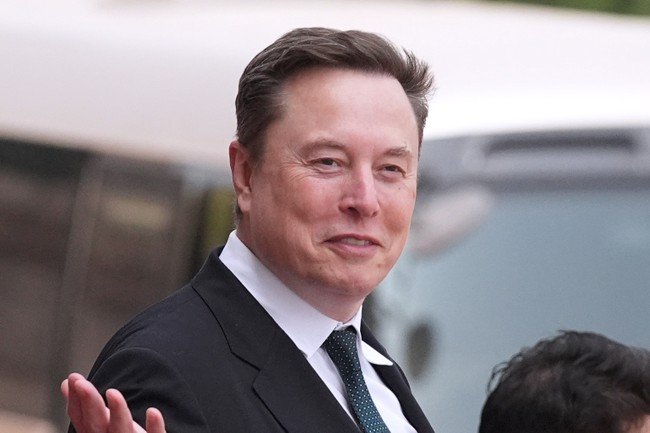
Elon Musk delivered a blunt message to European Union leaders at the G20 Innovation Ministerial in Chapel Hill, North Carolina, on Tuesday: the future belongs to those who build power generation, chip fabrication, and data centers — and Europe is falling dangerously behind.
The SpaceX CEO and founder said he believes artificial intelligence will expand the global economy by 20% to 30% over the next few years, a figure he described as “on the order of 20 to 30 trillion dollars per year.”
“Toward a 30% increase of the total global economy — this is quite a lot of prosperity we’re talking about here, just from digital AI,” Musk said. “But from robotics … I think we’ll see many multiples of the global economy, meaning you can increase the economy by a factor of 10 or more. These are mind-boggling numbers.”
That growth, however, hinges on three critical inputs: more chips, more data centers, and vastly more power generation. Musk warned that the supply crunch is not a distant problem.
“The consensus is that there will be a significant power shortfall next year — not a distant future,” he said, adding that analysts following AI closely expect at least a 15-gigawatt power shortfall in 2027 for AI chips alone.
SpaceX, Musk’s rocket company, plans to bypass terrestrial power limits by building data centers in space — a capability he said no other company currently possesses. But for most nations, the near-term answer lies in constructing new energy infrastructure and attracting AI firms with reliable electricity.
The exponential demand growth, Musk said, “creates an opportunity” for countries to “construct a lot of power, offer that to AI companies. And in exchange, of course, these data centers would be taxed and have to pay reasonable fees and so on.”
President Donald Trump set the tone on Monday, telling opponents of AI data centers that they would end up “backwards and poor” and that their resistance was effectively helping rival China.
Europe’s Innovation Gap
The contrast with Europe was stark. The last major consumer innovation to come out of the continent may have been the web browser more than three decades ago, according to the report. Europe has a few niche tech players — Germany’s Black Forest Labs, known for FLUX-based image generation, and France’s AMI Labs, a small startup — but none compete at the frontier of general AI.
Mistral AI, often cited as Europe’s AI leader, is privately held with an estimated valuation of less than $15 billion — almost a rounding error next to leading U.S. or Chinese firms.
Musk pointed directly at the regulatory environment as a key obstacle. Addressing ministers from France, Italy, and Germany, as well as EU tech chief Henna Virkkunen, he said: “You have to have an environment that’s relatively free of regulation, meaning that new things must be default legal as opposed to default illegal.”
“In the EU, for example, we find that the regulation level is extraordinarily high, and things are generally default illegal, and this inhibits progress with new technologies,” he added.
The consequences are measurable. The report notes that if the United Kingdom were a U.S. state, 30 years ago it would have ranked as the fifth-richest. Today, it would rank 51st, behind Mississippi. Over the next 25 years or less, Europe appears destined to be lapped by China as well.
A Choice for America
Musk’s remarks serve as a reminder that the United States faces a similar decision. Opposition to building out energy generation, chip fabrication, and data center construction, the report argues, is functionally no different than choking off rail and steel production at the start of the 19th century, or oil and automobiles at the dawn of the 20th.
The question now is whether the U.S. — and Europe — will allow the buildout needed to capture the AI-driven prosperity that Musk describes. As he put it, the numbers are “mind-boggling,” but they will only materialize for those willing to break ground.
Source: pjmedia.com — https://pjmedia.com/vodkapundit/2026/09/02/musk-the-future-is-power-chips-and-data-centers-n4956807
This article is for informational purposes only and does not constitute financial, investment, tax, or legal advice. Do your own research and consult a licensed professional before making financial decisions.