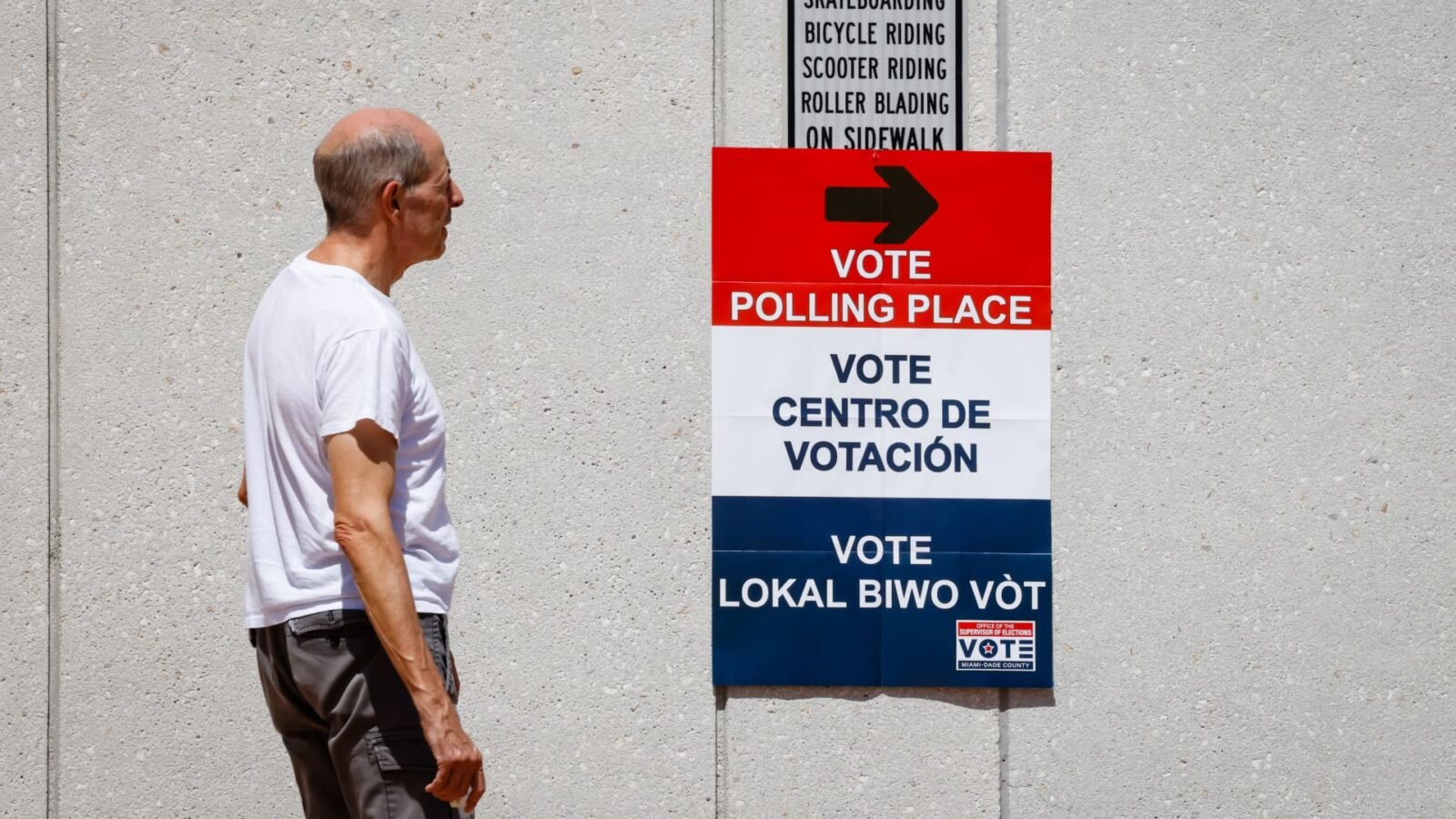
With the 2026 midterm elections just 10 weeks away, investors are beginning to price in the possibility that Democrats could seize control of one or both chambers of Congress, a shift that would fundamentally alter the legislative landscape in Washington and, by extension, the capital markets.
Democrats are favored to win at least one chamber in November, holding a roughly 6 percentage point lead on the generic ballot, according to FiftyPlusOne, a polling tracker. A divided government would likely grind major non-bipartisan legislation to a halt, turning even routine tasks like raising the debt ceiling into prolonged, high-stakes negotiations.
Executive action in the spotlight
Market strategists caution that divided government does not necessarily mean policy restraint — especially with President Donald Trump in the White House.
“One of the things you often hear is the market loves a divided government, and that usually means the extreme positions don’t get enacted,” said Ed Mills, managing director of Washington policy at Raymond James. “But what we have been cautioning is the biggest market moves from a policy perspective of the last two years have come from executive action.”
Mills emphasized that if Democrats take the House, Trump is unlikely to moderate his approach. “Do you think that President Trump is going to work with Democrats more? Or is it more likely he’s going to get more aggressive on executive action? My bet’s on more executive action,” he said.
The most prominent example is Trump’s tariff campaign, which relied on emergency authority under the International Emergency Economic Powers Act to impose sweeping levies. Though the Supreme Court eventually ruled those tariffs unconstitutional, they remained in effect for more than a year and weighed heavily on markets. Trump has since been replacing them with new tariffs under different executive authority.
JPMorgan noted in a June report that since 1950, the S&P 500 has historically performed better under divided Congresses than under single-party control. The firm also pointed out that even if Democrats win the Senate, Trump would still be able to block Democratic priorities on taxes, climate, and healthcare.
Debt ceiling looms large
A key risk investors are watching is the next debt ceiling fight. Most financial institutions expect the U.S. to hit its $41.5 trillion debt limit around mid-2027, requiring Congress to authorize additional borrowing. If lawmakers fail to act, the U.S. could default on its obligations.
Congress last raised the ceiling in 2025 as part of the Republican tax and spending package known as the “One Big Beautiful Bill Act.” If Democrats win at least one chamber, analysts widely agree that raising the ceiling again will be far more difficult, as Democrats could use their leverage to extract policy concessions.
“Split government can make the process of raising or suspending the ceiling especially contentious, though a blue wave could make the process less tricky,” said a recent report from TD Strategies, referring to the possibility that Democrats could win both chambers. “While we ultimately expect the ceiling to be raised, we look for negotiations to go down to the wire.”
That scenario played out in reverse in 2023, when Republicans controlled the House and demanded spending cuts in exchange for raising the debt ceiling, bringing the U.S. to the brink of default.
Molly Brooks, one of the authors of the TD Strategies report, said a standoff can increase market volatility and push Treasury yields higher, particularly as the “X-date” — when Treasury can no longer pay its bills — approaches. “Treasury bills that will be maturing in that year will be at higher rates because these investors are requiring a higher premium on that debt,” she said.
Mills added that he is watching for unusual market moves, including a potential bond selloff during a debt ceiling fight. “There’s been a perverse incentive at times that the worse the fight got, the better the yields on U.S. Treasurys were, like the very instrument that could default actually benefited,” he said. If the bond market sells off in anticipation, he warned, “the market would pay much more attention to this one than it has the last several ones.”
Election chaos risk
Another concern is a delayed or contested election result, which could leave markets guessing for weeks about who will control Congress.
Election night has become increasingly contentious in recent cycles, particularly after Trump’s efforts to challenge his 2020 loss. The president has also pushed for new voter-ID requirements this year, which opponents argue could undermine confidence in results.
Investors have made clear that uncertainty over the outcome is unwelcome. “Independent of the final outcome, one scenario that could become problematic for markets is the potential for election chaos,” the TD report said. With California likely to play a big role in determining House control, and recent Supreme Court rulings allowing states to count votes after Election Day, markets may not know the definitive winner for some time.
Brooks said higher volatility in that scenario would likely weigh on equities, while a flight to quality could push Treasury yields slightly lower. But investors would much prefer a decisive result, said Mills. “There is no desire to replay 2020,” he said, noting that control of the Senate wasn’t decided until Jan. 5, 2021, in that cycle. “Even in the 2024 election, what I heard consistently from investors was their number one goal was for a clear outcome on election night.”
Source: www.cnbc.com — https://www.cnbc.com/2026/08/25/trump-debt-ceiling-markets-midterm-election.html
This article is for informational purposes only and does not constitute financial, investment, tax, or legal advice. Do your own research and consult a licensed professional before making financial decisions.