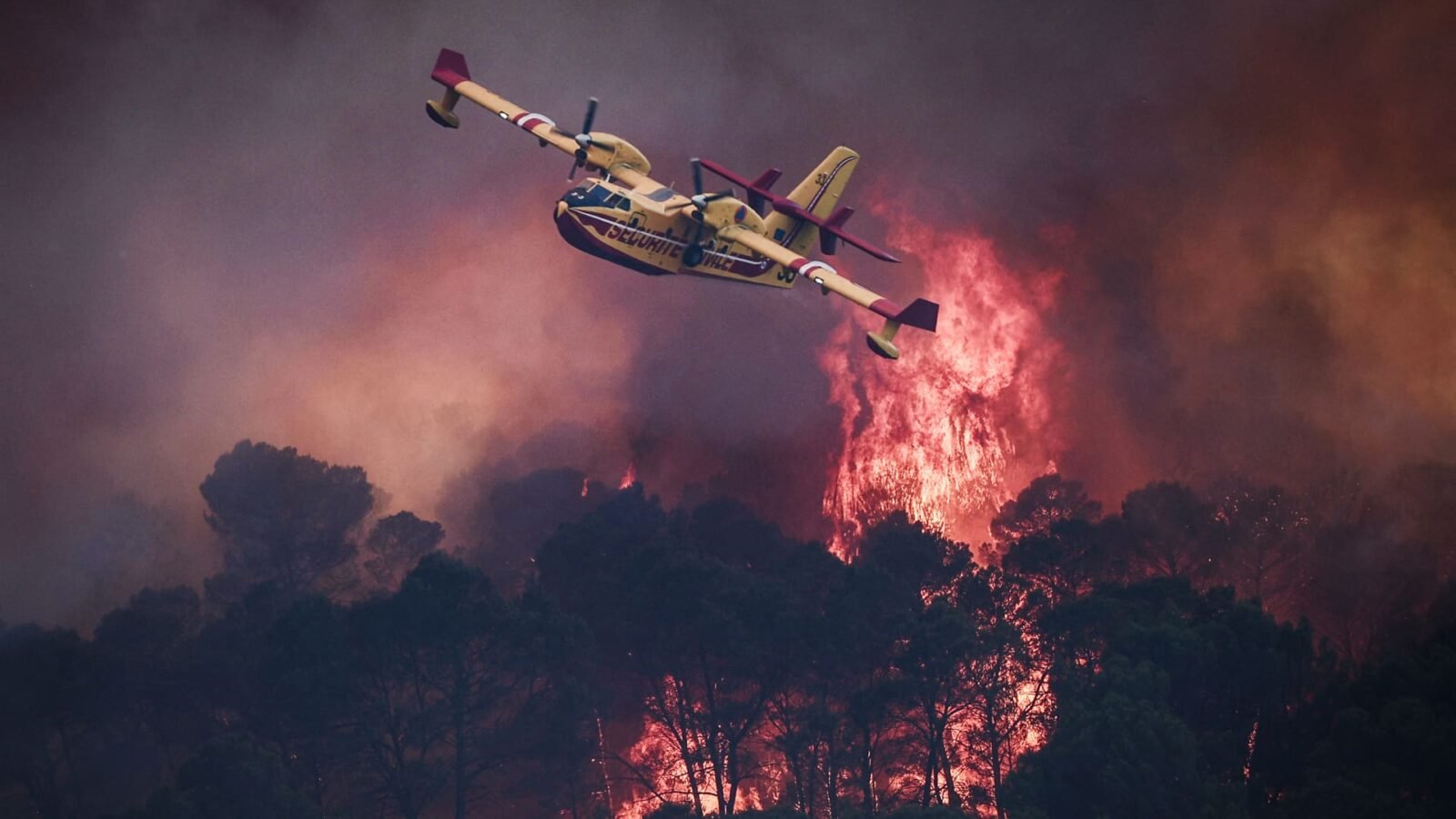
A massive wildfire that began last week in southwestern France has evolved into what meteorologists call a pyrocumulonimbus event, one of the most dangerous and unpredictable fire phenomena known to science. The blaze has consumed nearly 104,000 acres in France’s Gironde region near Bordeaux and forced the evacuation of more than 300,000 people in one of the country’s largest mass evacuations.
The fire, which started last Wednesday in Gironde, has spread into Spain, where approximately 190,000 acres have burned in the Avila and Toledo areas west of Madrid. French authorities have described the situation as both unprecedented and historic, with France experiencing almost 250,000 acres of burned land since the beginning of the year.
Rare Fire Cloud Phenomenon
What makes this wildfire particularly dangerous is its transformation into a pyrocumulonimbus, an extremely rare type of fire cloud that essentially creates its own weather system. These clouds generate their own thunderstorms, winds, and whirlwinds, according to Nicolas Braz, a firefighter captain who spoke with AFP.
Braz characterized the fire as “erratic and unmanageable” due to the self-generating weather patterns. Pyrocumulonimbus clouds form when intense heat from a fire causes air to rise rapidly, creating towering convective columns similar to thunderstorms. The resulting system can produce lightning, strong winds, and fire whirls that spread embers over vast distances, making containment efforts extraordinarily difficult.
Regional Impact
The Bordeaux region, known internationally for its wine production, has borne the brunt of the destruction in France. The fire’s rapid spread through the Gironde department has overwhelmed local firefighting resources, prompting assistance from neighboring regions and countries.
In Spain, the western Madrid areas of Avila and Toledo have faced their own battle with the spreading flames. The combined acreage consumed by fire across both countries represents one of the most significant wildfire events in recent European history.
The scale of evacuations underscores the severity of the threat. Moving more than 300,000 people to safety represents a logistical challenge on par with major natural disasters, requiring coordination among emergency services, local governments, and humanitarian organizations.
Historic Fire Season
The current conflagration fits into a broader pattern of escalating wildfire activity in France this year. With almost 250,000 acres burned since January, the country is experiencing fire conditions that officials have called historic in their scope and intensity.
European summers have grown increasingly hot and dry in recent years, creating conditions conducive to large, fast-moving wildfires. The combination of drought, high temperatures, and strong winds has made fire suppression more challenging across the continent.
As firefighting crews continue their battle against the flames, the rare pyrocumulonimbus phenomenon adds a layer of complexity that makes predicting the fire’s behavior nearly impossible. The self-generating weather system can shift wind patterns and create new ignition points miles from the main fire line, frustrating containment efforts and forcing authorities to maintain wide evacuation zones.
Source: www.cnbc.com — https://www.cnbc.com/2026/07/27/wildfire-pictures-spain-france-bordeaux-heatwave.html
This article is for informational purposes only and does not constitute financial, investment, tax, or legal advice. Do your own research and consult a licensed professional before making financial decisions.