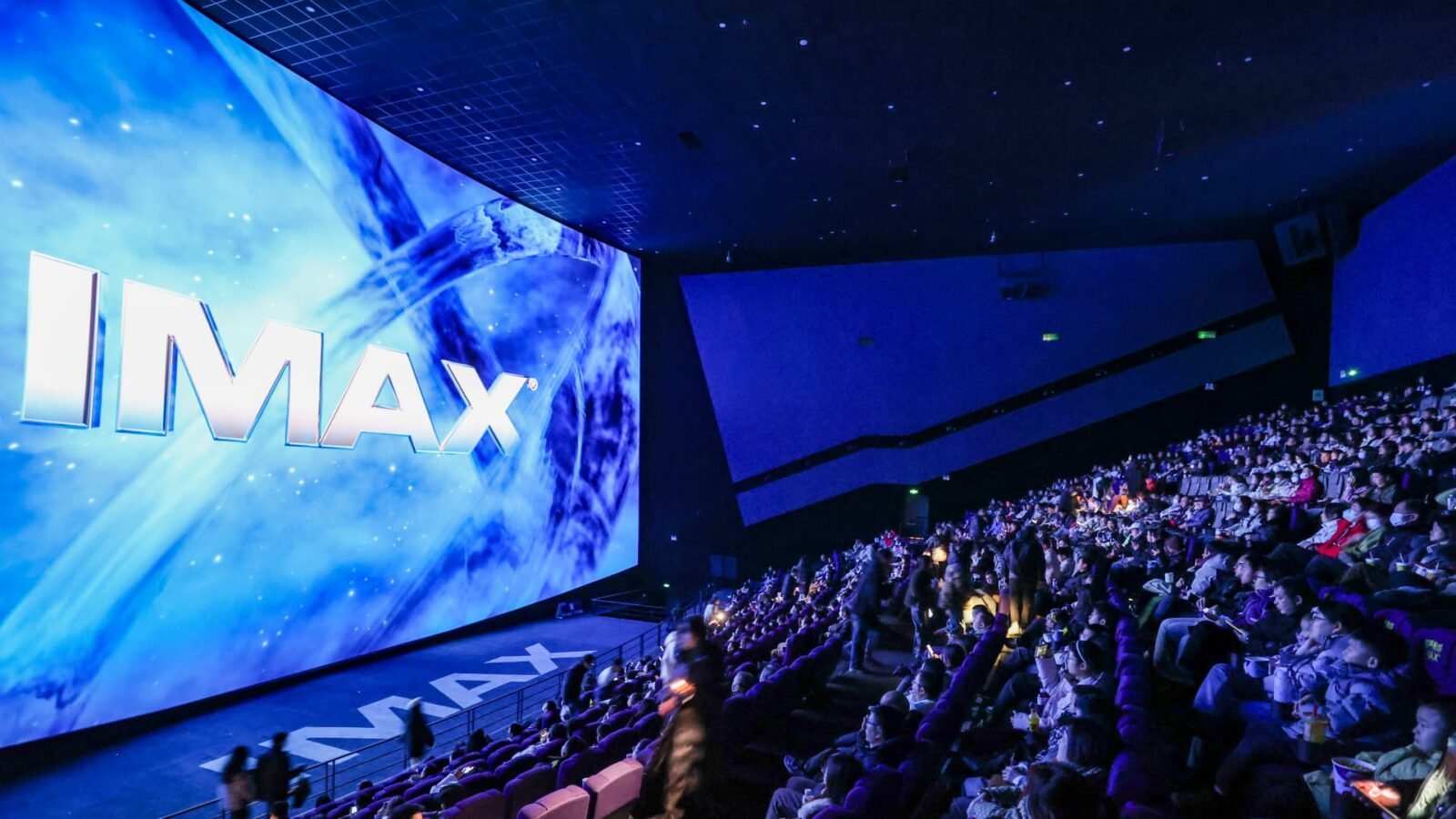
In December, Imax CEO Rich Gelfond signaled the company could be open to a sale. Nearly nine months later, the stock is trading at record levels, global ticket sales are surging, and the company’s outlook for the rest of 2026 appears robust. Yet no buyer has stepped forward.
Imax held preliminary conversations with potential acquirers earlier this year, but as of May it had not received any formal bids, CNBC previously reported. The company has not hired new bankers or prepared a formal pitch book, according to a person familiar with the matter.
A busy time for media deals
The media landscape is buzzing with consolidation. Paramount Skydance is fighting a contested $110 billion merger with Warner Bros. Discovery, Fox has agreed to acquire Roku for $22 billion, and Comcast is spinning off NBCUniversal, a move that could free up both entities for future deals. Imax, with a market cap near $3 billion, is a relatively inexpensive asset in entertainment, and its premium large-format screens have drawn moviegoers willing to pay up for a more immersive experience.
The company’s momentum is driven by blockbusters like Universal and Christopher Nolan’s “The Odyssey,” which surpassed $400 million in global Imax ticket sales over the weekend—the first film to cross that threshold in the company’s history. That figure represents nearly 30% of the film’s worldwide gross, despite Imax screens making up less than 1% of all movie screens globally. Pre-sales for “Dune: Part Three,” set to release in December, have also been strong, with some specialized screenings already sold out into January.
Wall Street analysts expect Imax to set another global box office record in 2026, following last year’s $1.28 billion haul. The company’s 2025 ticket sales were more than 40% above 2024 and 13% higher than its previous record set in 2019.
“The brand value of Imax has never been higher,” Eric Handler, managing director and senior research analyst at Roth, told CNBC. “They have done a really good job of situating themselves right in the center of the eco-structure for Hollywood. So, it’s been a masterful, long-time-coming situation.”
Premium pricing and expansion
Imax’s premium pricing has not deterred audiences. In 2026, the average adult Imax ticket in the U.S. is $20.57, more than 60% higher than a standard ticket’s $12.75 and nearly 18% above rival premium formats, which average around $17.46, according to EntTelligence data. The company is also diversifying beyond Hollywood, partnering with filmmakers in China, Japan, and South Korea to screen local-language content. Imax expects to install roughly 160 to 175 new systems in 2026, with contracts for hundreds more already in place.
So why hasn’t a buyer emerged? Analysts point to a mix of valuation, strategic conflicts, and the complexities of the exhibition business.
“It’s a lot more expensive than it has been for a long time,” said Alicia Reese, senior vice president of equity research at Wedbush. When Gelfond floated the idea of a sale last year, the stock was around $36 a share, giving the company a market cap of about $1.95 billion. Now, shares have surged to an all-time high of $54.79, up nearly 80% in the past 12 months, pushing the market cap roughly $1 billion higher.
“Maybe those tech companies or potentially [private equity] who had considered it or had been kicking the tires would wait a little while and see what happens to the share price,” Reese said. “There’s a large probability that it’s just going to continue to gain share and gain global growth and remain at these elevated valuation levels for some time, as the growth isn’t likely to reverse.”
Who could buy?
Major studios face an immediate conflict of interest, analysts said. Imax is “studio agnostic, and so they charge every studio the same,” said Eric Wold, executive director of equity research at Texas Capital Securities. “If some studio were to purchase them, I think the other studios would always feel that they’re kind of second in line for the key release slots in the holidays and summer, and so it may not be received well.”
Even if such a deal passed regulatory scrutiny, a single studio would struggle to fill a 52-week theatrical calendar with only its own films, as premium large format is built for blockbusters that justify higher ticket prices.
Among tech and media giants, analysts have floated Netflix, Apple, Amazon, and Sony as potential suitors. Netflix, which recently lost a bidding war for Warner Bros. Discovery’s studio business, could view Imax as a way to offer premium theatrical runs for its filmmakers, though the streamer has traditionally limited theatrical releases. Apple and Amazon both have streaming platforms and tech-heavy operations that could align with Imax’s business. Sony, which has not pursued streaming, partners with Netflix for distribution and already owns Alamo Drafthouse, making it one of the few studios to enter the cinema business.
A private equity buyer could sidestep conflict concerns entirely, analysts noted, and might be drawn to the stock’s momentum.
Several Wall Street analysts see further upside, with some price targets as high as $65. On Monday, B. Riley’s Drew Crum raised his target to $61 from $52, writing, “Taken together, we continue to forecast record financials in 2026, with share gains, higher margins, and healthy cash flow generation, as reflected in our above-consensus estimates.”
Potential acquirers are also weighing the broader theatrical outlook, which remains below pre-pandemic levels. Wedbush’s Reese noted that Imax is typically grouped with slower-growth exhibition names, which may eventually return to paying dividends once they achieve sustainable low single-digit growth. For now, Imax is not actively marketing itself, and its executives can afford to be patient—waiting for the right bid at the right price.
Source: www.cnbc.com — https://www.cnbc.com/2026/08/28/imax-sale-potential-buyers.html
This article is for informational purposes only and does not constitute financial, investment, tax, or legal advice. Do your own research and consult a licensed professional before making financial decisions.