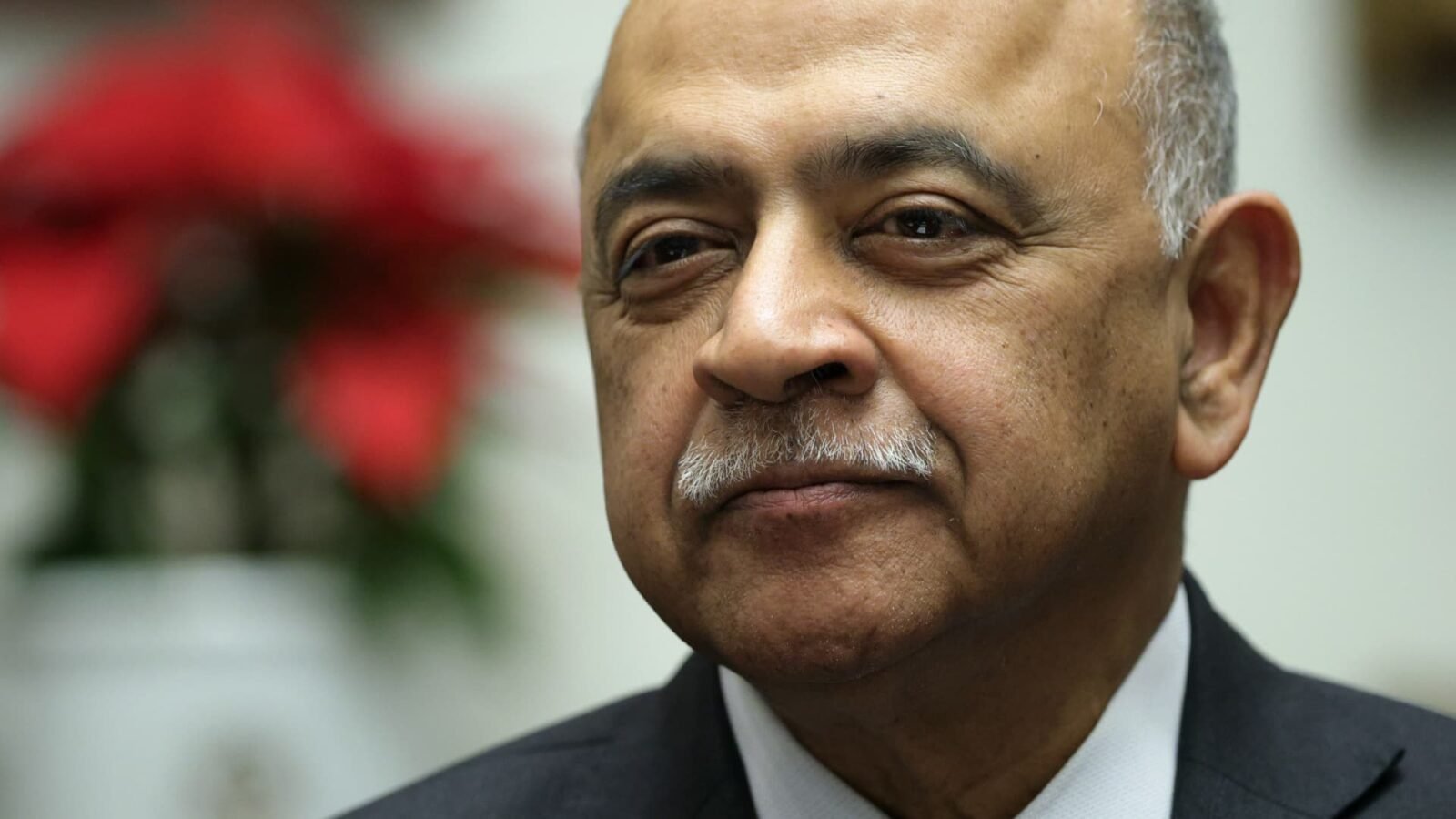
IBM Chief Executive Arvind Krishna sought to ease investor concerns about artificial intelligence disrupting his company’s software business, arguing that the vast majority of the tech giant’s offerings remain insulated from AI-driven replacement.
Speaking with CNBC on Thursday, Krishna said only 2% of IBM’s software could be replaced by applications built using AI models. The reassurance came one day after the company reported second-quarter results that sent shares lower and prompted a significant reduction in its software revenue growth forecast for the year.
“The rest of our software really helps people get ready for AI, unlocking data in real time, reducing the cost and complexity of managing it, going across the hybrid infrastructure, which most of our clients are using,” Krishna said. “And because it would be what you would call maybe infrastructure software, not applications, I believe it’ll be a tail wind for us.”
Broader Market Concerns About AI Disruption
IBM’s comments reflect growing anxiety across the software sector about whether AI tools will undermine traditional enterprise software models. The iShares Expanded Tech-Software Sector Exchange-Traded Fund has fallen 17% this year, while IBM shares have dropped about 30%.
Those concerns intensified for IBM in February, when shares plunged 13% after Anthropic published a blog post showcasing its Claude Code tool’s ability to modernize Cobol code—the decades-old programming language that runs on mainframes, a key IBM business.
During Wednesday’s earnings call, Krishna told analysts that IBM’s current-generation z17 mainframe faced headwinds in the quarter. Finance chief Jim Kavanaugh said some customers redirected spending toward other data center equipment, including servers and storage, as memory costs have surged due to demand from AI chip production.
Sharp Reversal in Mainframe and Software Growth
The mainframe slowdown represented a dramatic shift from the first quarter. Z mainframe revenue fell 42% in the second quarter after growing 48% in the prior period. Transaction processing software, which is closely tied to mainframe activity, declined 9% after posting 2% growth in the first quarter.
The weakness matters because mainframes drive significant software sales. For every dollar IBM generates from mainframe infrastructure, it collects three dollars in software revenue. Software accounted for 45% of IBM’s total revenue during the June quarter and carries the company’s highest profit margins.
Krishna offered a specific example of the vulnerability he acknowledged in that 2% slice of the portfolio. Starbucks, which spends about $2 million annually on IBM software, is phasing out Tririga lease management software. IBM acquired Tririga in 2011 and plans to end support for the product in 2027.
“That is a big component of that 2% I talked about, and I do think that software like that is subject to risk,” Krishna said. “By the way, what they had in place was a 10-year-old piece of software.”
Lowered Growth Expectations
While IBM maintained its guidance for a $1 billion increase in free cash flow for 2026, Kavanaugh on Wednesday reduced the company’s software revenue growth projection to a range of 6% to 8% for the year. That marked a significant step down from his January forecast of double-digit growth.
Krishna suggested the software weakness tied to mainframes should prove temporary. He noted that mainframe hardware capacity is expanding, and software sales typically lag behind hardware deployments.
“The software on that tends to lag the hardware capacity, and I do think that if we give it another year, you’ll find the software will catch back up,” he said.
Krishna also said that about 75% of deals that slipped out of the second quarter should close before year-end. Jefferies analysts wrote in a Thursday note that they would withhold full credit for IBM’s maintained guidance until more of that delayed activity shows up in reported results. The firm rates the stock a buy.
Source: www.cnbc.com — https://www.cnbc.com/2026/07/23/ibms-krishna-argues-that-ai-wont-disrupt-software-unit.html
This article is for informational purposes only and does not constitute financial, investment, tax, or legal advice. Do your own research and consult a licensed professional before making financial decisions.