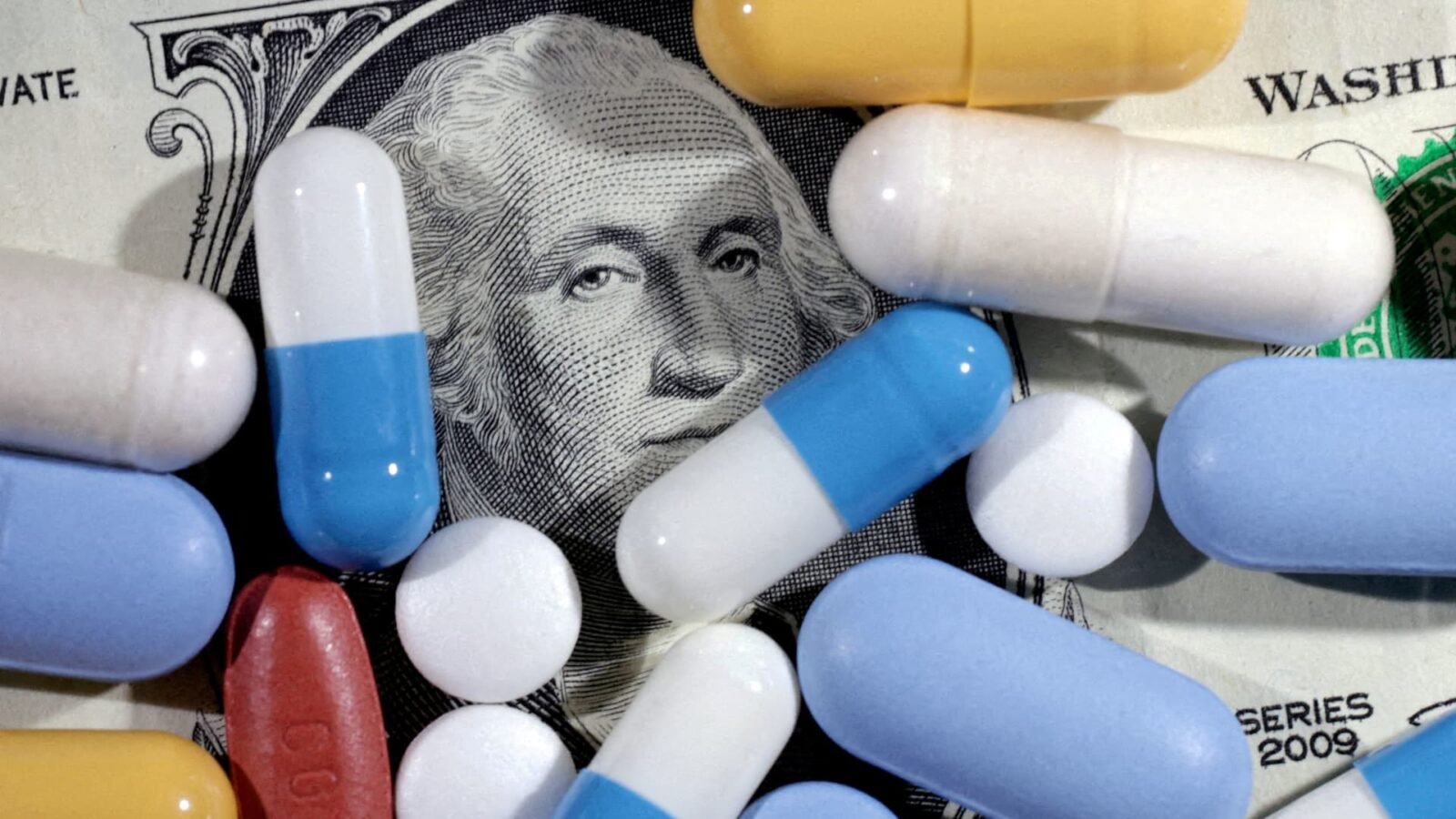
American consumers could soon face significantly higher prices for generic medications after the Trump administration announced sweeping tariffs on imported pharmaceutical products, according to the head of one of India’s largest drugmakers.
Erez Israeli, chief executive of Dr. Reddy’s Laboratories, told CNBC on Thursday that the planned tariffs will directly translate into price increases for patients. Generic drugs operate on razor-thin profit margins, Israeli explained, making it impossible for companies to absorb the cost of the levies.
“This kind of level of tariff cannot be absorbed” by manufacturers, Israeli said, adding that prices will increase “in the magnitude of the tariff.”
The Tariff Timeline
President Donald Trump announced Tuesday that generic drugs imported into the United States will face zero tariffs for an initial two-year period beginning August 1. After that grace period ends in August 2028, a 100% tariff will take effect, escalating further to 200% one year later.
The administration has framed the policy as an effort to reshore the generic medicine industry to American soil. Generic drugs currently account for more than 90% of prescriptions filled in the United States.
However, Israeli cast doubt on whether pharmaceutical companies could realistically relocate operations within the two-year window, suggesting the process would require four to seven years to complete.
India’s Dominant Role
Indian pharmaceutical companies supply nearly half of all generic drugs consumed in the U.S. market, according to data from the Indian Pharmaceutical Alliance, a lobby group representing the sector. The proposed tariffs therefore pose a direct threat to a critical supply chain.
Despite the importance of the American market, industry representatives have emphasized that generic drug manufacturers cannot simply absorb tariffs of 100% to 200% without passing costs along to consumers.
“Right now, we are operating on a very thin margin,” Namit Joshi, chair of the Pharmaceuticals Export Promotion Council of India, said in an interview Wednesday.
Economic Realities of Manufacturing
Israeli suggested that relocating generic drug production to the United States is economically unfeasible due to the fundamental cost structure of the business. Manufacturing generic medications in India, where production costs are substantially lower, has enabled significant price reductions for American consumers.
“The operation in India by us and also by others allowed a significant decrease in the cost of medicine to the United States,” Israeli said.
For Dr. Reddy’s specifically, the U.S. market has become less central to overall operations in recent years. Generic drug sales to the United States now represent just 27% of the company’s total revenue, down from 50% several years ago. Israeli said that figure will fall below 25% this year as other business segments grow more rapidly.
Global brokerage Nomura echoed the view that Indian companies are unlikely to shift generic manufacturing to American facilities, citing “low economic viability.” The firm noted in a Wednesday report that the tariffs could instead create an opportunity for manufacturers to raise prices and improve profit margins.
Source: www.cnbc.com — https://www.cnbc.com/2026/07/24/us-to-see-higher-generic-drug-prices-on-tariffs-indian-pharma-ceo.html
This article is for informational purposes only and does not constitute financial, investment, tax, or legal advice. Do your own research and consult a licensed professional before making financial decisions.