Congressional Democrats unveiled legislation Wednesday aimed at preventing foreign entities from influencing American elections through U.S.-registered corporations, building on concerns that the 2010 Citizens United Supreme Court decision created avenues for foreign money to enter the political system.
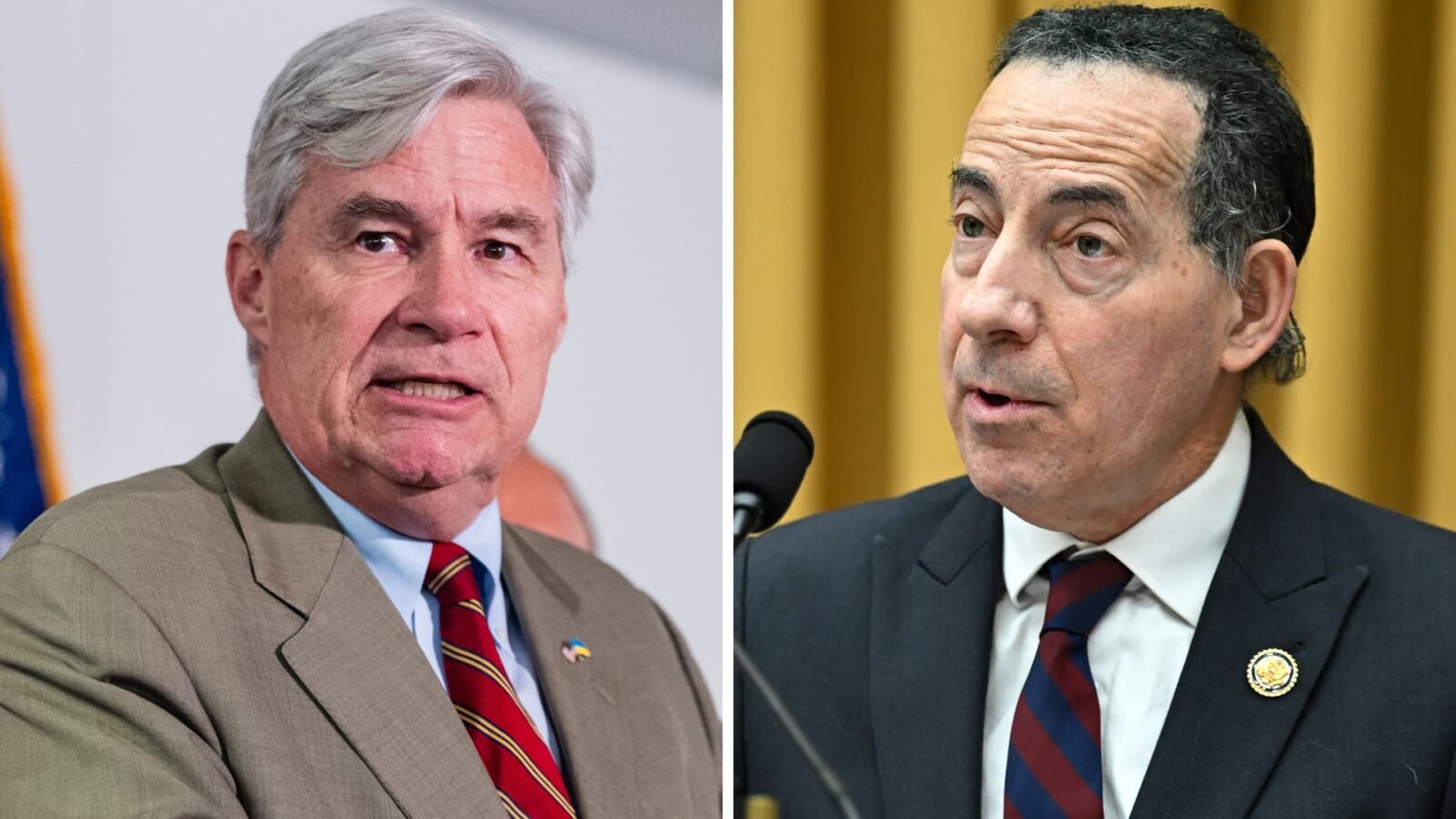
The bill, led by Rep. Jamie Raskin of Maryland and Sen. Sheldon Whitehouse of Rhode Island, would establish foreign ownership thresholds to determine which U.S. corporations should be prohibited from contributing to campaigns, ballot initiatives and referendums. The Get Foreign Money out of U.S. Elections Act launched with more than 65 Democratic cosponsors in the House and 11 in the Senate.
Under the proposed legislation, business entities located outside the U.S. in which foreign nationals own 50% of voting shares, total equity or membership units would be banned from making political contributions. The bill would also prohibit contributions from U.S.-based entities in which a single foreign national outside the U.S. owns or controls 1% of voting shares, total equity or membership units.
“The Roberts Court’s reckless decision in Citizens United continues to spell disaster for American democracy, allowing oligarchs and autocrats around the world to wield their influence over our elections and undermine our institutions,” Raskin said in a statement, referring to the ruling that enabled corporations and outside groups to spend unlimited sums on U.S. elections.
Foreign Investment Context
The legislation arrives as foreign equity in U.S. companies has increased significantly since the 1990s. It also follows the Supreme Court’s June decision striking down limits on the amount political parties can spend in coordination with candidates for office.
While current law already prohibits foreign nationals from contributing to U.S. elections, the Democratic proposal would extend those restrictions to certain companies registered domestically with foreign ownership above specified thresholds.
“Thanks to the disastrous Citizens United decision, foreign actors can exploit the same corrupting dark money channels that allow unlimited corporate spending,” Whitehouse said in a statement. “We should get rid of the damned stuff entirely, but this bill would at least safeguard our democracy from foreign adversaries influencing American elections from the shadows.”
Uphill Battle in Congress
The measure faces long odds in the current Congress, with Republicans controlling both the House and Senate. Raskin and Whitehouse led a nearly identical bill in the previous Congress, though it never received a vote in either chamber.
The Democratic proposal comes shortly after the House passed a separate bipartisan bill earlier this month aimed at prohibiting foreign contributions in local ballot initiatives, referendums and recall elections. That measure, led by Reps. Brian Fitzpatrick, a Pennsylvania Republican, and Jared Golden, a Maine Democrat, has not yet received a Senate vote.
“The ballot is the instrument by which a free people govern themselves. No foreign government, foreign national, or foreign interest should have a hand in deciding the laws Americans live under,” Fitzpatrick said following passage of that earlier legislation.
Source: www.cnbc.com — https://www.cnbc.com/2026/07/22/citizens-united-foreign-campaign-contributions-raskin-whitehouse-bill.html
This article is for informational purposes only and does not constitute financial, investment, tax, or legal advice. Do your own research and consult a licensed professional before making financial decisions.