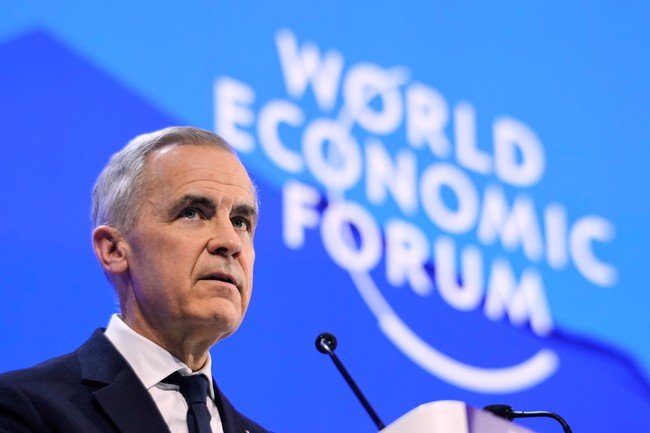
The ongoing spat between Canadian Prime Minister Mark Carney and former President Donald Trump over the symbolic renaming of Lake Ontario has opened a fresh window into the personal finances and political histories of two of Canada’s most prominent leaders. While Carney casts himself as a bulwark against American influence, his disclosed investments and family choices tell a different story. Meanwhile, Ontario Premier Doug Ford, a staunch Carney ally, faces his own litany of controversies that complicate his government’s moral high ground.
Carney’s American Entanglements
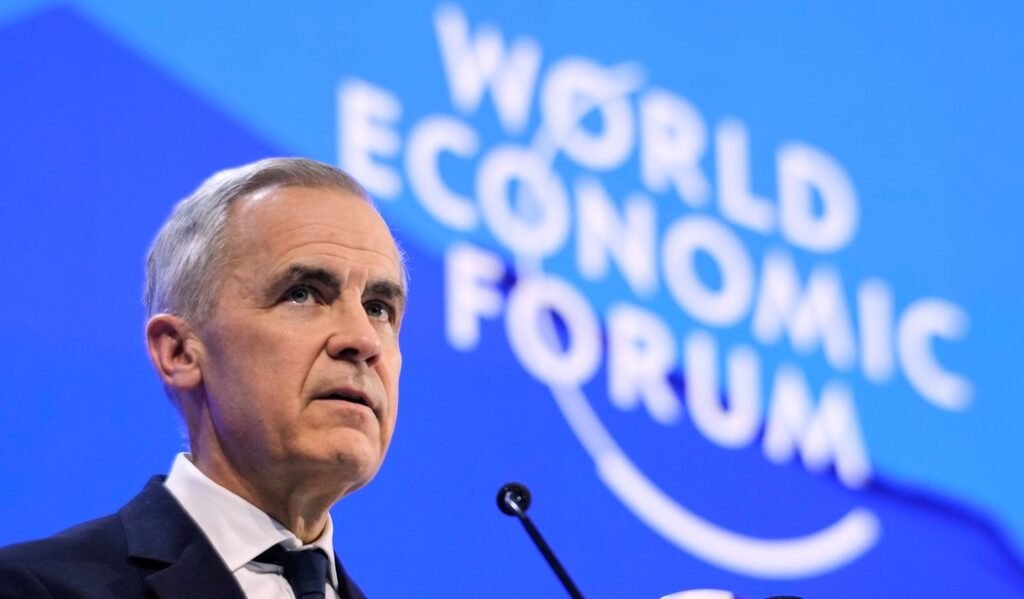
Carney, who came to power in 2025 on a wave of nationalist fervor, has built his political identity around resisting American economic encroachment. Yet an independent review of his ethics-commissioner disclosure, as reported by Global News, found that 515 of his 567 total holdings — roughly 91% — were in American-headquartered companies. Canadian companies accounted for just four, about 0.71%. Among his eight controlled assets, only three are Canadian, including Canadian Natural Resources, Canadian Pacific Kansas City, and Lululemon. The rest read like a who’s who of U.S. capitalism: Tesla, Alphabet, Amazon, Apple, Meta, Microsoft, Netflix, Bank of America, Morgan Stanley, Exxon Mobil, Chevron, Boeing, Lockheed Martin, Ford, and Walmart.
Even more personal is the education of his children. Half of Carney’s kids have studied at Harvard and Yale — institutions that seem at odds with his warnings about American unreliability. A man who urges Canadians to keep their distance from the U.S. apparently saw no irony in sending his family into the heart of it.
The most serious charge, however, involves his former employer, Brookfield Asset Management. The Conservative Party of Canada notes that Carney championed Westinghouse, a nuclear firm Brookfield helped acquire while he was there. Brookfield, which manages over $1 trillion in assets, actively owns and operates businesses in nuclear energy, housing infrastructure, and AI data centers — sectors Carney now subsidizes and deregulates as prime minister. Critics, including Democracy Watch’s Duff Conacher, argue that Canada’s blind trust rules are so full of loopholes that they offer little real separation. Carney’s defense that he can’t know what’s in the trust doesn’t wash when the pattern of his investments and policy decisions aligns so conveniently.
In fairness, the 91% figure represents a count of companies, not dollar value, and the trust is now managed by a third party. But the documented record shows a man whose investment instincts point firmly south of the border, whose former employer benefits from his current policies, and whose own family chose American classrooms. It’s hard to square that with the image of a fierce nationalist.
Ford’s Record of Scandal
Ford, who just yesterday unveiled a sign proclaiming it would always be “Lake Ontario,” has his own record of controversies. In 2019, his overhaul of the Ontario Autism Program sparked widespread protests after it threatened to cut off services for many families. That same year, his chief of staff, Dean French, resigned over a patronage scandal involving lucrative postings to friends and relatives, including a 26-year-old whose main qualification was playing lacrosse with French’s son, at a salary of $165,000.
Ford also appointed longtime friend Ron Taverner to head the Ontario Provincial Police, but the job’s qualifications had been quietly lowered to make him eligible; Taverner eventually stepped down. Retroactive health funding cuts stripped roughly $177 million a year from Toronto Public Health and Paramedic Services, totaling close to $1 billion over a decade.
The biggest scandal is the Greenbelt affair. Video surfaced of Ford, before winning office, promising to open up a “big chunk” of protected land to developers. Once in power, he did just that. Ontario’s auditor general and integrity commissioner both found evidence of corruption in how land was selected and released. The RCMP opened a criminal investigation. Two staffers and two cabinet ministers resigned. Ford’s approval ratings plummeted, and he eventually canceled the plan after weeks of defending it.
Other missteps include breaking the Beer Store contract, which cost $225 million in compensation, with projected losses of $1.4 billion to $1.9 billion by 2030, and the controversial closure of the Ontario Science Centre, which drew scrutiny over developers with ties to Ford’s family buying adjacent land.
Both leaders have positioned themselves as defenders of Canadian sovereignty. But their personal and political records raise questions about whether their nationalist posturing is genuine or merely convenient cover for their own contradictions.
Source: pjmedia.com — https://pjmedia.com/eric-florack/2026/08/30/renaming-a-lake-a-surefire-way-to-expose-the-corrupt-n4956701
This article is for informational purposes only and does not constitute financial, investment, tax, or legal advice. Do your own research and consult a licensed professional before making financial decisions.