President Donald Trump has sought to reassure Americans about the nation’s $40 trillion national debt, arguing that strong economic growth will ultimately solve the problem. "It’s been a problem for 35 years," Trump said, "and what we have now that we’ve never had before… is we have tremendous growth—and the way you take care of debt is with growth."
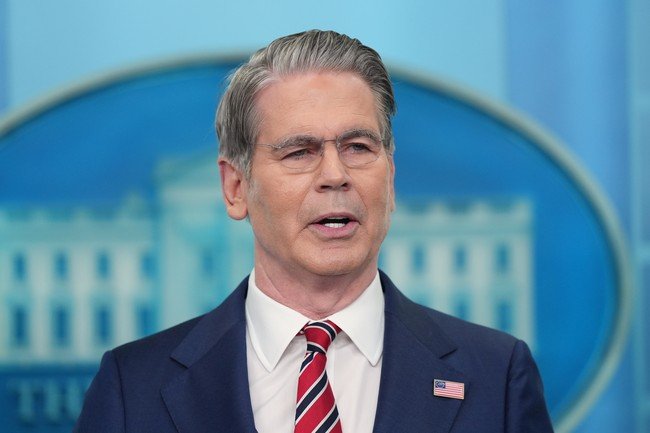
Treasury Secretary Scott Bessent echoed that sentiment on CNBC, stating, "there’s nothing magic about the 40 trillion number. We can grow our way out of that." Bessent also expressed a "very good chance" that the debt would begin to decline as the administration’s economic policies spur growth, waste and fraud are eliminated, and government becomes more efficient.
This "grow our way out of it" approach is the conventional Republican wisdom on the national debt. On the Democratic side, the prevailing view—rooted in the New Deal era—is that the debt is not a problem because "we owe it to ourselves." That argument dates back even further, to Adam Smith, who in The Wealth of Nations attributed it to the pre-capitalist Mercantilist perspective: the idea that paying interest on public debt is merely a transfer from one hand to another, with no net loss to the nation.
Smith, however, rejected that reasoning as "sophistry," noting that foreign nations, such as the Dutch, held a considerable share of British public funds. Even if the entire debt were domestically held, he argued, it would still be "pernicious." More recently, economist Paul Krugman has echoed this idea, writing that "because debt is money we owe to ourselves, it does not directly make the economy poorer."
Columnist Mark Tapscott, writing for PJ Media, argues that both parties’ conventional wisdom has enabled the debt to balloon to its current level. He points out that much of the debt is owed to China and other foreign nations, undermining the "we owe it to ourselves" claim.
Tapscott tested the feasibility of outgrowing the debt by asking AI models Grok4 and ChatGPT what it would take to eliminate the $40 trillion burden. Both models calculated that paying down $500 billion per year would take 80 years under the simplest assumption—no new borrowing and no interest. But that scenario ignores reality: net interest on the debt already exceeds $1 trillion annually, and ongoing deficits remain large.
As ChatGPT explained, with an annual deficit of roughly $1.8 trillion and interest costs approaching $1 trillion, simply finding an additional $500 billion would only reduce the deficit, not the debt itself. To achieve a true $500 billion annual paydown, Washington would need to improve its fiscal position by about $2.3 trillion per year—covering the existing deficit plus the repayment amount.
If federal revenue remains at approximately 17.5% of GDP, generating $2.3 trillion entirely through economic growth would require GDP to rise from roughly $32.5 trillion to $45.6 trillion—a 40% increase from today’s level—while federal spending stays essentially flat. If spending rises alongside GDP, the necessary expansion would be even greater.
Tapscott concludes that such an economic expansion is implausible, making default inevitable. "Our grandchildren will not be thanking us," he writes.
Source: pjmedia.com — https://pjmedia.com/marktapscott/2026/08/24/no-we-cant-outgrow-our-national-debt-and-no-we-dont-just-owe-it-to-ourselves-n4956472
This article is for informational purposes only and does not constitute financial, investment, tax, or legal advice. Do your own research and consult a licensed professional before making financial decisions.