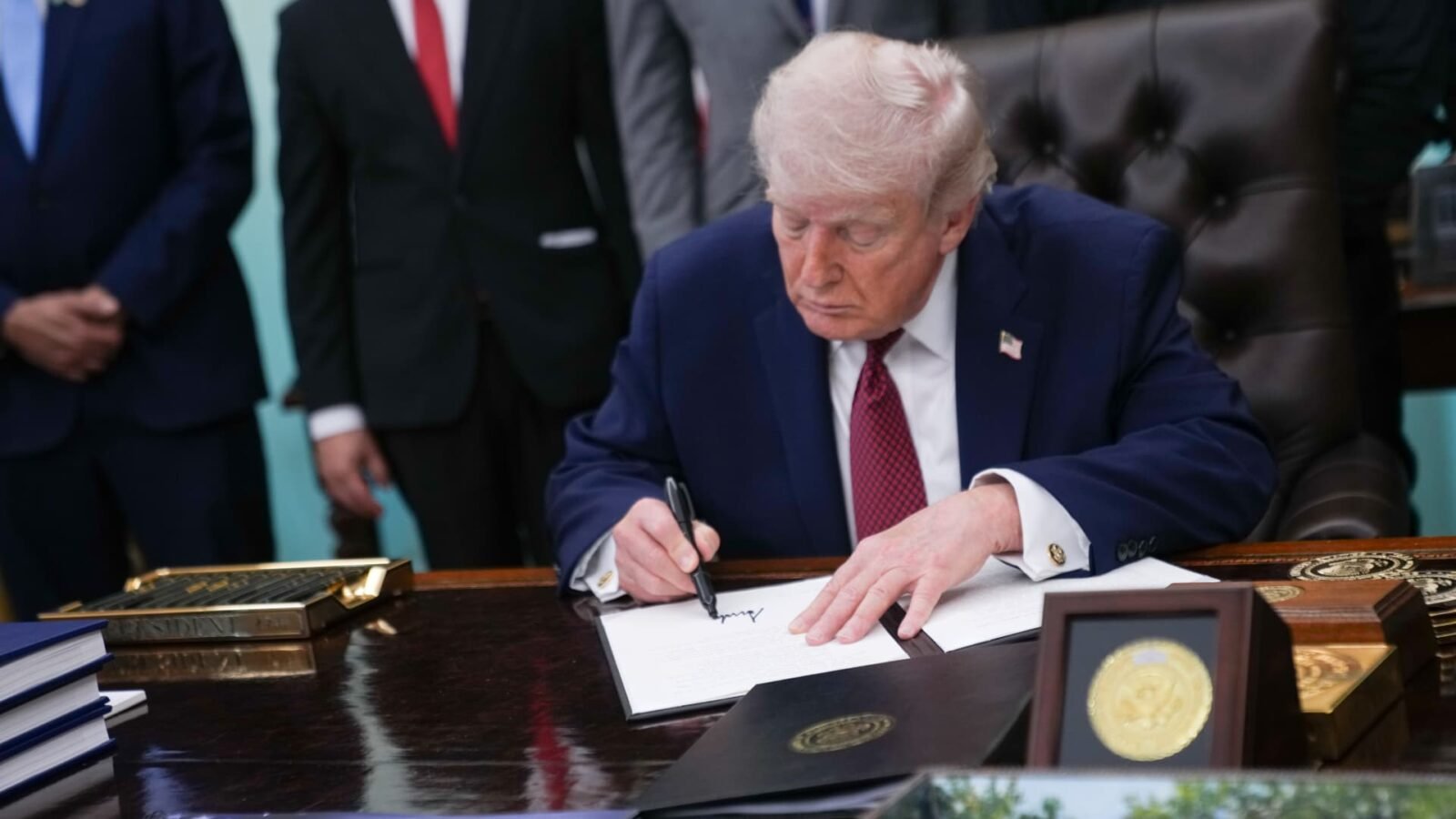
President Donald Trump announced a sweeping tariff schedule for generic pharmaceuticals that would give foreign drugmakers a two-year window to relocate production to the United States before facing punitive duties that could reach 200%.
In a social media post Tuesday, Trump said imported generic drugs will enter the country tariff-free beginning August 1, but that grace period ends abruptly in August 2028 when a 100% tariff takes effect. One year later, that rate doubles to 200%. The president framed the escalating levies as “a penalty” for companies that fail to build manufacturing plants and facilities on American soil during the initial two-year period.
Tariffs on patented and branded pharmaceuticals will remain unchanged under the new policy. Trump previously imposed a 100% duty on patented drugs and their ingredients under Section 232 authority on April 2, though generic medications, biosimilars, and related components were exempted at that time. Larger pharmaceutical companies received 120 days before the full tariff rate applied, while smaller firms that depend on contract manufacturers were given 180 days.
Pricing Deals and Trade Leverage
More than a dozen major pharmaceutical companies have already negotiated agreements with the administration to reduce prices on both new and existing medicines. Eli Lilly, Pfizer, and Novo Nordisk are among those that have struck deals under Trump’s “most favored nation” policy, which pegs U.S. drug prices to lower rates charged in other wealthy countries. Companies participating in these agreements receive a three-year exemption from tariffs.
The administration has deployed tariff threats alongside the most-favored-nation pricing framework as leverage to prevent drugmakers from charging Americans more than patients pay in comparable high-income nations.
Impact on India and Global Supply Chains
The policy carries significant implications for India’s pharmaceutical sector. Indian companies currently supply nearly half of all generic medicines consumed in the United States, and the American market accounts for roughly one-third of India’s pharmaceutical exports annually. Most of those shipments consist of lower-cost generic versions of popular branded drugs.
Meanwhile, Chinese manufacturers dominate the production of active pharmaceutical ingredients that form the foundation of many medicines, including widely used compounds such as amoxicillin and heparin. The two-year timeline appears designed to allow companies sufficient time to reconfigure complex global supply chains and establish domestic manufacturing capacity before tariffs take effect.
The announcement represents the latest effort by the Trump administration to reshape pharmaceutical trade and production patterns, using tariff policy as a tool to encourage domestic manufacturing while simultaneously pressuring companies on drug pricing.
Source: www.cnbc.com — https://www.cnbc.com/2026/07/22/trump-generic-drugs-tariffs-medicine-trade-.html
This article is for informational purposes only and does not constitute financial, investment, tax, or legal advice. Do your own research and consult a licensed professional before making financial decisions.