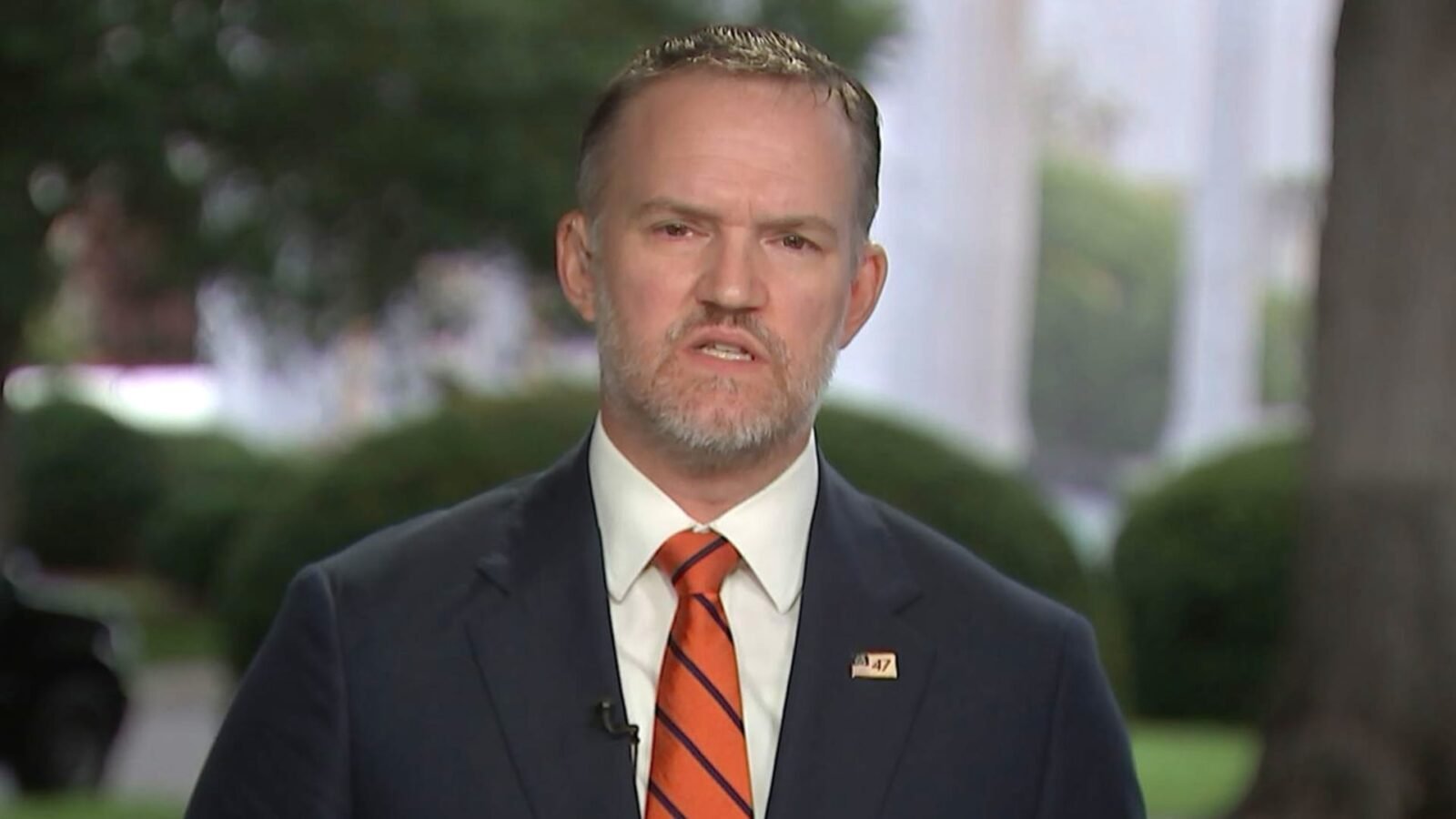
U.S. Trade Representative Jamieson Greer signaled Tuesday that another wave of tariffs is approaching, marking the latest effort by the Trump administration to rebuild its trade policy framework following a significant legal setback earlier this year.
“We expect to see some action soon,” Greer told CNBC’s “Squawk Box” when asked whether new tariffs would be announced in the near term. While declining to provide a specific timeline, citing obligations to brief Congress and other stakeholders first, he confirmed that action is imminent.
The comments come as the administration pivots to alternative legal authorities after the Supreme Court dealt a major blow to its trade agenda in February. The court struck down the administration’s sweeping reciprocal tariff regime, ruling that the International Emergency Economic Powers Act did not authorize the duties Trump had imposed.
Section 301 as the New Foundation
Trade policy experts see the administration focusing on Section 301 of the Trade Act of 1974 as its primary tool for reimposing tariffs. This approach is expected to prove more legally durable than the tariffs that were overturned by the courts.
“The expectation is continuity,” said Blake Harden, a trade policy expert and managing director of Washington Council Ernst & Young. “We’re really seeing a re-creation of that global tariff, and 301 being used as a way to lock that in.”
In early June, the Office of the U.S. Trade Representative proposed tariffs of up to 12.5 percent on imports from 60 economies, citing alleged forced labor issues. Greer said Tuesday that these proposed duties would cover “about 99% of our trade.”
“The U.S. has laws to prohibit trading goods with forced labor,” Greer explained. “Other countries, most don’t have a law. Those that do don’t really enforce it.”
Temporary Tariffs Set to Expire
The timing is significant because Trump’s temporary import levies, imposed hours after the Supreme Court ruling under Section 122 of the 1974 trade law, are scheduled to expire Friday at 12:01 a.m. Eastern Time. The administration imposed a blanket 10 percent tariff in February as a stopgap measure, but Congress appears unlikely to intervene to extend those duties.
The Section 301 tariffs are seen as filling that gap while providing a more secure legal foundation. The investigations cover major trading partners including China, the European Union, Singapore, Switzerland, Mexico, Japan, India, and numerous Asian economies.
Recent Trade Actions Multiply
The anticipated tariffs would add to a growing list of recent trade actions. The administration is implementing 25 percent tariffs on most imports from Brazil under Section 301, set to take effect Wednesday.
On Monday, Trump signed proclamations imposing 50 percent tariffs in 30 days on various Canadian goods, including wine, beer, hockey sticks, cement, and dog leashes. Those duties, brought under Section 338 of the Tariff Act of 1930, prompted a sharp response from Canadian Prime Minister Mark Carney, who said they violate the USMCA trade agreement.
Carney indicated Tuesday that while he and Trump agreed to intensify negotiations, all options remain on the table if the U.S. proceeds with the threatened tariffs.
Political and Legal Durability
Trade experts emphasize that tariffs justified on forced labor grounds may prove particularly difficult to roll back, even for future administrations.
“It’s much harder to roll back tariffs that are intended to help combat forced labor,” said Tiffany Smith, vice president of global trade policy at the National Foreign Trade Council. “I think you have to expect that the 301 tariffs are going to be much more durable.”
The Supreme Court’s February ruling eliminated IEEPA-related duties that had accounted for the majority of U.S. tariff revenue collected last year. However, Trump suggested at the time that the decision left room for him to impose tariffs using other established authorities, writing on social media that he had “the absolute right to charge TARIFFS in another form.”
Peter Harrell, a visiting scholar at Georgetown Law School’s Institute of International Economic Law, said he expects the administration will use its trade powers “to eventually restore most of the IEEPA tariff rates.”
Source: www.cnbc.com — https://www.cnbc.com/2026/07/21/trump-trade-tariffs-greer-section-301.html
This article is for informational purposes only and does not constitute financial, investment, tax, or legal advice. Do your own research and consult a licensed professional before making financial decisions.