The United States Strategic Petroleum Reserve has dropped to its lowest level since March 1983, raising concerns about the government’s ability to respond to future oil supply disruptions as decades-old infrastructure shows signs of severe strain.
According to CNBC, the emergency stockpile this week held approximately 308 million barrels after the U.S. withdrew 352 million barrels over four years to address supply disruptions caused by the war with Iran and Russia’s invasion of Ukraine. The reserve is expected to fall further to about 243 million barrels once a release ordered by President Donald Trump in March is fully executed.
Infrastructure on Life Support
A May report from the Government Accountability Office painted a troubling picture of the reserve’s condition. Department of Energy officials told federal auditors that the SPR’s network of pipelines, caverns, and storage tanks is being held together with what they described as “Band-Aids,” with uncertainty about how long repairs will hold.
The auditors warned that the SPR’s ability to draw down, distribute, and refill crude oil is “currently limited and are at risk going forward due to longstanding issues with aging infrastructure compounded with ongoing major construction intended to address them.”
More than a quarter of the SPR was found to be unavailable for drawdown due to construction and cavern outages. According to an analysis by Rapidan Energy, this means at least 103 million barrels currently stored in the reserve cannot be deployed in an emergency.
Largest Release in History
President Trump’s March order came in response to Iran choking off oil exports through the Strait of Hormuz, triggering what has been described as the largest supply disruption in history. The 172-million-barrel release followed an even larger drawdown under President Joe Biden, who authorized 180 million barrels to be released following Russia’s invasion of Ukraine—the largest single release in SPR history.

The Biden administration’s drawdown served as an “unplanned stress test” of the reserve’s operational capabilities, according to federal auditors. While the Energy Department executed the release “without major equipment failures or crude oil spills,” officials acknowledged it was “operationally challenging” and required emergency repairs to address leaking water pumps and pipes.
Repair Efforts Face Budget Constraints
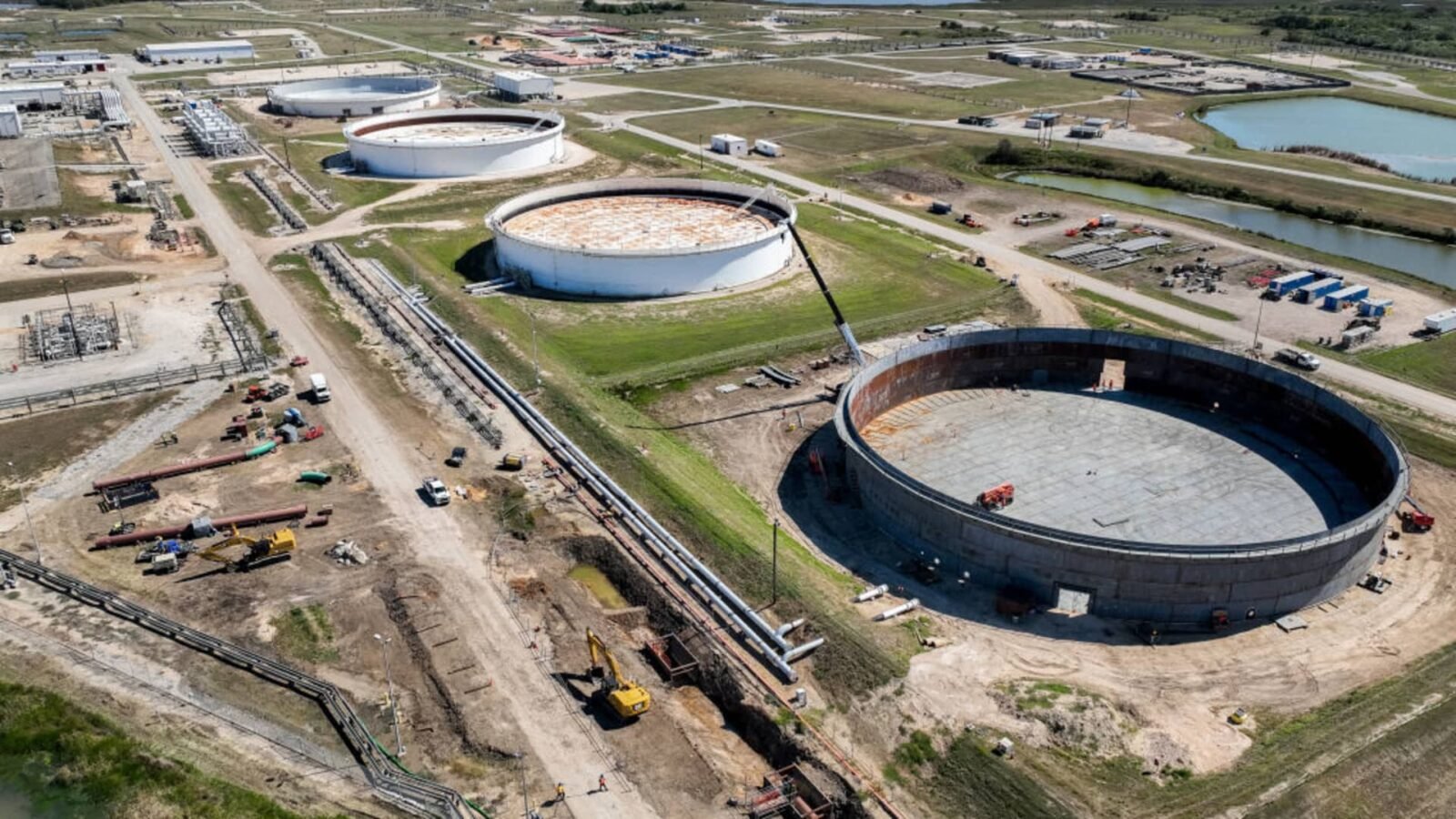
Established by Congress in 1975 in response to the 1973 Arab oil embargo, the SPR’s infrastructure is reaching the end of its design life just as inventory releases have become larger and more frequent. The Energy Department is implementing a $1.4 billion repair plan, though officials had to narrow the project’s scope to remain within budget.
The crude oil is stored in 60 salt caverns thousands of feet underground at four major sites along the Gulf Coast. Water is pumped into the bottom of these caverns to displace oil to the surface for distribution through pipelines.
David Goldwyn, who served as a State Department special envoy for international energy affairs under President Barack Obama, expressed confidence that the reserve retains enough inventory to address another crisis. However, he noted that frequent drawdowns accelerate equipment degradation, requiring increased maintenance.
A Department of Energy spokesperson told CNBC that federal law does not mandate a minimum operating level for the SPR. The operational minimum needed to safely manage the caverns is approximately 70 million barrels, or about ten percent of the reserve’s 714-million-barrel authorized storage capacity.
Energy officials warned auditors that the 2022 drawdown “highlighted risks to the SPR’s capability to repeat a drawdown of similar speed and scale” if directed to do so in the near future.
Source: www.cnbc.com — https://www.cnbc.com/2026/07/28/us-strategic-petroleum-reserve-spr-iran-oil-strait-hormuz.html
This article is for informational purposes only and does not constitute financial, investment, tax, or legal advice. Do your own research and consult a licensed professional before making financial decisions.