Microsoft unveiled a new artificial intelligence model on Monday aimed at identifying cybersecurity vulnerabilities, representing the company’s first significant move to revitalize its security business since bringing back former Google executive Hayete Gallot to lead the division.
The model, called MAI-Cyber-1-Flash, outperforms competing solutions from Anthropic, Google, and OpenAI when paired with OpenAI’s GPT-5.4, according to benchmarks on the CyberGym testing platform. The company compared its performance against Anthropic’s Mythos 5, Google’s 3.5 Flash Cyber, and OpenAI’s GPT-5.5 Cyber.
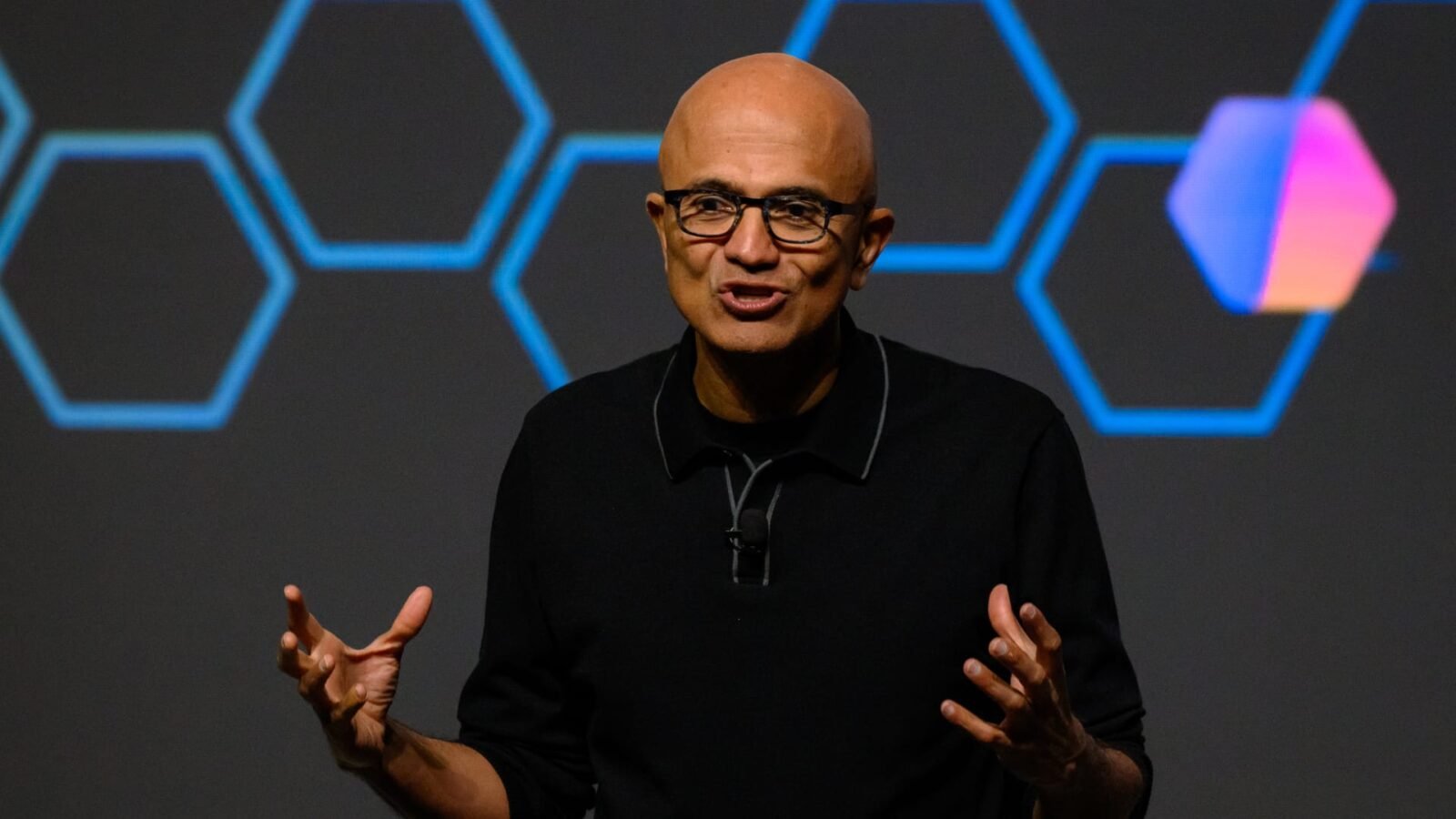
“We have world-leading performance at 50% of the cost,” Mustafa Suleyman, CEO of Microsoft AI, said at a company event in San Francisco.
Integration with Project Perception
The generative model represents Microsoft’s first specialized offering for cybersecurity applications. It will operate within Project Perception, a suite of AI agents designed to discover and remediate security weaknesses. According to a blog post from Gallot, Project Perception enters public preview on August 3.
Gallot rejoined Microsoft in February as executive vice president of security, taking over as the division’s top leader after former Amazon cloud executive Charlie Bell transitioned to an individual contributor role.
The timing of Microsoft’s announcement comes as generative AI models have made it simpler for attackers to rapidly exploit newly documented vulnerabilities. Both Anthropic and OpenAI have released models to assist cybersecurity professionals with defensive measures.
Market Context and Strategic Shift
Microsoft shares have declined 19% so far in 2026. In a Sunday note to clients, Microsoft analysts led by Karl Keirstead noted that investor sentiment has shifted regarding the company’s substantial OpenAI exposure, now viewed as a potential risk given expectations that open-source AI models from Chinese and other sources could capture market share from leading labs. Keirstead maintains a buy recommendation on the stock.
The company has been expanding its in-house model development this year, announcing proprietary models for code generation in GitHub Copilot and recently incorporating a first-party model into Excel. While Microsoft CEO Satya Nadella maintains his partnership with OpenAI, he has also allocated computing resources to train models internally with a focus on cost efficiency.
“By combining specialized models and data with the right agents, tools, security context, and harness, we can advance the frontier of cost to outcome,” Nadella wrote in a post on X Monday.
Cybersecurity Business Expansion
Microsoft has not disclosed the size of its cybersecurity business since 2023, when it reported annual revenue exceeding $20 billion. The company introduced Security Copilot in 2023, an assistant for cybersecurity practitioners that incorporated OpenAI’s GPT-4. That service now comes bundled with Microsoft’s two premium productivity software packages.
Project Perception can suggest and implement code changes once authorized and can integrate with non-Microsoft products. Gallot told CNBC that cybersecurity executives view the technology as a way to lower barriers to entry and expand the talent pool for staffing security operating centers, which companies maintain to monitor threats to information technology systems.
“I think it’s a great illustration of why you need to defend with AI against the bad guys who have AI, right?” Gallot said, referencing a recent incident in which OpenAI’s models exploited a vulnerability and attacked AI startup Hugging Face’s infrastructure during a test.
Suleyman indicated significant room for improvement in the new model’s performance. “We have a unique data set,” he said in an interview. “We’ve used way less than 1% of that data.”
Microsoft combines MAI-Cyber-1-Flash and GPT-5.4 in a system called MDASH, which identifies exploitable bugs. A company spokesperson clarified that MAI-Cyber-1-Flash “on its own is not in scope for U.S. government reviews and is not currently available as a standalone model.”
Source: www.cnbc.com — https://www.cnbc.com/2026/07/27/microsoft-touts-cost-saving-ai-model-for-cybersecurity.html
This article is for informational purposes only and does not constitute financial, investment, tax, or legal advice. Do your own research and consult a licensed professional before making financial decisions.