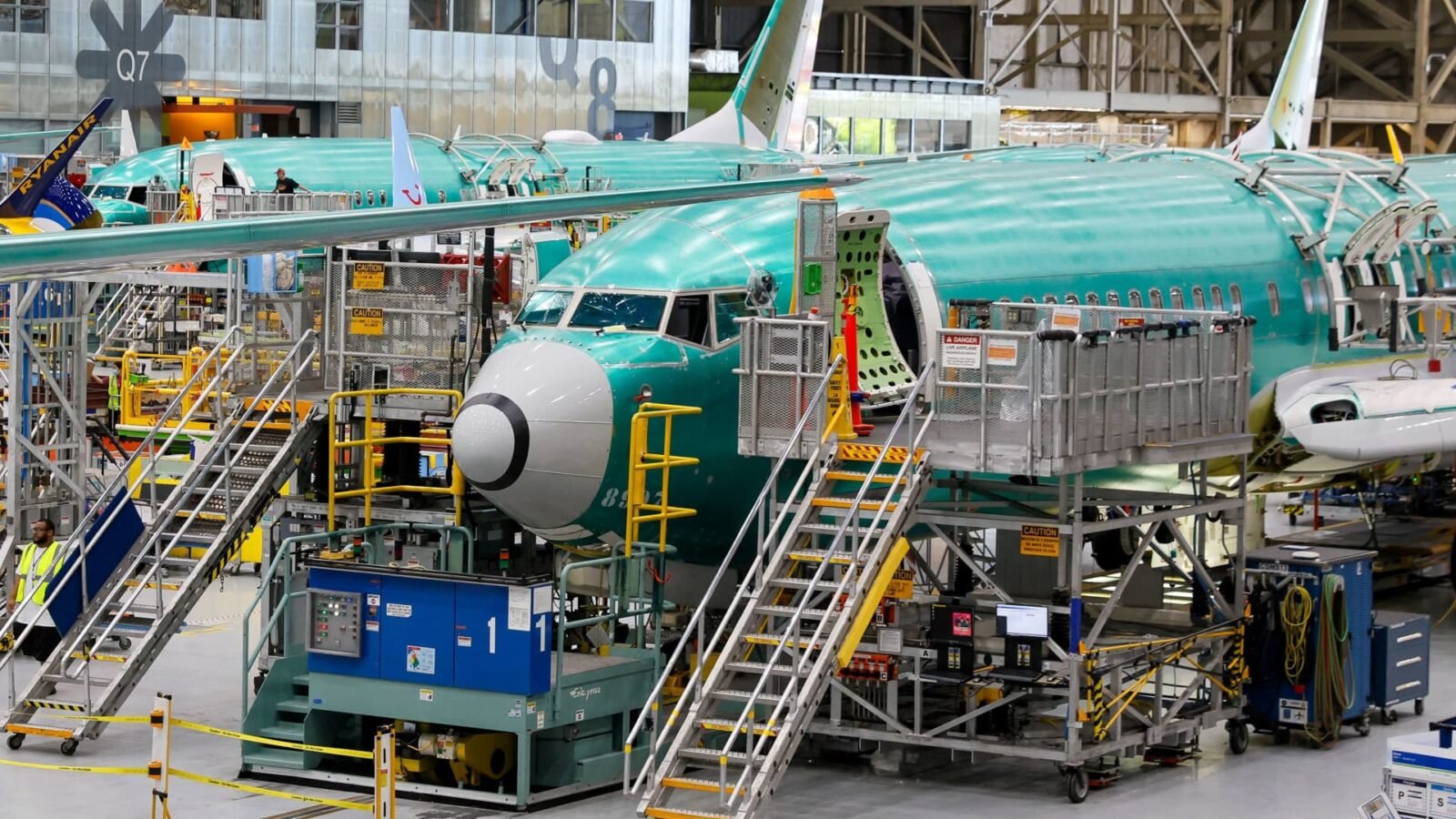
Boeing reported a larger-than-expected loss for the second quarter, dragged down by a $280 million charge on its troubled Air Force One program as the company ramps up investment to deliver two modified 747s to serve as the next presidential aircraft.
The aircraft manufacturer posted a net loss of $428 million, or 67 cents per share, for the quarter ended June 30. Excluding one-time items, the adjusted loss came to 76 cents per share, wider than the loss analysts had anticipated. That compared with a net loss of $612 million, or 92 cents per share, in the same period a year earlier.
Boeing said it still expects to deliver the first of the two Air Force One jets in 2028, despite the ongoing cost pressures. Chief Executive Kelly Ortberg told employees in a note that the program has moved through the design phase.
“While we’re making progress on our development programs, you’re never done until you’re done,” Ortberg wrote to staff.
Revenue Growth Across Divisions
Despite the quarterly loss, Boeing showed signs of operational momentum. Revenue climbed 8% to $24.56 billion from the year-ago period, with gains across its business segments. The company delivered 171 commercial aircraft during the quarter, up 14% from the 150 planes handed over in the second quarter of 2025.
Boeing has been steadily increasing production of its 737 Max, its bestselling narrow-body jet. The company is currently producing 47 of the aircraft per month and plans further rate increases as it works to clear its order backlog.
The cash flow picture also brightened. Boeing generated $631 million in free cash flow, a sharp improvement from the $200 million cash burn in the year-ago quarter and well ahead of the $177 million burn analysts had forecast.
Air Force One Complications
The Air Force One program has been a persistent challenge for Boeing. Ortberg emphasized the importance of on-time delivery to the customer during an interview with CNBC.
“It’s very important to our customer that we deliver that airplane on time,” he said. “We’re gonna put more resources on to make sure that we do that.”
The presidential aircraft program gained attention earlier this month when President Donald Trump took his first flight on a luxury Boeing 747 gifted by Qatar. That jet was intended to serve as a temporary Air Force One while Boeing completes work on the new aircraft. According to reports, security concerns arose after Trump used the plane for a trip to Turkey and subsequently departed the country on the older Air Force One.
Looking Ahead
Ortberg struck a cautiously optimistic tone about the company’s trajectory, telling employees that continued focus on safety, quality and on-time performance would improve competitiveness.
“While two quarters don’t make a year, if we work together and stay focused on safety, quality and on-time performance — we’ll improve our competitiveness and set ourselves up for a big second half,” he said in the staff note.
Boeing faces several critical certification milestones in the coming months. The 737 Max 7, the smallest variant in the Max family, is expected to be the next aircraft to receive regulatory approval. The company also continues working toward certification of the 737 Max 10 and the 777X, its new wide-body aircraft that has faced years of delays.
Boeing executives were scheduled to hold an analyst call later in the morning, where they were expected to field questions about the timing of these upcoming certifications.
Source: www.cnbc.com — https://www.cnbc.com/2026/07/28/boeing-ba-2q-2026-earnings.html
This article is for informational purposes only and does not constitute financial, investment, tax, or legal advice. Do your own research and consult a licensed professional before making financial decisions.