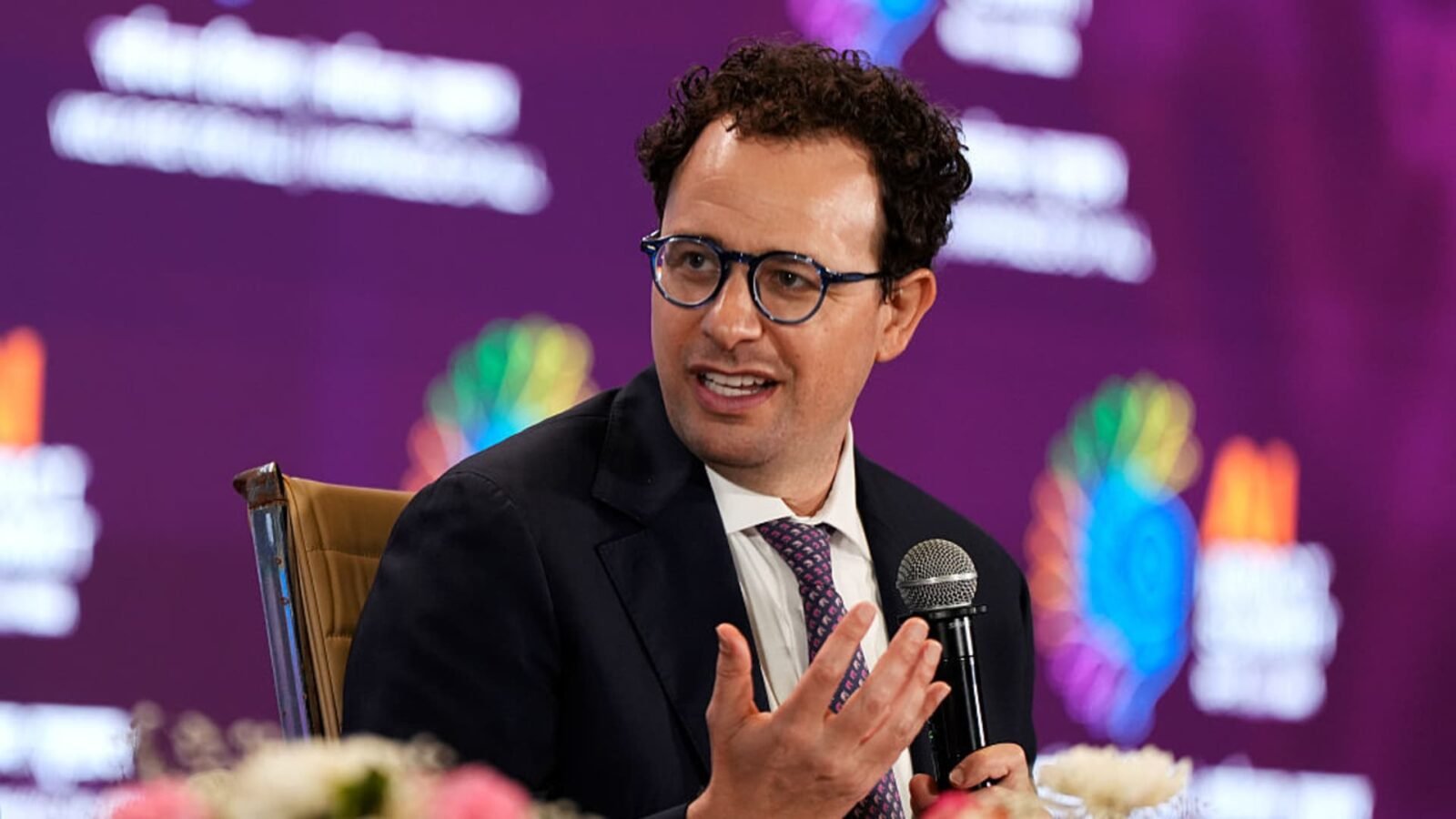
Anthropic CEO Dario Amodei moved to quash mounting criticism Monday, stating that his company has never called for a ban on open-weight AI models despite conspicuously declining to join a coalition of tech giants supporting them last week.
The clarification came in a blog post after Nvidia, Microsoft, Meta, Palantir and other companies urged policymakers to avoid “premature restrictions” on open-weight models. These models, which users can download, modify and run on their own infrastructure, have become a flashpoint in debates over AI regulation.
Anthropic’s absence from the coalition drew attention particularly because OpenAI, its chief rival in proprietary AI development, signed the letter after publication. Both companies primarily develop closed models that customers access through APIs rather than downloading directly.
Clarifying the Position
“To summarize my and Anthropic’s position, we have not and are not advocating for a ban on open-weights models as a category,” Amodei wrote. Instead, he outlined a different set of priorities: preventing powerful chips from reaching authoritarian governments, stopping industrial-scale distillation, and requiring safety testing for all sufficiently capable models regardless of whether they are open or closed.
Distillation refers to an AI training technique where developers create smaller, less capable models using outputs from larger existing models. Anthropic has been vocal about concerns in this area, sending a letter to the U.S. Senate Committee on Banking, Housing, and Urban Affairs last month alleging that Alibaba conducted what it called “the largest known distillation attack” against Anthropic’s Claude models to develop its Qwen family of models.
Finding Common Ground
Amodei acknowledged agreement with several arguments made in the coalition letter. He said Anthropic supports the view that concerns about unlawful distillation should be addressed through “targeted legal and commercial frameworks.”
He also agreed that open-weight models provide customers with greater control, expand access to the AI economy, and strengthen competition in certain use cases. However, he disputed claims that open-weight models inherently favor cyber defenders over attackers or make it easier for users to develop safeguards.
National Security Focus
The debate over open-weight models has taken on geopolitical dimensions, with Chinese startups currently dominating the market. Some government officials have begun considering whether such models should face restrictions or bans in the United States.
Amodei made clear that blanket prohibitions would miss the mark. “Protectionist bans would not address my most serious national security concerns,” he said.
The controversy highlights tensions within the AI industry over the appropriate balance between openness and control. While Anthropic develops the proprietary Claude model family that it sells to businesses, the company’s position on open-weight models has implications for how policymakers approach regulation of the rapidly evolving technology.
Source: www.cnbc.com — https://www.cnbc.com/2026/07/27/anthropic-ceo-dario-amodei-isnt-advocating-open-weight-model-ban.html
This article is for informational purposes only and does not constitute financial, investment, tax, or legal advice. Do your own research and consult a licensed professional before making financial decisions.