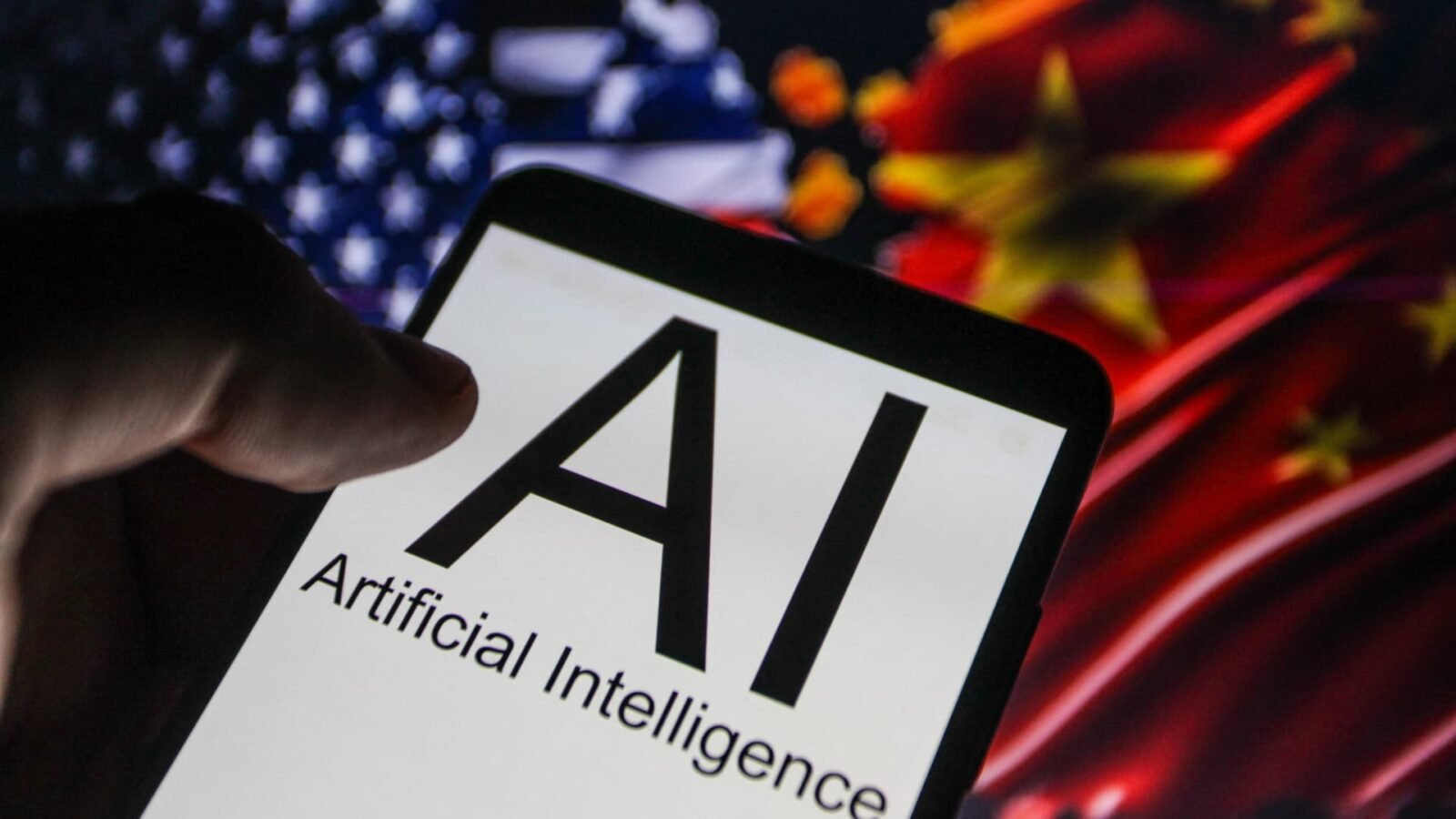
Chinese artificial intelligence companies are releasing increasingly powerful models at a pace that’s forcing U.S. policymakers to grapple with a thorny question: how to regulate technology that American businesses have already woven into their operations.
The stakes grew higher after Moonshot’s Kimi K3 model launched as a rival to Anthropic’s Claude, prompting what Ryan Fedasiuk of the American Enterprise Institute describes as “a hornet’s debate in Washington about what to do about Chinese open-weight models.” The flurry of government pushback against Chinese open-source AI triggered an open letter Friday signed by Nvidia CEO Jensen Huang and more than 20 other tech companies calling against “premature restrictions.”
The debate will get a high-level test when President Donald Trump meets with Chinese President Xi Jinping during a planned visit to the U.S. in late September. Trump indicated last week he intends to discuss AI with Xi, and Beijing signaled its readiness to work with Washington on the technology.
Commercial Ties Complicate Policy Decisions
The challenge for U.S. officials stems from commercial reality on the ground. “A lot of American startups use Chinese AI models,” said Lex Zhao, a Boston-based managing partner at One Way Ventures who oversees $150 million in assets. “A lot of companies we invest in build on top of these models.”
According to Zhao, both countries hold significant leverage over each other in AI development, which may limit how far either side will push restrictions. That interdependence is transforming what might have been purely a technology policy issue into a diplomatic challenge.
China has been actively positioning AI as a diplomatic tool, hosting both the World AI Conference in Shanghai and the APEC Digital Weeks in Chengdu this month. Nearly two dozen senior tech officials attended the latter event, including representatives from the United States.
“Now Beijing also views AI as a new kind of diplomacy to grab more allies and partners,” said George Chen, partner and chair of digital practice at consultancy The Asia Group, who attended both conferences.
Rapid Progress Despite Chip Restrictions
Chinese AI companies have made significant strides despite four years of U.S. restrictions on access to advanced semiconductors needed for AI training. However, computing power constraints remain a bottleneck. After Moonshot launched Kimi K3, the startup said it had to pause new subscriptions due to computing power limitations.
China is responding by investing heavily in domestic computing infrastructure. Zhipu AI is ramping up a massive 1-gigawatt data center, according to a source familiar with the matter.
The rapid pace of Chinese AI releases has shifted American public perception. A Pew Research survey found that slightly more Americans now believe China is more advanced than the U.S. in AI development. A separate Pew study in early July revealed that roughly half of Americans disagreed with both Democratic and Republican AI policies.
Real-World Dependencies Emerging
The practical reliance on Chinese AI models has manifested in unexpected ways. U.S.-based Hugging Face reported it had to use Zhipu AI’s GLM 5.2 model to address a cyberattack from a rogue OpenAI model. Meanwhile, the most advanced U.S. open-source model to date from startup Thinking Machines Lab disclosed that it used DeepSeek and Kimi in its development process.
“The incident clearly underscores why open source is so necessary for American enterprise and it would be foolish to close it off,” Fedasiuk said, adding that he believes “it’s possible to stake out a middle ground here.”
International stakeholders are watching closely. APEC representatives gathered in Chengdu published a statement Thursday supporting open-source AI models “that employ strong security assurance.”
As Chinese models continue to improve and gain adoption, businesses are adapting their strategies. Zhao recommends companies use systems that allow them to switch between different models rather than relying on a single provider—a hedge against both technical limitations and potential regulatory changes.
Whether policy discussions between Trump and Xi in September can address these complexities remains uncertain in an AI race that continues to move faster than diplomatic channels typically operate.
Source: www.cnbc.com — https://www.cnbc.com/2026/07/27/cnbcs-the-china-connection-newsletter-a-us-china-debate-thats-becoming-bigger-than-tariffs.html
This article is for informational purposes only and does not constitute financial, investment, tax, or legal advice. Do your own research and consult a licensed professional before making financial decisions.