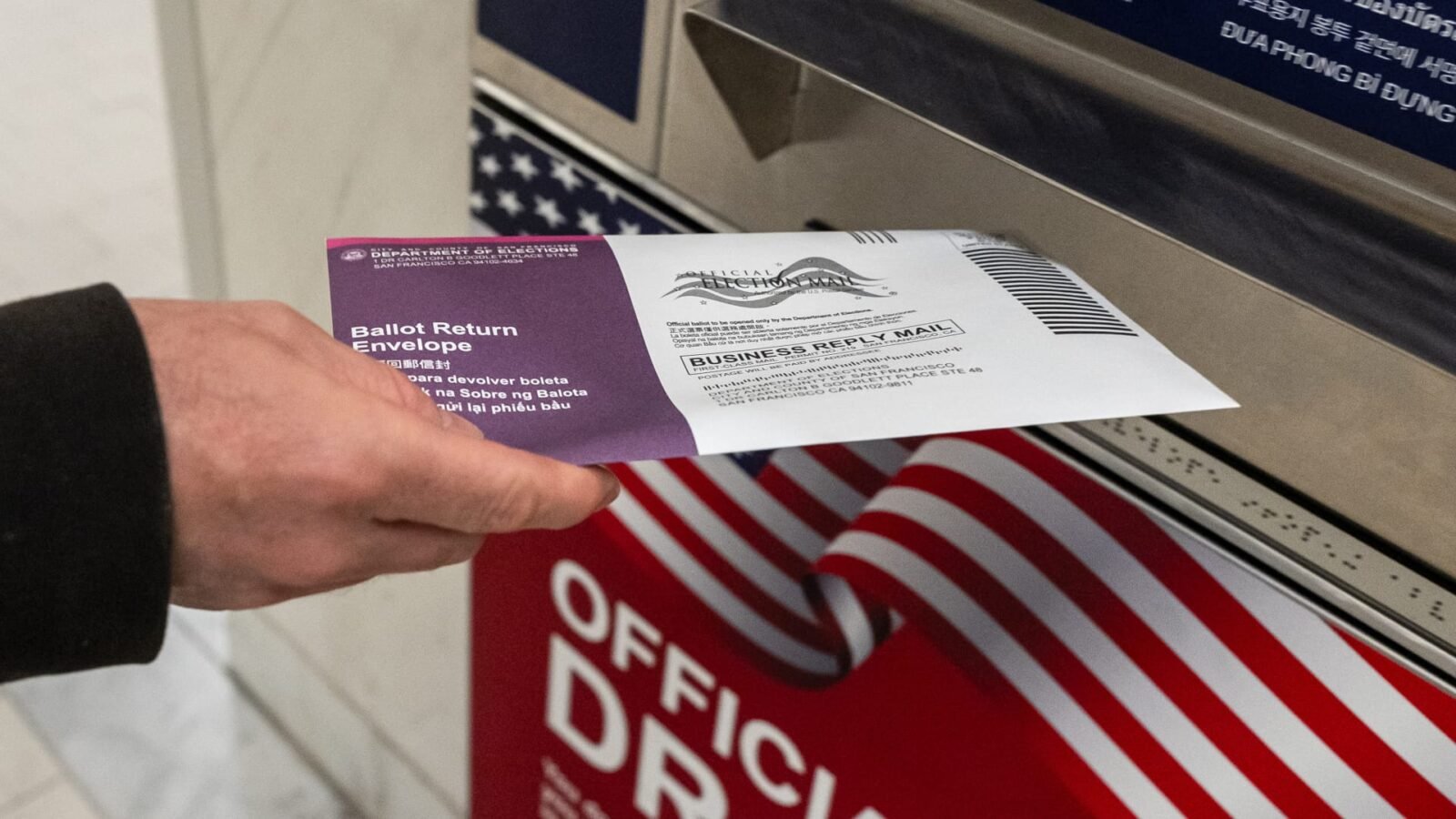
The Trump administration on Monday filed an emergency request with the Supreme Court seeking to lift lower-court restrictions on a presidential executive order that would impose new limits on mail-in voting, according to CNBC.
The move escalates a brewing legal conflict between the federal government and state officials over election administration, coming less than 100 days before the November midterm elections.
At the center of the dispute is an executive order issued in March directing federal agencies to create voter eligibility lists and limit U.S. Postal Service delivery of ballots not tied to those lists. A coalition of 23 states has challenged the order, arguing the president lacks authority to impose federal rules on elections that are administered by state and local officials under the Constitution.
Appeals Court Blocks Key Provisions
The administration’s Supreme Court filing came after the 1st U.S. Circuit Court of Appeals ruled Saturday to leave in place an injunction blocking key parts of the executive order. In a 2-1 decision, the majority found that the order would impose unprecedented levels of federal involvement in state election administration and create risks of voter confusion and disenfranchisement.
The Justice Department had argued the legal challenge was premature because federal agencies had not yet finalized the policies needed to carry out the order. The appeals court rejected that reasoning, noting that states were already being forced to prepare for potential changes that could affect upcoming elections.
The current injunction applies only to states covered by that particular lawsuit. A separate federal appeals court in Washington recently lifted a broader nationwide injunction against the order, creating the possibility that Postal Service restrictions could be implemented in other parts of the country.
Constitutional Questions at Stake
The legal battle highlights fundamental questions about the division of authority between federal and state governments in administering elections. The U.S. Constitution assigns states primary responsibility for overseeing most aspects of election operations.
Trump and his supporters have framed the changes as necessary safeguards against illegal voting. Critics, including Democrats and voting-rights organizations, counter that the order could prevent eligible voters from receiving or returning mail ballots.
The mail-voting restrictions represent one component of a broader push by Trump to reshape how elections are conducted in the United States. He has also been pressing Congress to pass legislation imposing a national voter identification requirement for casting ballots and proof of citizenship for voter registration.
The White House and Justice Department did not immediately provide comment on the Supreme Court filing, according to CNBC.
With the midterm elections scheduled for November 3, the Supreme Court faces pressure to act quickly if it chooses to take up the case. Any decision on the emergency request could have significant implications for how voters in multiple states cast their ballots this fall.
Source: www.cnbc.com — https://www.cnbc.com/2026/07/27/trump-supreme-court-mail-in-voting-restrictions.html
This article is for informational purposes only and does not constitute financial, investment, tax, or legal advice. Do your own research and consult a licensed professional before making financial decisions.