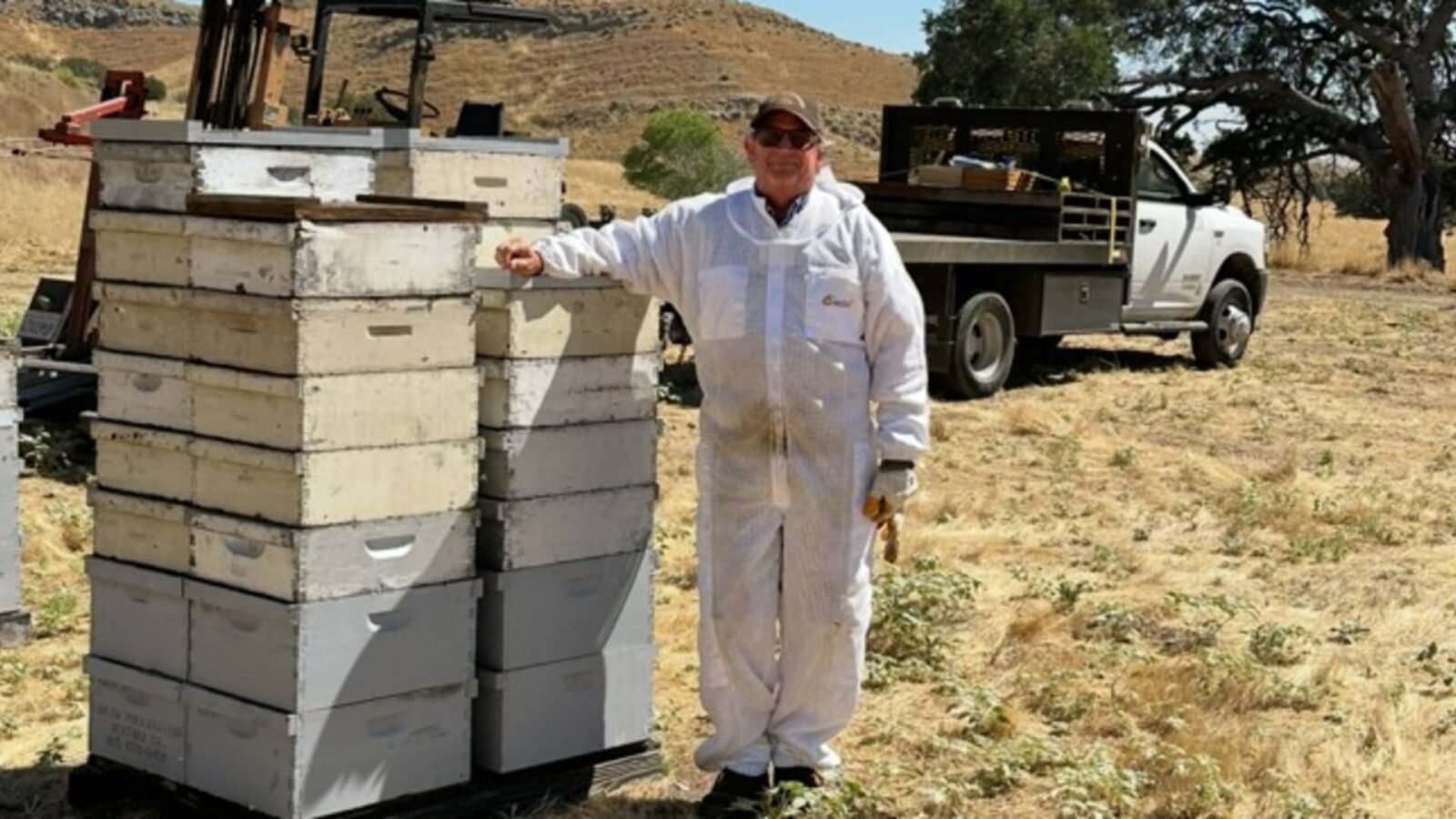
A 70-year-old California beekeeper is struggling to keep his family’s honey farm afloat as the business faces mounting financial pressures and a devastating loss of bee colonies that mirrors a crisis hitting commercial beekeepers nationwide.
David Bradshaw, who runs Bradshaw Honey Farms in Visalia, California, saw his operation bring in about $1.8 million in gross income last year, according to documents reviewed by CNBC. Despite that revenue figure, the business ended the year at a loss after accounting for expenses including labor, fuel, and tariffs on supplies like honey bottles.
The farm’s financial struggles come as Bradshaw estimates he lost roughly 60% of his bee population in 2025, largely due to viral infections caused by parasitic mites. That loss rate aligns with broader industry data showing 62% of commercial honeybee colonies in the United States died between June 2024 and February 2025, according to a survey published in April 2025 by Project Apis m., a nonprofit bee research organization. Beekeepers reported the primary causes of death were parasites, pathogens, pesticide exposure, and inadequate nutrition.
Pollination Services Drive Revenue
The majority of Bradshaw Honey Farms’ revenue comes from renting out bees for pollination services rather than honey sales. Bradshaw moves his colonies throughout the San Joaquin Valley on a yearly rotation, starting with almond orchards in mid-February, then cherries and prunes, followed by citrus crops in late spring. During summer and early fall, he relocates the bees to the Sierra Nevada mountains to gather pollen from native plants.
Honey production, once a significant revenue stream, has declined sharply over the past decade. Bradshaw said his bees have not been producing much honey in recent years, and domestic honey production has faced competition from cheaper imported products. The farm now sells only small batches of honey, along with custom beekeeping equipment and bee food supplements through an online store. Bradshaw also extracts honey for other local beekeepers to generate additional income.
Living on Depleted Savings
Labor represents one of the farm’s largest expenses, with two full-time employees including Bradshaw’s daughter, who manages honey bottling operations. His son helps out as needed. Bradshaw typically lives on whatever remains after paying the farm’s bills, but for the past few years he has had to draw on personal savings, which he said are now depleted.
The second-generation farmer took over the operation from his father, Howard Bradshaw, who founded the business in 1958 as a backyard hobby before leaving his job as an aircraft mechanic to focus on beekeeping full-time. David Bradshaw initially resisted joining the family business, wanting instead to become a car mechanic, but eventually obtained an associate’s degree in agricultural mechanics and began working on the farm. By the mid-1980s, father and son each owned 2,000 bee colonies. Howard Bradshaw passed away in 2019 at age 81.
Mites Pose Existential Threat
Parasitic mites remain one of Bradshaw’s primary concerns. The mites can weaken or kill honeybees and transmit deadly diseases like deformed wing virus. Bradshaw and his employees regularly medicate the bees to prevent mite infestations, but once a virus enters a hive, recovery is unlikely.
Weather conditions add another layer of unpredictability. Insufficient rain reduces plant growth and diminishes pollen supply, while excessive rain prevents bees from leaving their hives to gather food, forcing Bradshaw to supplement their stores with artificial protein and sugar syrup.
Bradshaw expressed concern about the future of both his farm and the American beekeeping industry. Many independent beekeepers are selling their operations to larger corporations rather than continuing to face the challenges, he said. Despite the difficulties, Bradshaw remains committed to the business, calling himself a beekeeper “inside out” who will likely continue until he dies. He said the best part of his job remains the feeling of accomplishment when producing a strong honey crop and maintaining thriving bee colonies.
Source: www.cnbc.com — https://www.cnbc.com/2026/07/25/how-this-70-year-old-honey-bee-farmer-is-keeping-his-family-farm-alive.html
This article is for informational purposes only and does not constitute financial, investment, tax, or legal advice. Do your own research and consult a licensed professional before making financial decisions.