The U.S. immigration officer allegedly responsible for the fatal shooting of an asylum seeker in Maine had been deemed not credible by a state judge just months before the incident, according to court records reviewed by The Washington Post.
David Brouillette appeared in Maine District Court in October seeking to terminate child support payments to a former wife, claiming health issues and a revoked driver’s license were preventing him from earning income. Judge Amy Dieterich rejected those claims in a November ruling, finding Brouillette was “voluntarily underemployed” and that his testimony was not credible.
State motor vehicle records obtained by The Washington Post show Brouillette’s license was not revoked at the time of his court testimony, according to a spokesperson for Maine’s Bureau of Motor Vehicles. The agency found no record of any recent suspension related to child support payments, though Brouillette’s license was briefly suspended in 2008 after he failed to provide proof of insurance following an accident.
Separate records raise additional questions about Brouillette’s past statements. A 2019 divorce settlement indicated he was employed by the police department in Hallowell, Maine, but Police Chief Zachary Kindelan told The Washington Post that Brouillette never worked there. “He’s a name I had never even heard before,” Kindelan said, noting that Brouillette had applied multiple times but was never hired.
Connection to Fatal Shooting
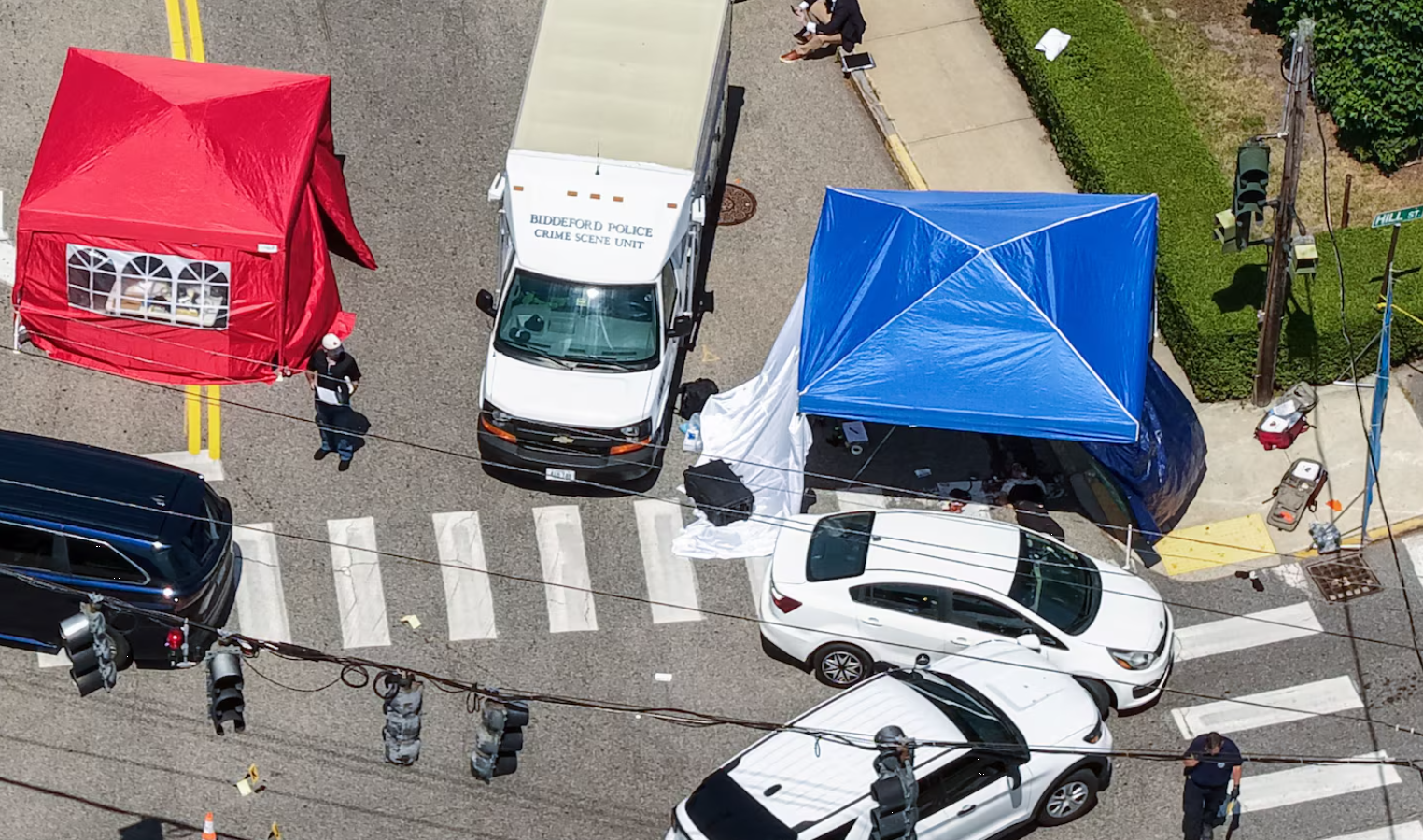
While the Department of Homeland Security has not officially identified Brouillette as the officer who shot 25-year-old Johan Sebastián Durán Guerrero on July 13 during an immigration enforcement action in Biddeford, Maine, his former wife Ashley Brouillette and others have said he told them he was responsible. Multiple people have identified him from footage taken immediately after the shooting.
According to The Washington Post, Brouillette told his ex-wife that Immigration and Customs Enforcement hired him in November — around the time of the judge’s credibility ruling — as the federal agency was rapidly expanding its workforce. He indicated he would start within a couple of months, she said.
Durán was an asylum seeker from Colombia with a work permit issued by the Trump administration. ICE stated that officers were surveilling an address associated with someone with a final removal order when they saw Durán leave and attempted to stop his vehicle. The agency said the officer fired “fearing for public safety” after the driver tried to flee.
However, immigration court records show Durán did not have a final removal order and was scheduled for an initial hearing in May. A spokesperson for Senator Angus King told The Washington Post that DHS initially said Durán was the target of the operation but later reversed that statement.
Implications for Investigation
Former DHS Inspector General John Roth, who served from 2014 to 2017 and worked as a longtime federal prosecutor, told The Washington Post that a judicial finding of false statements would significantly impact Brouillette’s credibility regarding the shooting.
“Obviously if a judge had found that he had made false statements to the court, that would have a significant detrimental impact on his testimony as to what happened in the shooting,” Roth said. “I think it’s a big deal.”
Ben Gideon, the attorney representing Durán’s family as they consider legal action, said credibility will be paramount given the apparent lack of body-camera or surveillance footage capturing the moment shots were fired. “If there’s no direct video evidence produced of the very moment of the shooting, there’s going to be questions about the credibility of the accounts given,” he said.
State investigators have interviewed Durán’s partner, Karolina, who arrived at the scene with their 3-year-old daughter shortly after hearing gunfire. Gideon said he has not heard from the FBI or the DHS Office of Inspector General, which typically investigate officer-involved shootings.
Employment History and Vetting Questions
State records show Brouillette held positions at several agencies for short periods, including the Maine Department of Corrections, the state Department of Health and Human Services, and the U.S. Department of Veterans Affairs. According to résumés and job applications he filed with the state, Brouillette served in the Maine National Guard until 2010 and then became an active-duty Army soldier. He wrote that he deployed to Afghanistan as a military interrogator and retired for unspecified medical reasons in 2015.
Former DHS officials have publicly questioned whether new hires during ICE’s rapid expansion were properly vetted. DHS did not respond to questions about when Brouillette was hired or how he was vetted. The agency said in a statement that publicizing officer identities “puts their lives and the lives of their families at serious risk.”
Brouillette did not respond to calls or emails seeking comment.
This article is for informational purposes only and does not constitute financial, investment, tax, or legal advice. Do your own research and consult a licensed professional before making financial decisions.