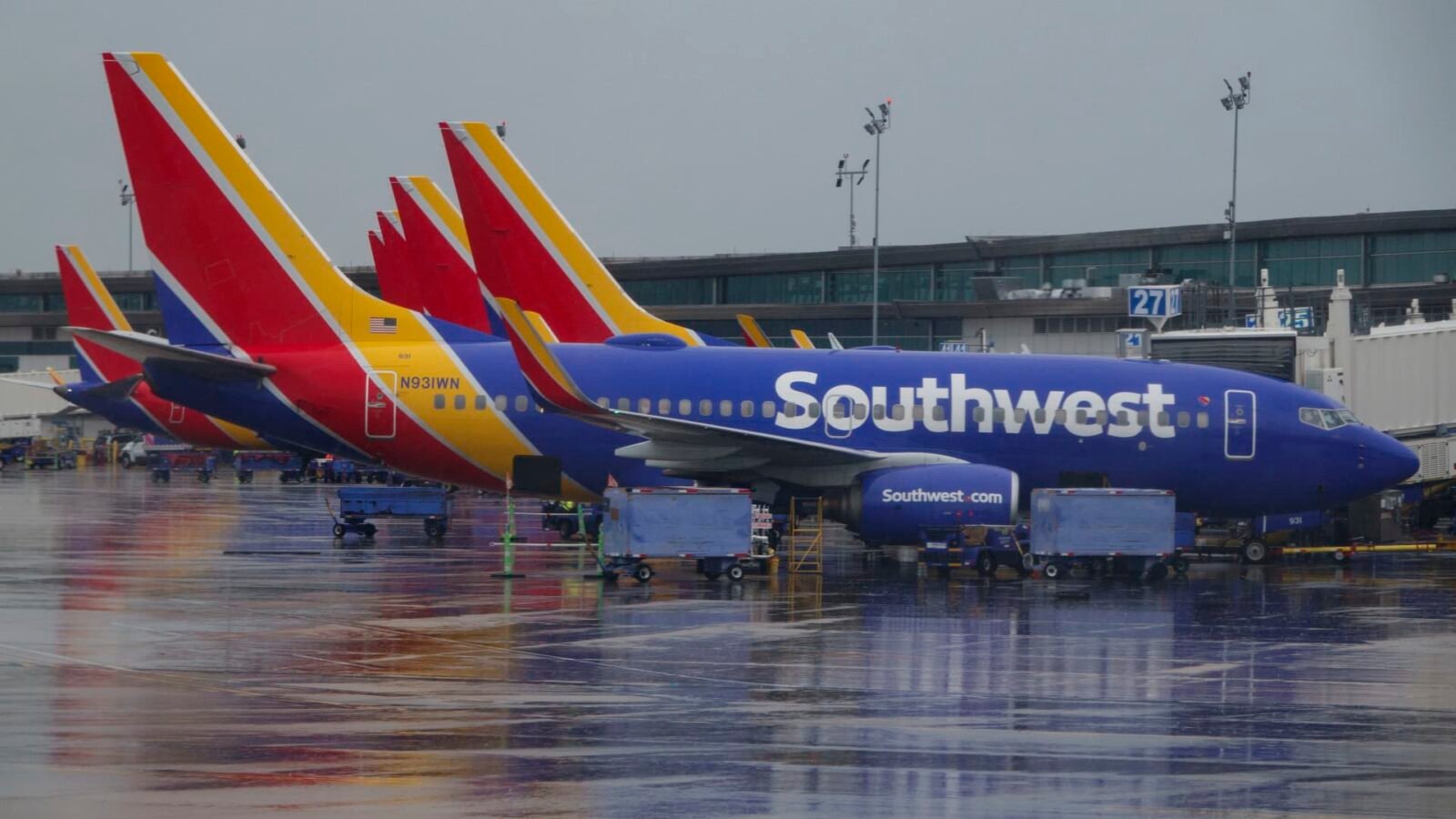
Southwest Airlines reported second-quarter earnings that showed a more than 9% increase in profit compared with the same period last year, driven primarily by higher ticket prices that helped the carrier manage a sharp rise in fuel expenses. However, the Dallas-based airline’s forecast for the summer travel season fell below Wall Street expectations.
Net income for the quarter ended June climbed to $233 million, or 47 cents per share, up from $213 million, or 39 cents per share, in the prior-year period. Revenue jumped 16.4% to $8.4 billion as the airline benefited from strong travel demand and pricing power.
Excluding one-time items, Southwest posted adjusted earnings of 94 cents per share. That figure included an adjustment related to customers redeeming flight credits in higher numbers than the company had projected, a consequence of the airline’s decision to add expiration dates to credits for many ticket classes sold starting in mid-2025.
Summer Outlook Falls Short
For the current quarter, Southwest forecast adjusted earnings between 50 cents and 75 cents per share, missing the 82-cent average estimate among analysts polled by LSEG. The airline projected third-quarter revenue growth of 17.5% to 19.5% compared with the same period in 2025, while planning to keep capacity flat or contract it by as much as 1%.
The company also updated its full-year guidance, now expecting adjusted earnings per share between $3.25 and $4.25 for 2026. That compares with its January forecast of at least $4 per share.
Fare Gains Offset Fuel Surge
Southwest’s average one-way fare rose nearly 21% to $225.61 from $186.65 a year earlier, reflecting the airline’s ability to maintain pricing power despite volatile fuel markets. The carrier’s fuel bill surged 67% to $2.22 billion in the second quarter compared with the prior year.
“The demand environment just remains really strong, and that includes domestic,” Chief Financial Officer Tom Doxey told CNBC on Wednesday.
While fuel prices have eased from peaks reached during the Iran war, costs remain elevated and unpredictable. Airlines across the industry have largely held onto fare increases implemented this year to offset the pressure on operating expenses.
Business Model Transformation Continues
Over the past two years, Southwest has fundamentally reshaped the low-cost carrier model that defined it for decades. The airline ended its signature open-seating policy in January, introduced basic economy fares, and eliminated its longstanding practice of allowing customers to check two bags without charge.
According to Doxey, recent upgrades to aircraft and amenities are helping attract a higher proportion of business travelers, a segment the airline has historically underserved compared with legacy carriers.
The transformation marks a significant shift for an airline that built its brand on operational simplicity and customer-friendly policies. Southwest is betting that these changes will generate enough incremental revenue to justify abandoning features that once set it apart from competitors.
Source: www.cnbc.com — https://www.cnbc.com/2026/07/22/southwest-airlines-luv-2q-2026-earnings.html
This article is for informational purposes only and does not constitute financial, investment, tax, or legal advice. Do your own research and consult a licensed professional before making financial decisions.